

Join Our Newsletter To Be Informed When New Videos Are Posted
Hebrew Text
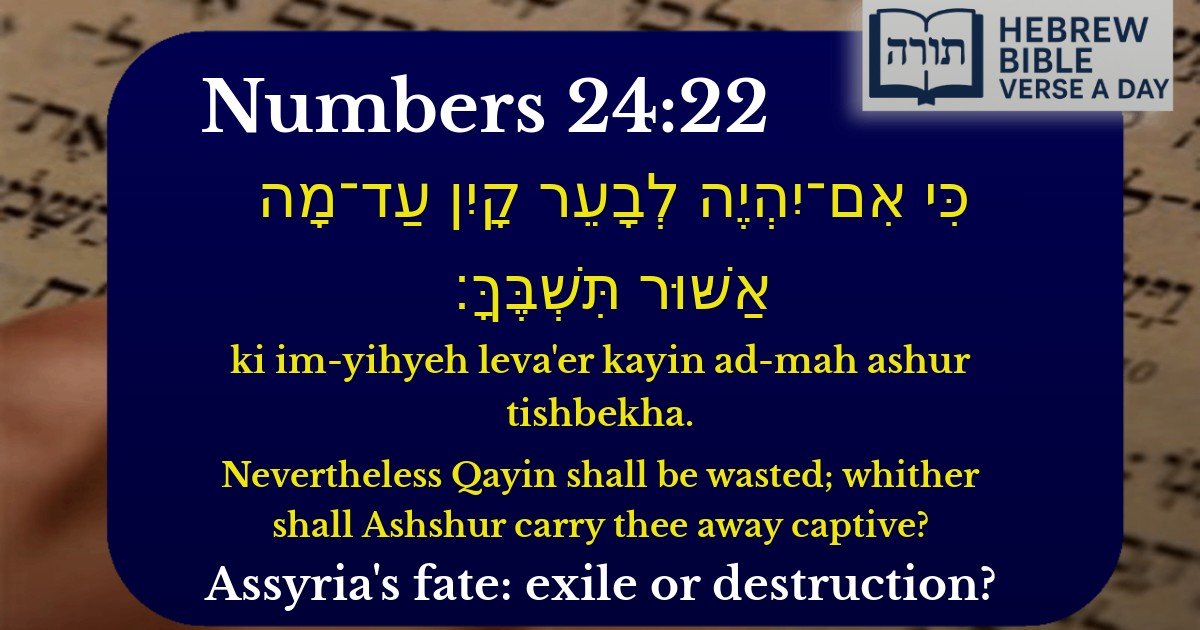
כִּי אִם־יִהְיֶה לְבָעֵר קָיִן עַד־מָה אַשּׁוּר תִּשְׁבֶּךָּ׃
English Translation
Nevertheless Qayin shall be wasted; whither shall Ashshur carry thee away captive?
Transliteration
Ki im-yihyeh leva'er kayin ad-mah ashur tishbekha.
Hebrew Leining Text
כִּ֥י אִם־יִהְיֶ֖ה לְבָ֣עֵֽר קָ֑יִן עַד־מָ֖ה אַשּׁ֥וּר תִּשְׁבֶּֽךָּ׃
🎵 Listen to leining
Parasha Commentary
📚 Talmud Citations
This verse is not quoted in the Talmud.
Context of the Verse
This verse appears in Sefer Hoshea (Hosea 10:14), where the prophet warns the Kingdom of Israel about impending destruction due to their sins. The verse metaphorically references historical figures—Qayin (Cain) and Ashshur (Assyria)—to convey divine judgment.
Interpretation of "Qayin Shall Be Wasted"
Rashi explains that "Qayin" here does not refer to Cain, the son of Adam, but rather symbolizes the Kingdom of Israel, which will be "wasted" (שָׁמֵם) due to its rebellion against Hashem. The term "Qayin" (קַיִן) is interpreted as a play on words, alluding to Israel's misplaced "acquisition" (from the root ק-נ-ה) of idolatry and sin instead of devotion to Hashem.
The Role of Ashshur (Assyria)
Radak (Rabbi David Kimchi) comments that Ashshur (Assyria) was the dominant empire of the time, destined to carry Israel into exile as punishment. The rhetorical question, "Whither shall Ashshur carry thee away captive?" emphasizes the inevitability and severity of the exile—there will be no escape.
Midrashic Insights
Halachic and Ethical Lessons
Rambam (Hilchos Teshuvah 7:5) derives from such prophecies that exile is a consequence of persistent sin, but repentance can avert disaster. The verse serves as a warning to prioritize spiritual integrity over fleeting political alliances (symbolized by reliance on Assyria).