
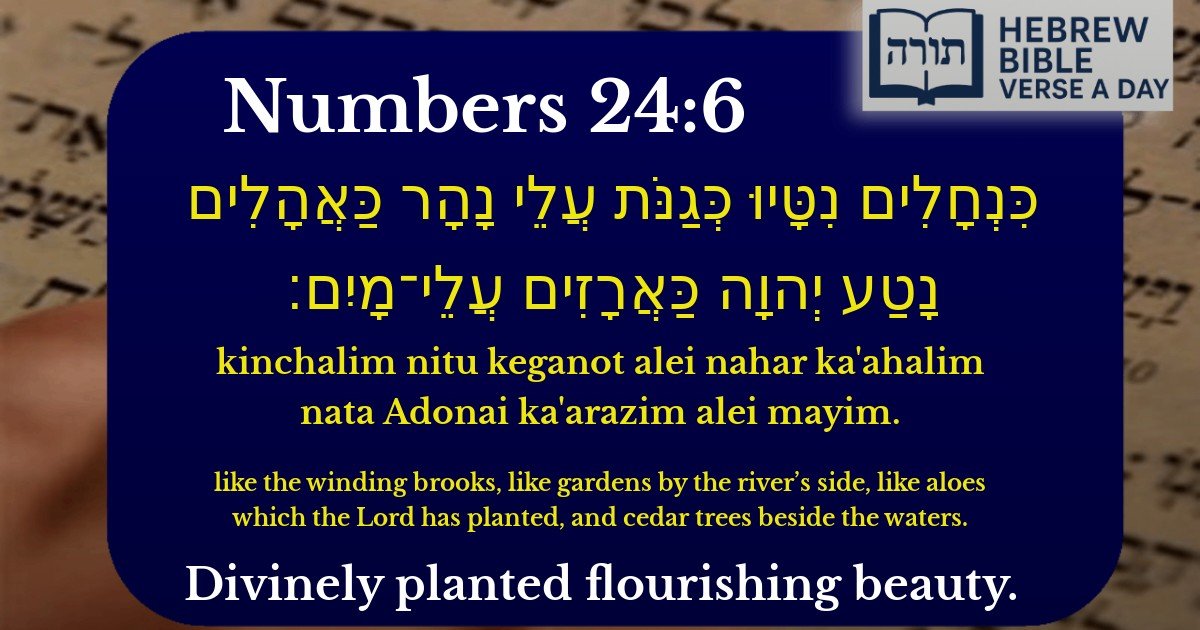

Numbers 24:6 - Divinely planted flourishing beauty.

Numbers 24:6 - במדבר 24:6

Hebrew Text

כִּנְחָלִים נִטָּיוּ כְּגַנֹּת עֲלֵי נָהָר כַּאֲהָלִים נָטַע יְהוָה כַּאֲרָזִים עֲלֵי־מָיִם׃

English Translation

like the winding brooks, like gardens by the river’s side, like aloes which the Lord has planted, and cedar trees beside the waters.

Transliteration

Kinchalim nitu keganot alei nahar ka'ahalim nata Adonai ka'arazim alei mayim.

Hebrew Leining Text

כִּנְחָלִ֣ים נִטָּ֔יוּ כְּגַנֹּ֖ת עֲלֵ֣י נָהָ֑ר כַּאֲהָלִים֙ נָטַ֣ע יְהֹוָ֔ה כַּאֲרָזִ֖ים עֲלֵי־מָֽיִם׃

🎵 Listen to leining

Parasha Commentary

Context and Source

The verse (Bamidbar 24:6) is part of Bilam's blessing over the Jewish people, where he describes their beauty and divine favor. The imagery of flourishing trees and gardens symbolizes the spiritual and physical prosperity of Israel under Hashem's protection.

Interpretation of the Imagery

  • "Like the winding brooks" (כִּנְחָלִים נִטָּיוּ): Rashi explains that this refers to the tents of Israel, which were arranged in an orderly fashion like the meandering paths of brooks. The Midrash (Bamidbar Rabbah 20:19) adds that this reflects the beauty and harmony of the Jewish encampment in the desert.
  • "Like gardens by the river’s side" (כְּגַנֹּת עֲלֵי נָהָר): The Ramban interprets this as a metaphor for the Torah scholars of Israel, who are constantly nourished by the "waters" of Torah, just as a garden thrives by a river. The Talmud (Ta'anit 7a) similarly compares Torah to water, essential for spiritual growth.
  • "Like aloes which the Lord has planted" (כַּאֲהָלִים נָטַע יְהוָה): The Ibn Ezra notes that aloes (אֲהָלִים) are fragrant and precious, symbolizing the unique sanctity of the Jewish people, planted by Hashem Himself. The Midrash (Bamidbar Rabbah 20:20) connects this to the Mishkan, which was fragrant and holy.
  • "Cedar trees beside the waters" (כַּאֲרָזִים עֲלֵי־מָיִם): The Malbim explains that cedars are strong and enduring, representing the eternal nature of Israel, rooted in divine providence. The Talmud (Chullin 89a) teaches that the humility of the cedar, which bends toward water, reflects the humility of Torah scholars.

Theological Significance

This verse emphasizes that the Jewish people's greatness stems from their connection to Hashem and His Torah. The imagery of water and planting underscores divine sustenance, while the trees and gardens reflect both physical and spiritual resilience. As the Sforno teaches, these blessings are contingent upon Israel's adherence to Torah and mitzvot, ensuring their continued flourishing.

📚 Talmud Citations

This verse is not quoted in the Talmud.

Frequently Asked Questions

Q: What does Numbers 24:6 mean in simple terms?
A: Numbers 24:6 is part of Balaam's blessing over the Jewish people. It poetically describes the beauty and prosperity of the Jewish nation, comparing them to well-watered gardens, fragrant aloes, and strong cedar trees—all symbols of vitality and divine blessing. Rashi explains that this imagery highlights how the Jewish people flourish under Hashem's care, just as plants thrive near water.
Q: Why does the verse compare the Jewish people to gardens and cedar trees?
A: The comparison emphasizes the spiritual and physical blessings bestowed upon the Jewish people. Gardens by a river symbolize constant nourishment (like Torah study), while cedar trees represent strength and endurance (like the Jewish people's resilience). The Midrash (Bamidbar Rabbah 20:19) teaches that these metaphors reflect the Jewish people's rootedness in holiness and their growth through divine providence.
Q: What lesson can we learn from Numbers 24:6 today?
A: The verse reminds us that just as plants depend on water, our spiritual lives depend on Torah and mitzvot. The Rambam (Hilchot De'ot 4:1) teaches that a person must seek a wholesome environment—like a garden by water—to grow in righteousness. This verse encourages us to stay connected to Torah, which sustains us like rivers sustain trees.
Q: What is the significance of the aloes and cedars mentioned in this verse?
A: Aloes (a fragrant plant) and cedars (tall, sturdy trees) represent two dimensions of Jewish life: beauty (aloes symbolize pleasant deeds and good character) and strength (cedars symbolize unwavering faith, as noted in Talmud Ta'anit 20a). Together, they show a balanced life of kindness and steadfastness in serving Hashem.