

Join Our Newsletter To Be Informed When New Videos Are Posted
Hebrew Text
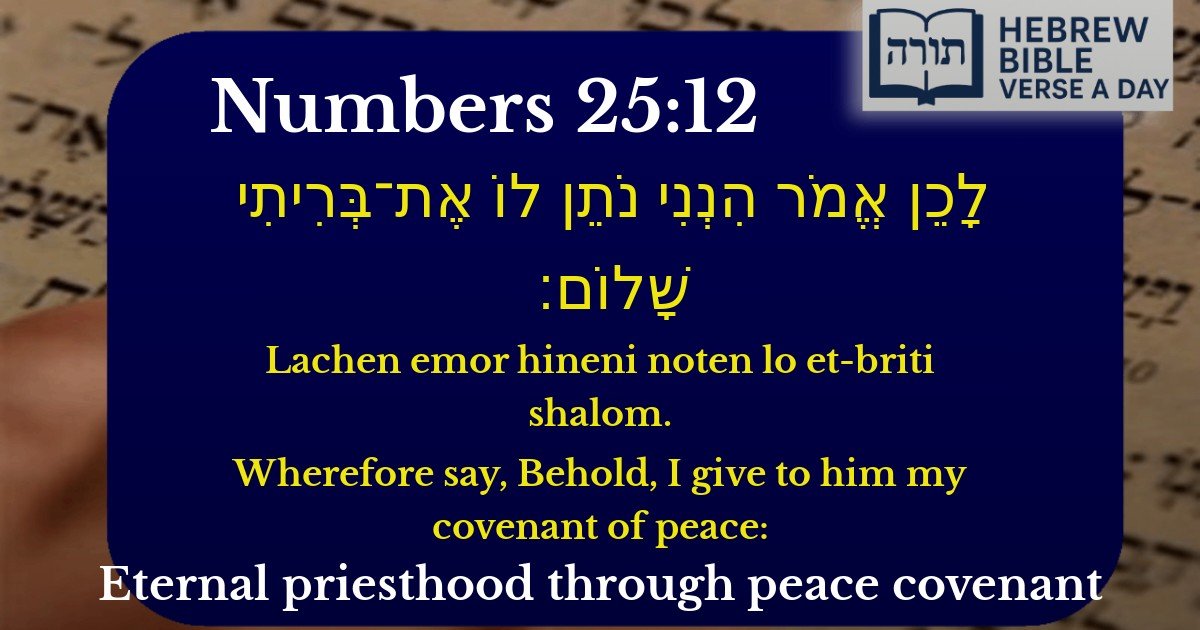
לָכֵן אֱמֹר הִנְנִי נֹתֵן לוֹ אֶת־בְּרִיתִי שָׁלוֹם׃
English Translation
Wherefore say, Behold, I give to him my covenant of peace:
Transliteration
Lachen emor hineni noten lo et-briti shalom.
Hebrew Leining Text
לָכֵ֖ן אֱמֹ֑ר הִנְנִ֨י נֹתֵ֥ן ל֛וֹ אֶת־בְּרִיתִ֖י שָׁלֽוֹם*(בספרי ספרד ואשכנז וי״ו קטיעא)׃
🎵 Listen to leining
Parasha Commentary
📚 Talmud Citations
This verse is quoted in the Talmud.
📖 Sotah 37a
The verse is referenced in the context of discussing the covenant of peace given to Pinchas (Phinehas) for his zealousness.
📖 Zevachim 101b
Mentioned in relation to the priesthood and the covenant of peace associated with it.
Context of the Verse
The verse (Bamidbar 25:12) appears in the Torah after Pinchas zealously defends the honor of Hashem by executing Zimri and Kozbi, thereby stopping a plague that had struck Bnei Yisrael. As a reward, Hashem grants Pinchas a "brit shalom" (covenant of peace).
Meaning of "Brit Shalom"
Rashi explains that the "brit shalom" was a divine assurance that Pinchas would be protected from retaliation for his act of zealotry. The Midrash (Bamidbar Rabbah 21:1) adds that this covenant signifies eternal peace, as Pinchas was later identified with Eliyahu HaNavi, who brings tidings of redemption.
Nature of the Covenant
Symbolism of the Letter "Vav" in "Shalom"
The Talmud (Kiddushin 66b) notes that in the Torah scroll, the word "shalom" (שלום) in this verse is written with a broken "vav," symbolizing that true peace may sometimes require disruption for a higher purpose. The Maharal explains that this reflects the balance between justice and mercy in Pinchas' actions.
Eternal Implications
The Zohar (Pinchas 229a) teaches that this covenant extends beyond Pinchas' lifetime, connecting him to Eliyahu, who heralds the ultimate peace of Mashiach. This underscores the idea that righteous zealotry, when aligned with divine will, has everlasting spiritual consequences.