Frequently Asked Questions
Q: Who was Kozbi in the Torah?
A: Kozbi was a Midyanite woman mentioned in Numbers 25:15. She was the daughter of Żur, a leader of a Midyanite clan. According to Rashi, her name 'Kozbi' (from the root 'kazav,' meaning falsehood) hinted at her deceitful nature, as she was involved in leading Israelites astray through immoral behavior and idolatry.
Q: Why is Kozbi's lineage mentioned in the Torah?
A: The Torah specifies Kozbi's lineage ('daughter of Żur, head of a Midyanite clan') to emphasize the severity of the incident. Ramban explains that her high social status highlights how the Midyanites deliberately sent noblewomen to seduce the Israelites, intensifying their spiritual downfall. This shows the calculated nature of the attack on Jewish morality.
Q: What lesson does the story of Kozbi teach us?
A: The episode of Kozbi (Numbers 25) teaches the dangers of foreign influence that can lead to assimilation and sin. The Talmud (Sanhedrin 106a) connects this to the broader idea of 'yetser hara' (evil inclination), warning how external temptations can undermine Jewish values. It reinforces the importance of maintaining spiritual boundaries.
Q: How does the Torah describe the Midyanites' role in this story?
A: Traditional sources (Rashi, Midrash Tanchuma) explain that the Midyanites intentionally used women like Kozbi to lure Israelites into idolatry and immorality. This was a strategic attack on Jewish sanctity, which is why the Torah later commands vengeance against Midyan (Numbers 31:2). Their actions exemplify the spiritual warfare faced by the Jewish people.
Q: Why is Kozbi's name significant?
A: Kozbi's name (כָּזְבִּי) derives from the Hebrew word 'sheker' (falsehood). The Midrash (Bamidbar Rabbah 20:24) notes that names in Torah often reflect character—here, indicating her role in deception. This aligns with the Talmudic principle (Berachos 7b) that names can influence destiny, emphasizing how she embodied false ideals that opposed Torah values.

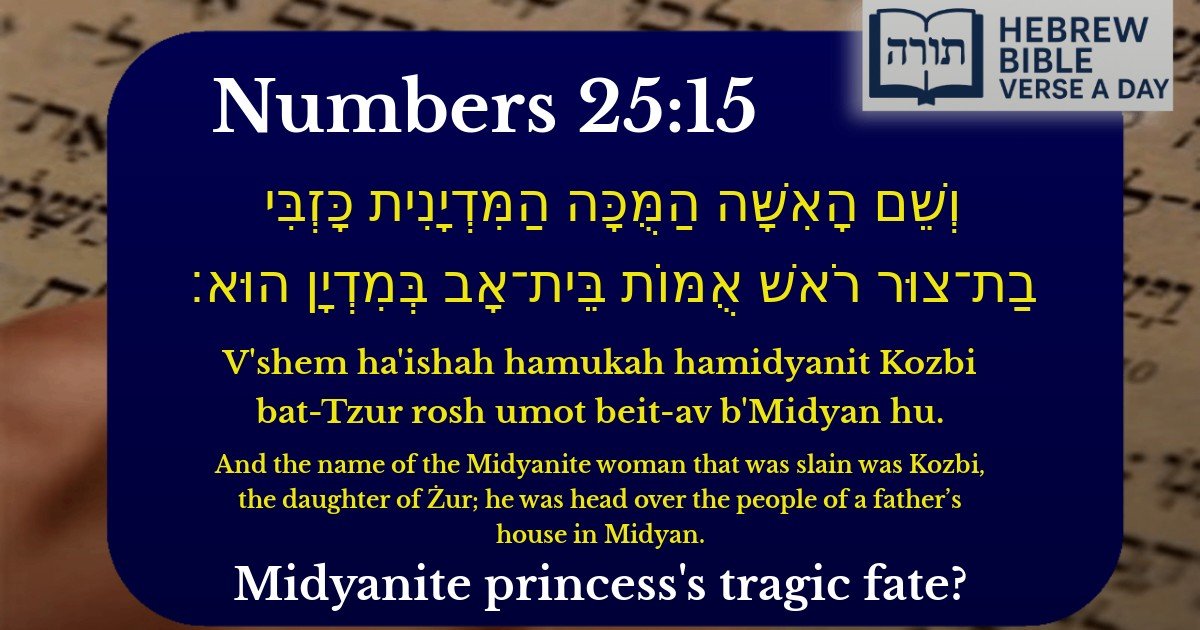

The Identity of Kozbi bat Tzur
The verse identifies the slain Midyanite woman as Kozbi bat Tzur, emphasizing her lineage and status. Rashi (Bamidbar 25:15) explains that her father, Tzur, was a prominent chieftain (rosh umot) among the Midyanites, indicating that she came from nobility. This detail highlights the severity of the incident—her high social standing suggests that the Midyanites deliberately sent a woman of stature to entice Bnei Yisrael into sin.
The Meaning of "Kozbi"
The name Kozbi (כָּזְבִּי) is significant. The Midrash (Bamidbar Rabbah 20:24) connects it to the root כָּזָב ("falsehood"), implying deceit. This aligns with the narrative in which the Midyanites used seduction and trickery to lead Bnei Yisrael astray. Ramban (Bamidbar 25:1) adds that her name reflects the deceptive nature of idolatry and immorality, which appear enticing but ultimately lead to destruction.
Tzur's Role in Midyan
The phrase "rosh umot beit av b’Midyan" ("head over the people of a father’s house in Midyan") underscores Tzur’s leadership. The Talmud (Sanhedrin 106a) suggests that Tzur was a key instigator of the plot against Bnei Yisrael, possibly even a king or high-ranking official. This reinforces the idea that the sin of Baal Peor was not merely individual but orchestrated by Midyanite leadership as a strategic attack.
Lessons from the Incident