

Join Our Newsletter To Be Informed When New Videos Are Posted
Hebrew Text
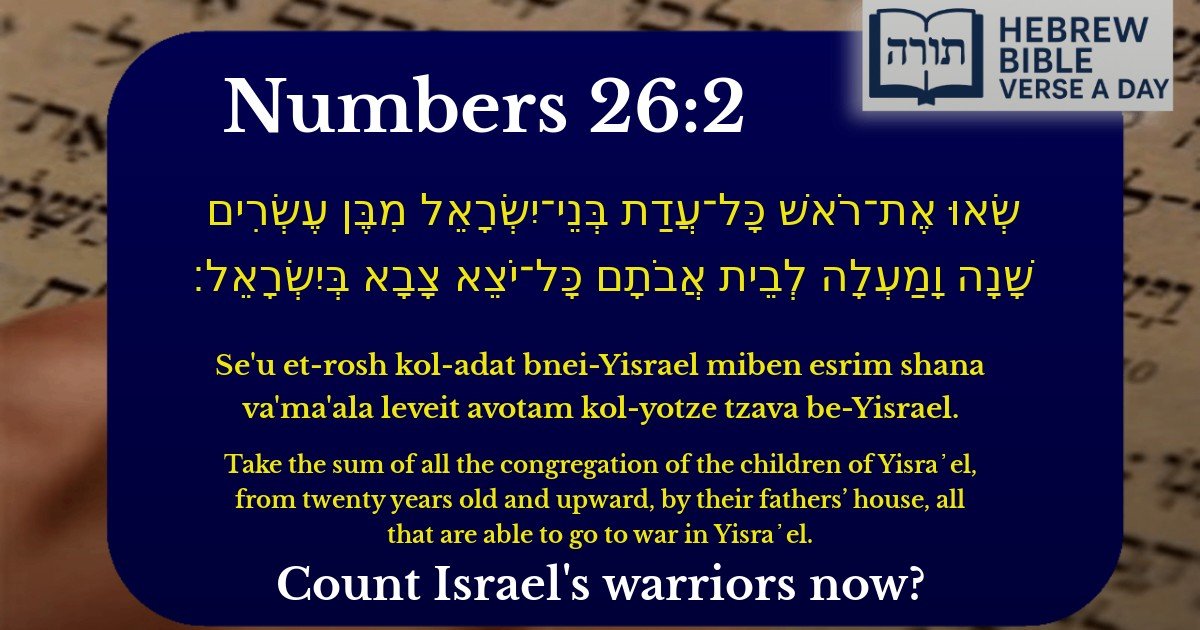
שְׂאוּ אֶת־רֹאשׁ כָּל־עֲדַת בְּנֵי־יִשְׂרָאֵל מִבֶּן עֶשְׂרִים שָׁנָה וָמַעְלָה לְבֵית אֲבֹתָם כָּל־יֹצֵא צָבָא בְּיִשְׂרָאֵל׃
English Translation
Take the sum of all the congregation of the children of Yisra᾽el, from twenty years old and upward, by their fathers’ house, all that are able to go to war in Yisra᾽el.
Transliteration
Se'u et-rosh kol-adat bnei-Yisrael miben esrim shana va'ma'ala leveit avotam kol-yotze tzava be-Yisrael.
Hebrew Leining Text
שְׂא֞וּ אֶת־רֹ֣אשׁ ׀ כׇּל־עֲדַ֣ת בְּנֵי־יִשְׂרָאֵ֗ל מִבֶּ֨ן עֶשְׂרִ֥ים שָׁנָ֛ה וָמַ֖עְלָה לְבֵ֣ית אֲבֹתָ֑ם כׇּל־יֹצֵ֥א צָבָ֖א בְּיִשְׂרָאֵֽל׃
🎵 Listen to leining
Parasha Commentary
📚 Talmud Citations
This verse is quoted in the Talmud.
📖 Yoma 22b
The verse is referenced in a discussion about the counting of the Israelites and the significance of their numbers in relation to military service.
📖 Sotah 44b
The verse is cited in the context of discussing who is eligible to go to war and the criteria for being counted among the fighters of Israel.
Context of the Verse
The verse (Bamidbar 1:2) appears at the beginning of Sefer Bamidbar, where Hashem commands Moshe to conduct a census of Bnei Yisrael. This census is specifically for men aged twenty and above who are fit for military service. The counting is organized according to their ancestral tribes and families.
Rashi's Explanation
Rashi (Bamidbar 1:2) explains that the phrase "שְׂאוּ אֶת־רֹאשׁ" ("Take the sum") implies a counting that elevates and honors each individual. The term "ראש" (head) suggests that each person is counted as significant, like the head of a body. Rashi also notes that this census was conducted with half-shekels (as seen in Shemot 30:12-16) to avoid the "evil eye," as directly counting people can bring misfortune.
Age of Twenty and Military Readiness
The specification of "מִבֶּן עֶשְׂרִים שָׁנָה וָמַעְלָה" (from twenty years old and upward) is significant. The Talmud (Sotah 44b) teaches that twenty is the age when a man reaches full physical strength and is fit for war. Rambam (Hilchot Melachim 7:10) also states that only those above twenty are enlisted in the obligatory wars (milchemet mitzvah).
Organization by Ancestral Houses
The instruction to count "לְבֵית אֲבֹתָם" (by their fathers’ house) emphasizes the importance of lineage and tribal identity. The Midrash (Bamidbar Rabbah 1:7) explains that this structure preserved the integrity of each shevet (tribe) and reinforced their unique roles within Klal Yisrael. Each tribe had its own flag and encampment position, symbolizing unity through diversity.
Spiritual Significance of the Census
The Sforno (Bamidbar 1:2) highlights that this census was not merely for military purposes but also to demonstrate Hashem's love for Bnei Yisrael. Just as a person frequently counts their prized possessions, Hashem counts His people to show their cherished status. The Ohr HaChaim adds that the census prepared them for their journey toward Eretz Yisrael, instilling discipline and unity.
Key Lessons