

Join Our Newsletter To Be Informed When New Videos Are Posted
Hebrew Text
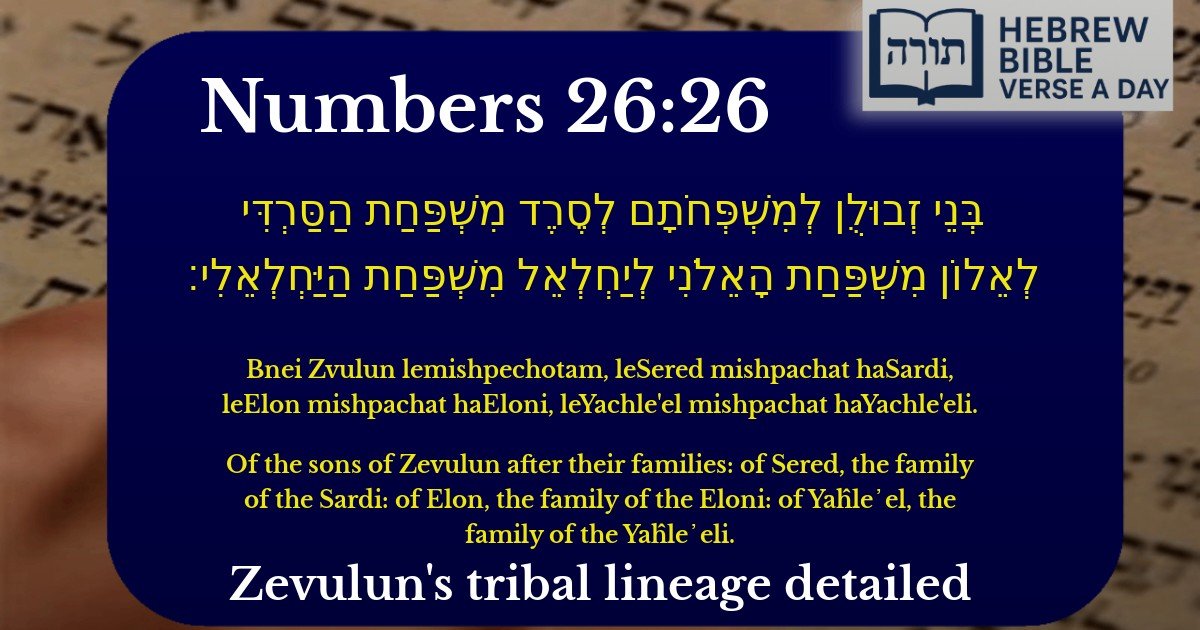
בְּנֵי זְבוּלֻן לְמִשְׁפְּחֹתָם לְסֶרֶד מִשְׁפַּחַת הַסַּרְדִּי לְאֵלוֹן מִשְׁפַּחַת הָאֵלֹנִי לְיַחְלְאֵל מִשְׁפַּחַת הַיַּחְלְאֵלִי׃
English Translation
Of the sons of Zevulun after their families: of Sered, the family of the Sardi: of Elon, the family of the Eloni: of Yaĥle᾽el, the family of the Yaĥle᾽eli.
Transliteration
Bnei Zvulun lemishpechotam, leSered mishpachat haSardi, leElon mishpachat haEloni, leYachle'el mishpachat haYachle'eli.
Hebrew Leining Text
בְּנֵ֣י זְבוּלֻן֮ לְמִשְׁפְּחֹתָם֒ לְסֶ֗רֶד מִשְׁפַּ֙חַת֙ הַסַּרְדִּ֔י לְאֵל֕וֹן מִשְׁפַּ֖חַת הָאֵלֹנִ֑י לְיַ֨חְלְאֵ֔ל מִשְׁפַּ֖חַת הַיַּחְלְאֵלִֽי׃
🎵 Listen to leining
Parasha Commentary
📚 Talmud Citations
This verse is not quoted in the Talmud.
The Lineage of Zevulun
The verse enumerates the descendants of Zevulun, the sixth son of Yaakov Avinu, listing their families according to their forebears: Sered, Elon, and Yachle'el. This follows the pattern seen throughout Sefer Bamidbar, where the Torah meticulously records the genealogies of each tribe to establish their unique identities and roles within Klal Yisrael.
Significance of Family Names
Rashi (Bamidbar 26:26) notes that the family names—Sardi, Eloni, and Yachle'eli—are derived from their respective ancestors, Sered, Elon, and Yachle'el. This reflects the Torah's emphasis on preserving familial lineage, as each family unit maintained its distinct identity even within the broader tribe of Zevulun.
Zevulun's Role Among the Tribes
The Midrash (Bereishit Rabbah 99:9) highlights Zevulun's partnership with Yissachar, where Zevulun engaged in commerce to support Yissachar's Torah study. This symbiotic relationship underscores the tribe's unique contribution to Klal Yisrael—facilitating spiritual growth through material means. The listing of Zevulun's families here reinforces their enduring role in this sacred partnership.
Lessons from the Names
Halachic Implications
Rambam (Hilchot Shemittah ve'Yovel 10:4) derives from such tribal genealogies that land inheritance in Eretz Yisrael was strictly tied to family lineage. Thus, this verse reinforces the halachic principle that tribal and familial identities were inseparable from land rights and communal responsibilities.