

Join Our Newsletter To Be Informed When New Videos Are Posted
Hebrew Text
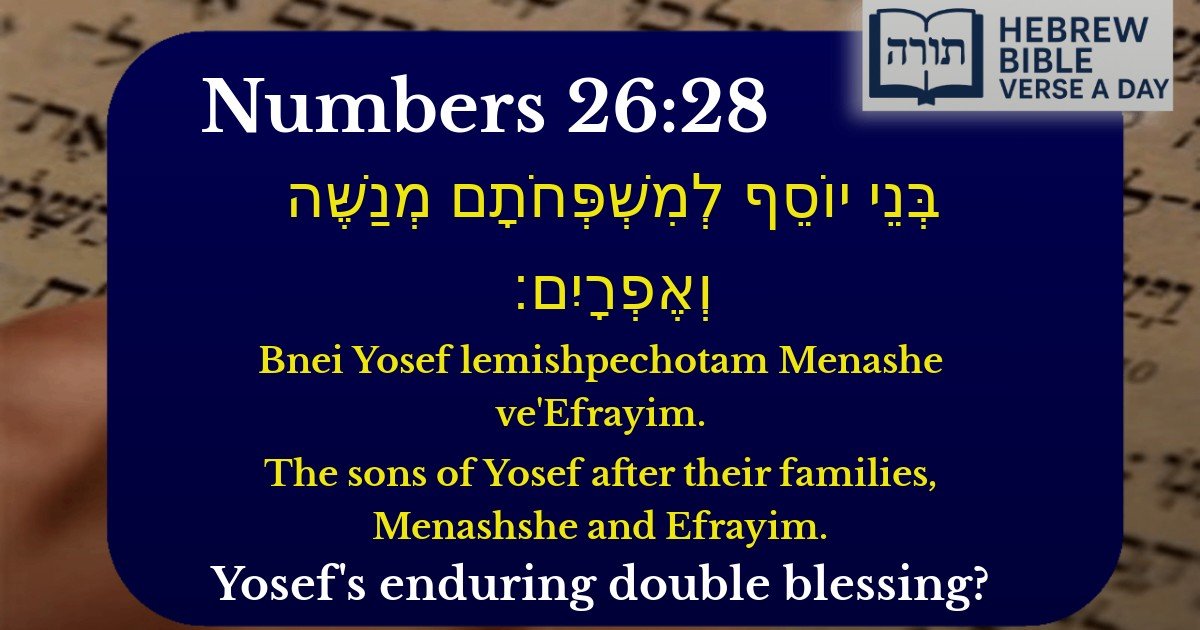
בְּנֵי יוֹסֵף לְמִשְׁפְּחֹתָם מְנַשֶּׁה וְאֶפְרָיִם׃
English Translation
The sons of Yosef after their families, Menashshe and Efrayim.
Transliteration
Bnei Yosef lemishpechotam Menashe ve'Efrayim.
Hebrew Leining Text
בְּנֵ֥י יוֹסֵ֖ף לְמִשְׁפְּחֹתָ֑ם מְנַשֶּׁ֖ה וְאֶפְרָֽיִם׃
🎵 Listen to leining
Parasha Commentary
📚 Talmud Citations
This verse is not quoted in the Talmud.
The Sons of Yosef: Menashe and Efrayim
The verse states: "בְּנֵי יוֹסֵף לְמִשְׁפְּחֹתָם מְנַשֶּׁה וְאֶפְרָיִם" ("The sons of Yosef after their families, Menashe and Efrayim"). This seemingly straightforward declaration carries deep significance in Jewish tradition, particularly regarding tribal lineage and the unique status of Yosef's descendants.
Rashi's Explanation
Rashi (Bamidbar 26:28) notes that the Torah lists Menashe before Efrayim here, reversing the order found in other passages (e.g., Bereishit 48:20, where Yaakov blesses Efrayim before Menashe). Rashi explains that this follows the natural birth order—Menashe was the firstborn (Bereishit 41:51), whereas the reversal in Yaakov's blessing reflected prophetic insight into Efrayim's future greatness (as seen in Yehoshua bin Nun, a descendant of Efrayim).
Tribal Status and Inheritance
Despite being grandsons of Yaakov, Menashe and Efrayim were elevated to the status of full tribes, as Ramban (Bamidbar 1:32) explains. This fulfilled Yaakov's adoption of them in Bereishit 48:5 ("Efrayim and Menashe shall be mine like Reuven and Shimon"). Their inclusion as independent tribes ensured Yosef received a double portion in Eretz Yisrael, a privilege of the firstborn (Divrei HaYamim I 5:1-2).
Midrashic Insights
Halachic Implications
The Mishnah (Bikkurim 1:5) records that Efrayim and Menashe brought separate first-fruit offerings, confirming their distinct tribal identities. This separation persisted in territorial allotments (Yehoshua 16-17) and military divisions (Bamidbar 2:18-24), demonstrating their equal standing among the Twelve Tribes.