Frequently Asked Questions
Q: What does Numbers 26:34 mean?
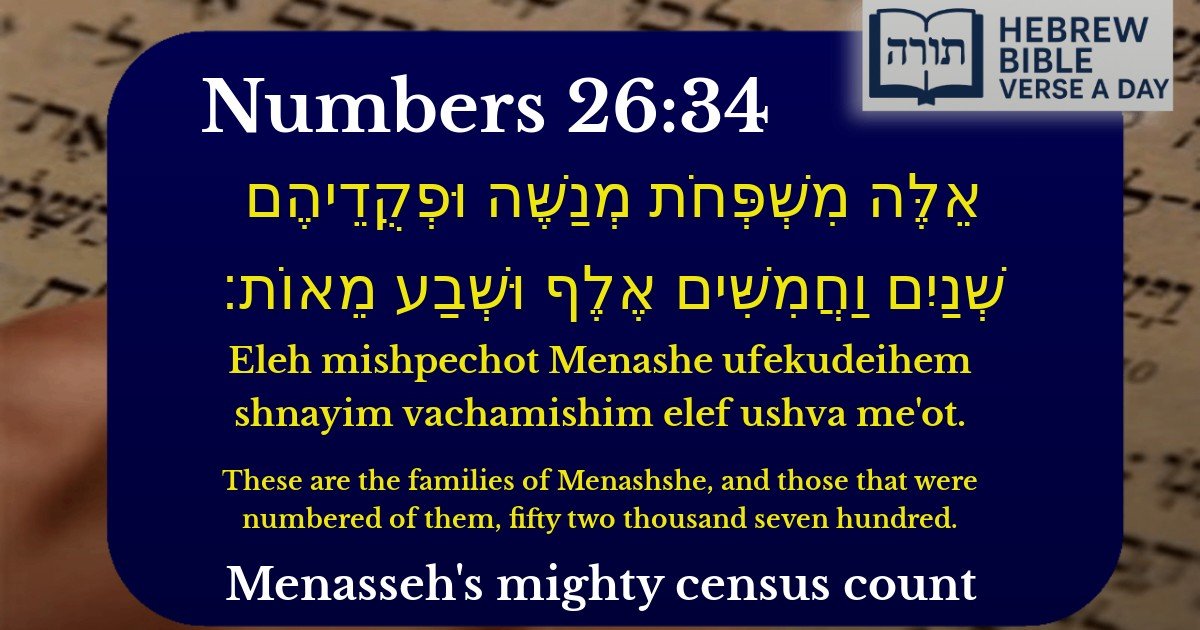
A: Numbers 26:34 records the census count of the tribe of Menashe (Menashshe) during the Israelites' journey in the wilderness. It states that there were 52,700 men eligible for military service from the families of Menashe. This count was part of the larger census taken before entering the Land of Israel, as commanded by Hashem.
Q: Why is the counting of the tribes important in the Torah?
A: The counting of the tribes, as seen in Numbers 26, was important for several reasons: 1) To organize the nation for military and tribal responsibilities, 2) To allocate portions of the Land of Israel fairly among the tribes (Rashi on Numbers 26:53), and 3) To show Hashem's care for each individual, as counting demonstrates personal importance (Midrash Tanchuma Ki Tisa 9).
Q: How does the number of Menashe's descendants compare to other tribes?
A: Menashe's count of 52,700 was smaller than some tribes like Yehuda (76,500) but larger than others like Binyamin (45,600). The variations reflect natural population differences. Rashi notes (Numbers 26:5) that these numbers show Hashem's blessing despite the harsh conditions in the wilderness.
Q: What can we learn from the detailed family counts in the Torah?
A: The detailed counts teach us that every individual and family has significance in the Jewish nation. The Talmud (Bava Batra 121b) explains that these records establish lineage and tribal identity, which were crucial for inheriting land and maintaining the tribal structure. It also shows that every person counts in fulfilling the national mission.
Q: How does the concept of tribal identity apply to Jews today?
A: While we no longer have the same tribal divisions for land inheritance, tribal identity remains spiritually significant. The Rambam (Hilchot Melachim 12:3) discusses how tribal lineage will be relevant in messianic times. Today, knowing one's possible tribe (like Levi or Yehuda) connects us to our biblical roots and the eventual redemption.


Context in Sefer Bamidbar
The verse (Bamidbar 26:34) appears in the census of Bnei Yisrael taken in the plains of Moav before entering Eretz Yisrael. This count follows the earlier census in the wilderness (Bamidbar 1) and serves to establish the tribal allotments in the Land.
Significance of the Numbering
Rashi notes that the census reflects Hashem's love for Bnei Yisrael, as He counts them frequently—like a treasured possession. The specific number (52,700) shows Menashe's growth from the previous count (32,200 in Bamidbar 1:35), despite the generation's passing.
Menashe's Tribal Structure
Numerical Anomaly
The Baal HaTurim highlights that Menashe's total (52,700) is numerically spelled with a vav in "וּשְׁבַע מֵאוֹת" (unlike other tribes), alluding to the 6 cities of refuge later established in their territory (Devarim 4:43).