
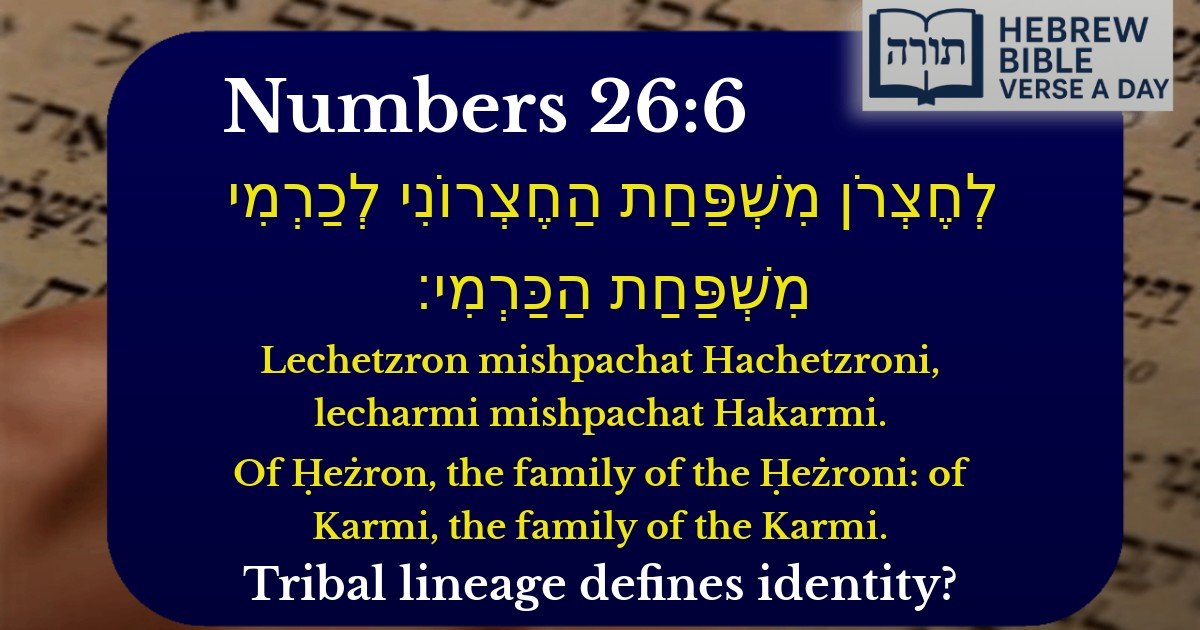

Numbers 26:6 - Tribal lineage defines identity?

Numbers 26:6 - במדבר 26:6

Hebrew Text

לְחֶצְרֹן מִשְׁפַּחַת הַחֶצְרוֹנִי לְכַרְמִי מִשְׁפַּחַת הַכַּרְמִי׃

English Translation

Of Ḥeżron, the family of the Ḥeżroni: of Karmi, the family of the Karmi.

Transliteration

Lechetzron mishpachat Hachetzroni, lecharmi mishpachat Hakarmi.

Hebrew Leining Text

לְחֶצְרֹ֕ן מִשְׁפַּ֖חַת הַֽחֶצְרוֹנִ֑י לְכַרְמִ֕י מִשְׁפַּ֖חַת הַכַּרְמִֽי׃

🎵 Listen to leining

Parasha Commentary

Context in the Torah

The verse (Bamidbar 26:6) appears in the census of the tribes of Israel, specifically listing the families descended from Yehudah. It mentions two families: the Chezroni (descendants of Chetzron) and the Karmi (descendants of Karmi). These names trace back to the lineage of Yehudah through his son Peretz (see Bereishit 46:12).

Rashi's Explanation

Rashi (on Bamidbar 26:6) clarifies that Chetzron and Karmi were sons of Peretz, making them grandsons of Yehudah. The verse emphasizes their familial divisions (mishpachot) within the tribe of Yehudah. Rashi notes that the Torah lists these families separately to highlight their distinct identities, even though they share a common ancestry.

Significance of Family Lineages

According to Rambam (Hilchot Shemita v’Yovel 10:4), tribal and familial distinctions were crucial for maintaining land inheritance in Eretz Yisrael. Each family received a portion based on their lineage, ensuring the fulfillment of the divine promise to Avraham, Yitzchak, and Yaakov. The mention of these families underscores the Torah’s precision in preserving tribal heritage.

Midrashic Insights

  • The Midrash Rabbah (Bamidbar Rabbah 18:13) connects the name Chetzron (from cheitzer, meaning "enclosure") to the idea of Yehudah’s descendants being "enclosed" in greatness, as kingship (Malchut) would emerge from this lineage.
  • The name Karmi (from kerem, "vineyard") symbolizes fertility and blessing, reflecting Yehudah’s blessing in Bereishit 49:11: "He washes his garments in wine."

Halachic Implications

The Sefer HaChinuch (Mitzvah 360) explains that tribal lineage was essential for marriage laws, inheritance, and the division of the Land. The Torah’s detailed recording of families like the Chezroni and Karmi ensured clarity in these halachic matters.

📚 Talmud Citations

This verse is not quoted in the Talmud.

Frequently Asked Questions

Q: What is the meaning of Numbers 26:6?
A: Numbers 26:6 lists the families descended from Hezron and Karmi, who were part of the tribe of Judah. This verse is part of the census taken in the wilderness to count the Israelite men eligible for military service (Numbers 26:2). The names signify family lineages, showing the importance of tribal identity in Jewish tradition.
Q: Why does the Torah list family names like Hezroni and Karmi?
A: The Torah lists family names to preserve the lineage and tribal structure of the Jewish people. According to Rashi and other commentators, maintaining clear family records was essential for inheritance, tribal responsibilities, and the division of the Land of Israel (Bamidbar Rabbah 21:10). These details highlight the Torah's emphasis on ancestry and communal identity.
Q: What can we learn from the mention of Hezron and Karmi in the Torah?
A: The mention of Hezron and Karmi teaches the value of family heritage and continuity in Judaism. The Talmud (Sanhedrin 4a) explains that every individual and family has a unique role in the Jewish nation. Recognizing these lineages reminds us of our connection to past generations and our responsibilities to future ones.
Q: How does this verse apply to Jews today?
A: While we no longer conduct tribal censuses, this verse reminds us of the importance of knowing our roots and maintaining Jewish identity. The Rambam (Hilchot Melachim 12:3) emphasizes that lineage (yichus) still matters in certain halachic contexts, such as marriage and communal leadership. It encourages us to value our heritage and pass it on to future generations.