

Join Our Newsletter To Be Informed When New Videos Are Posted
Hebrew Text
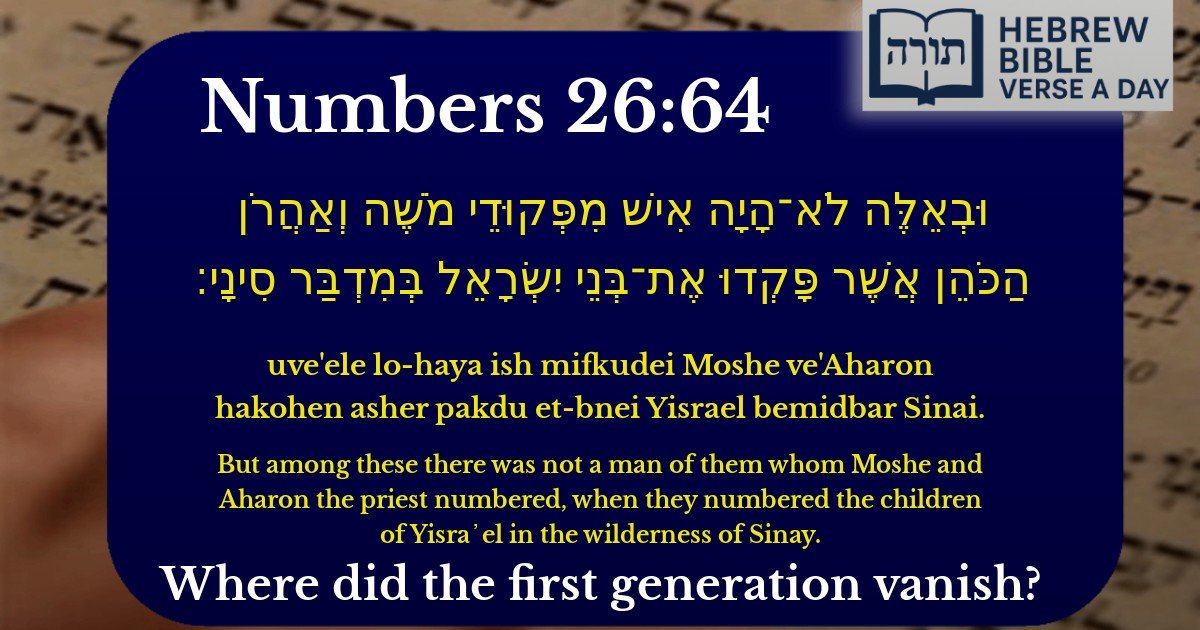
וּבְאֵלֶּה לֹא־הָיָה אִישׁ מִפְּקוּדֵי מֹשֶׁה וְאַהֲרֹן הַכֹּהֵן אֲשֶׁר פָּקְדוּ אֶת־בְּנֵי יִשְׂרָאֵל בְּמִדְבַּר סִינָי׃
English Translation
But among these there was not a man of them whom Moshe and Aharon the priest numbered, when they numbered the children of Yisra᾽el in the wilderness of Sinay.
Transliteration
Uve'ele lo-haya ish mifkudei Moshe ve'Aharon hakohen asher pakdu et-bnei Yisrael bemidbar Sinai.
Hebrew Leining Text
וּבְאֵ֙לֶּה֙ לֹא־הָ֣יָה אִ֔ישׁ מִפְּקוּדֵ֣י מֹשֶׁ֔ה וְאַהֲרֹ֖ן הַכֹּהֵ֑ן אֲשֶׁ֥ר פָּקְד֛וּ אֶת־בְּנֵ֥י יִשְׂרָאֵ֖ל בְּמִדְבַּ֥ר סִינָֽי׃
🎵 Listen to leining
Parasha Commentary
📚 Talmud Citations
This verse is not quoted in the Talmud.
Context of the Verse
The verse appears in Bamidbar (Numbers) 26:64, following the second census of Bnei Yisrael in the wilderness. This census was taken before entering Eretz Yisrael, nearly 40 years after the Exodus from Mitzrayim (Egypt). The verse emphasizes that none of those counted in the first census (recorded in Bamidbar 1) remained alive at this time, except for Yehoshua bin Nun and Kalev ben Yefuneh.
Rashi's Explanation
Rashi (Bamidbar 26:64) explains that this verse underscores the fulfillment of Hashem’s decree that the generation of the Exodus would perish in the wilderness due to the sin of the Meraglim (the spies). The phrase "לֹא־הָיָה אִישׁ" ("there was not a man") highlights that not a single individual from the original census survived, except for the righteous exceptions—Yehoshua and Kalev—who had a different spirit and followed Hashem wholeheartedly (Bamidbar 14:24, 38).
Rambam's Perspective
Rambam (Maimonides), in Moreh Nevuchim (Guide for the Perplexed), discusses the concept of Divine justice. He explains that the decree against the generation of the wilderness was a consequence of their lack of faith in Hashem’s promise to bring them into Eretz Yisrael. Their punishment served as a lesson for future generations about the severity of rejecting Hashem’s word and the importance of trust in Divine providence.
Midrashic Insights
Halachic Implications
The Chofetz Chaim (in his commentary on the Torah) derives a moral lesson: just as the generation of the wilderness perished due to speaking ill of Eretz Yisrael (through the Meraglim), we must be vigilant against lashon hara (evil speech), which has severe consequences. The verse serves as a reminder of the power of words and the importance of gratitude for Hashem’s gifts.
Symbolism of the Wilderness
The Kli Yakar (Bamidbar 26:64) explains that the wilderness (מִדְבָּר) symbolizes a place of trial and refinement. The generation that left Mitzrayim was tested and found lacking, while the new generation—raised in the wilderness—demonstrated greater faith and readiness to enter the Land. This transition reflects the spiritual growth necessary to inherit Eretz Yisrael.