

Join Our Newsletter To Be Informed When New Videos Are Posted
Hebrew Text
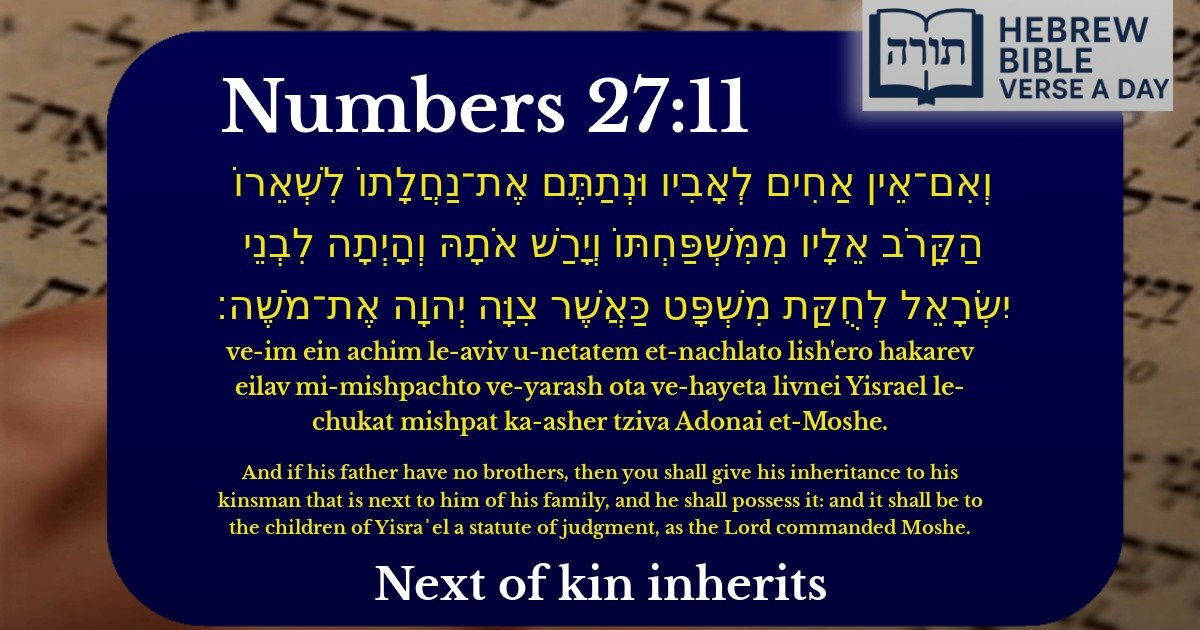
וְאִם־אֵין אַחִים לְאָבִיו וּנְתַתֶּם אֶת־נַחֲלָתוֹ לִשְׁאֵרוֹ הַקָּרֹב אֵלָיו מִמִּשְׁפַּחְתּוֹ וְיָרַשׁ אֹתָהּ וְהָיְתָה לִבְנֵי יִשְׂרָאֵל לְחֻקַּת מִשְׁפָּט כַּאֲשֶׁר צִוָּה יְהוָה אֶת־מֹשֶׁה׃
English Translation
And if his father have no brothers, then you shall give his inheritance to his kinsman that is next to him of his family, and he shall possess it: and it shall be to the children of Yisra᾽el a statute of judgment, as the Lord commanded Moshe.
Transliteration
Ve-im ein achim le-aviv u-netatem et-nachlato lish'ero hakarev eilav mi-mishpachto ve-yarash ota ve-hayeta livnei Yisrael le-chukat mishpat ka-asher tziva Adonai et-Moshe.
Hebrew Leining Text
וְאִם־אֵ֣ין אַחִים֮ לְאָבִיו֒ וּנְתַתֶּ֣ם אֶת־נַחֲלָת֗וֹ לִשְׁאֵר֞וֹ הַקָּרֹ֥ב אֵלָ֛יו מִמִּשְׁפַּחְתּ֖וֹ וְיָרַ֣שׁ אֹתָ֑הּ וְֽהָ֨יְתָ֜ה לִבְנֵ֤י יִשְׂרָאֵל֙ לְחֻקַּ֣ת מִשְׁפָּ֔ט כַּאֲשֶׁ֛ר צִוָּ֥ה יְהֹוָ֖ה אֶת־מֹשֶֽׁה׃ {פ}
🎵 Listen to leining
Parasha Commentary
📚 Talmud Citations
This verse is quoted in the Talmud.
📖 Bava Batra 109b
The verse is cited in a discussion about the laws of inheritance, specifically regarding the order of heirs when there are no brothers.
📖 Yevamot 24a
The verse is referenced in the context of discussing the laws of yibbum (levirate marriage) and inheritance rights.
Inheritance Laws in the Absence of Brothers
The verse (Bamidbar 27:10) discusses the laws of inheritance when a deceased man has no brothers. Rashi explains that the Torah establishes a clear hierarchy for inheritance: if there are no sons, the inheritance passes to daughters (as stated in the previous verses); if there are no daughters, it goes to the father's brothers; and if there are no brothers, it is given to the closest relative (she'er karov) within the family. This demonstrates the Torah's meticulous system for preserving family lineage and property.
The Concept of She'er Karov (Close Relative)
According to Rambam (Hilchot Nachalot 1:3), the term she'er karov refers to the nearest blood relative in the paternal line. The Talmud (Bava Batra 109a) elaborates that the order of precedence follows: the father (if still alive), then the father's father, and so on, moving upward in the paternal lineage before considering other relatives. This ensures that property remains within the family structure as much as possible.
A Divine Statute of Justice
The verse concludes by emphasizing that this law is a chukat mishpat (statute of judgment) commanded by Hashem to Moshe. The Midrash (Bamidbar Rabbah 21:8) teaches that this phrase underscores the divine wisdom behind these laws—they are not arbitrary but rooted in justice and the preservation of societal order. The Sforno adds that this system prevents disputes and ensures fairness in inheritance matters.
Practical Implications