

Join Our Newsletter To Be Informed When New Videos Are Posted
Hebrew Text
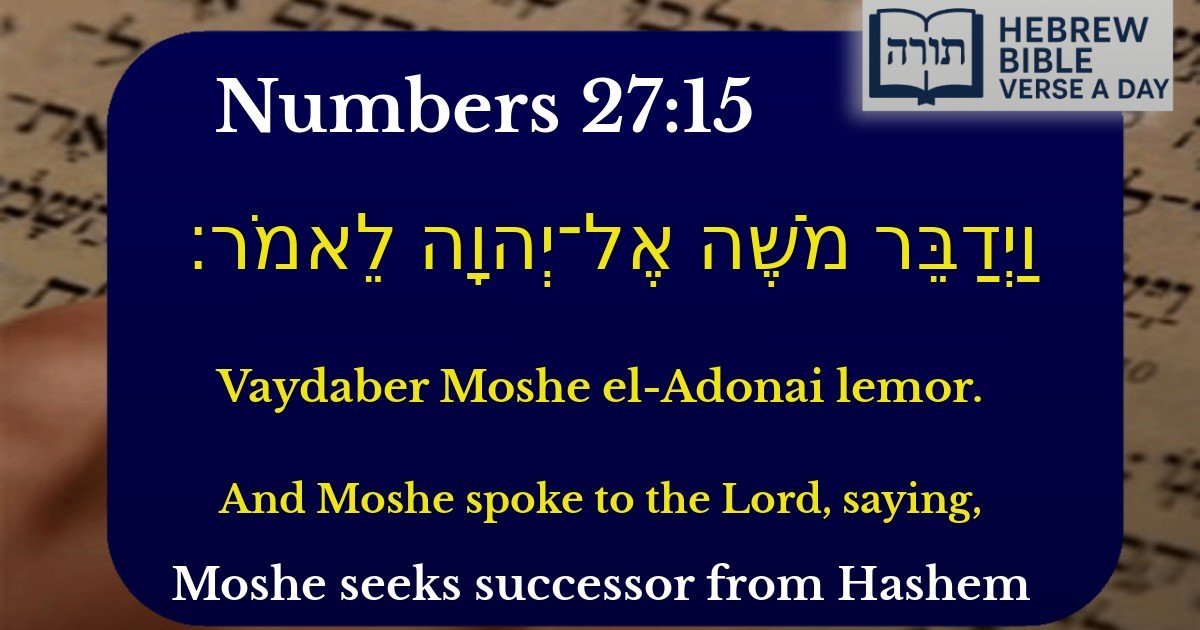
וַיְדַבֵּר מֹשֶׁה אֶל־יְהוָה לֵאמֹר׃
English Translation
And Moshe spoke to the Lord, saying,
Transliteration
Vaydaber Moshe el-Adonai lemor.
Hebrew Leining Text
וַיְדַבֵּ֣ר מֹשֶׁ֔ה אֶל־יְהֹוָ֖ה לֵאמֹֽר׃
🎵 Listen to leining
Parasha Commentary
📚 Talmud Citations
This verse is not quoted in the Talmud.
Context of the Verse
The verse "וַיְדַבֵּר מֹשֶׁה אֶל־יְהוָה לֵאמֹר" (And Moshe spoke to the Lord, saying) appears in Bamidbar (Numbers) 27:15, where Moshe Rabbeinu addresses Hashem after being informed that he will not enter Eretz Yisrael. This moment marks a pivotal transition in leadership to Yehoshua bin Nun.
Rashi's Explanation
Rashi (Bamidbar 27:15) notes that Moshe's speech here demonstrates his exceptional humility and concern for Klal Yisrael. Even after being told he would not lead the nation into the Land, Moshe's primary focus was ensuring the people would have a worthy successor. Rashi emphasizes that Moshe did not plead for his own life or entry into Eretz Yisrael but instead asked Hashem to appoint a leader "who will go out before them and come in before them" (Bamidbar 27:17).
Midrashic Insights
Rambam's Perspective
In Moreh Nevuchim (Guide for the Perplexed 1:54), the Rambam explains that Moshe's ability to speak to Hashem in this manner exemplifies the highest level of nevuah (prophecy), where the prophet communicates with clarity and without intermediary. This verse reinforces Moshe's unparalleled prophetic stature.
Halachic and Leadership Lessons
The Or HaChaim (Bamidbar 27:15) derives from this verse that a true leader must prioritize the community's welfare above personal interests. Moshe's selflessness sets a timeless model for Jewish leadership, teaching that the role of a roeh Yisrael (shepherd of Israel) demands complete dedication to the people's spiritual and physical needs.