

Join Our Newsletter To Be Informed When New Videos Are Posted
Hebrew Text
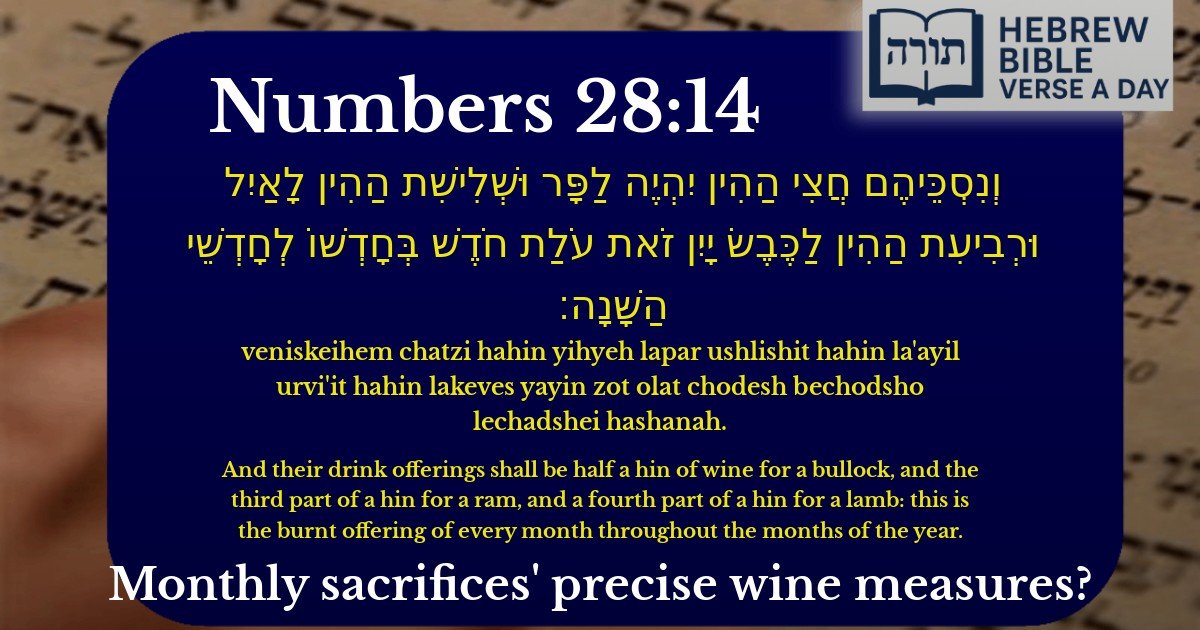
וְנִסְכֵּיהֶם חֲצִי הַהִין יִהְיֶה לַפָּר וּשְׁלִישִׁת הַהִין לָאַיִל וּרְבִיעִת הַהִין לַכֶּבֶשׂ יָיִן זֹאת עֹלַת חֹדֶשׁ בְּחָדְשׁוֹ לְחָדְשֵׁי הַשָּׁנָה׃
English Translation
And their drink offerings shall be half a hin of wine for a bullock, and the third part of a hin for a ram, and a fourth part of a hin for a lamb: this is the burnt offering of every month throughout the months of the year.
Transliteration
Veniskeihem chatzi hahin yihyeh lapar ushlishit hahin la'ayil urvi'it hahin lakeves yayin zot olat chodesh bechodsho lechadshei hashanah.
Hebrew Leining Text
וְנִסְכֵּיהֶ֗ם חֲצִ֣י הַהִין֩ יִהְיֶ֨ה לַפָּ֜ר וּשְׁלִישִׁ֧ת הַהִ֣ין לָאַ֗יִל וּרְבִיעִ֥ת הַהִ֛ין לַכֶּ֖בֶשׂ יָ֑יִן זֹ֣את עֹלַ֥ת חֹ֙דֶשׁ֙ בְּחׇדְשׁ֔וֹ לְחׇדְשֵׁ֖י הַשָּׁנָֽה׃
🎵 Listen to leining
Parasha Commentary
📚 Talmud Citations
This verse is quoted in the Talmud.
📖 Menachot 91a
The verse is discussed in the context of the measurements for drink offerings, particularly focusing on the quantities specified for different sacrifices.
📖 Chullin 83b
Referenced in a discussion about the laws of sacrifices and the specific measurements of wine offerings for different animals.
Verse Context and Overview
This verse (Bamidbar 28:14) details the wine libations (נִסְכֵּיהֶם) accompanying the Korban Musaf (additional offerings) brought on Rosh Chodesh (the New Moon). The Torah specifies precise measurements for each type of animal offering: a bull, a ram, and a lamb. The amounts differ based on the animal's size and significance in the sacrificial service.
Measurements of Wine Libations
Rashi explains that these measurements correspond to the animal's stature—larger animals require larger libations, reflecting their greater importance in the avodah (Temple service).
Symbolism of the Wine Libations
The Midrash Tanchuma (Pinchas 10) connects wine libations to joy, as wine symbolizes celebration (Tehillim 104:15). The regular monthly offerings, accompanied by wine, signify Israel's ongoing relationship with Hashem, marked by both reverence and joy. The Kli Yakar (Bamidbar 28:14) adds that the varying amounts teach that spiritual service must be proportional to one's capacity—just as the offerings differ, so too do individuals' abilities in serving Hashem.
Halachic Implications
Rambam (Hilchot Ma'aseh HaKorbanot 2:1) emphasizes that these measurements are precise Torah law and cannot be altered. The Gemara (Menachot 89a) discusses the importance of proper measurements, noting that inaccuracies invalidate the libation. Additionally, the wine must be of high quality, as derived from the term "יַיִן" in the verse, which implies wine fit for libation (Torat Kohanim, Emor 14:3).
Connection to Rosh Chodesh
The verse concludes by identifying these offerings as "עֹלַת חֹדֶשׁ בְּחָדְשׁוֹ" (the monthly burnt offering). The Sforno explains that Rosh Chodesh offerings renew Israel's dedication to Hashem at the start of each month, symbolizing spiritual renewal. The Or HaChaim adds that the cyclical nature of these offerings reflects the perpetual bond between Hashem and the Jewish people, reaffirmed with each new moon.