Frequently Asked Questions
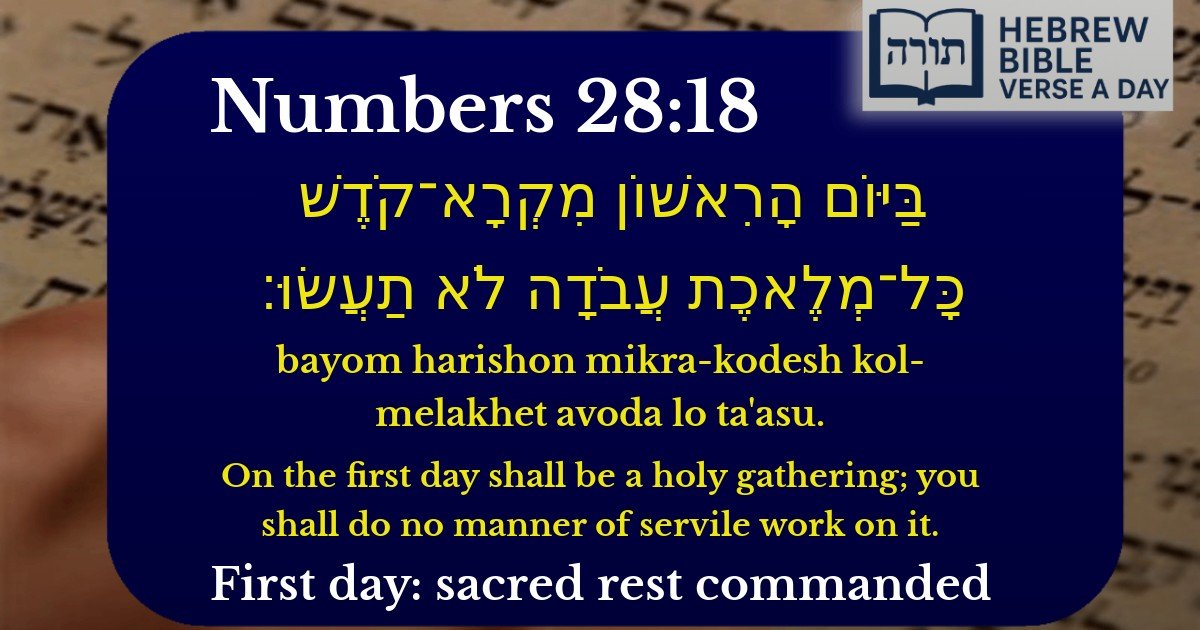
Q: What does 'a holy gathering' mean in Numbers 28:18?
A: A 'holy gathering' (מִקְרָא־קֹדֶשׁ) refers to a sacred assembly where the Jewish people gather for prayer, Torah study, and special holiday observances. Rashi explains that this term emphasizes the sanctity of the day, requiring us to refrain from work and focus on spiritual matters.
Q: Why is it forbidden to do work on the first day of Passover (Numbers 28:18)?
A: The Torah prohibits work on the first day of Passover (and other holidays) to distinguish it as a sacred day dedicated to connecting with Hashem. The Rambam (Hilchot Yom Tov 1:1) teaches that refraining from work allows us to focus on prayer, joy, and celebrating the Exodus from Egypt.
Q: What types of work are forbidden on the first day of Passover according to Numbers 28:18?
A: The verse prohibits 'servile work' (מְלֶאכֶת עֲבֹדָה), which includes most forms of labor like business, construction, or farming. The Talmud (Chagigah 18a) explains that the restrictions are similar to Shabbat, except for certain food preparation tasks needed for the holiday (like cooking).
Q: How do we observe the 'holy gathering' today based on Numbers 28:18?
A: Today, we observe this commandment by attending synagogue services for special holiday prayers (like Mussaf), reciting Hallel (psalms of praise), and gathering with family for the Seder. The Midrash (Sifrei Bamidbar) emphasizes that these gatherings strengthen our unity and connection to Torah.
Q: Is the first day of Passover still considered holy if it falls on Shabbat?
A: Yes, the holiness of the first day of Passover remains even if it coincides with Shabbat. The Talmud (Pesachim 6b) discusses how the two sanctities combine, and we observe both the holiday and Shabbat restrictions while adding special prayers and Torah readings for the occasion.


Context in the Torah
The verse (Vayikra 23:7) appears in the section detailing the festivals, specifically referring to the first day of Pesach (Passover). It establishes the sanctity of the day by prohibiting melachah (servile work), similar to Shabbat, though with distinctions in halachic severity.
Rashi's Explanation
Rashi clarifies that "mikra kodesh" (holy gathering) means the day is designated for sanctity and communal assembly. He notes that "kol melachet avodah lo ta'asu" (you shall do no manner of servile work) excludes labor necessary for food preparation (ochel nefesh), which is permitted on Yom Tov (festivals) but forbidden on Shabbat.
Halachic Distinctions from Shabbat
Midrashic Insights
The Sifra (a halachic Midrash on Vayikra) links this verse to the Exodus, teaching that the sanctity of the first day of Pesach commemorates our transition from slavery to divine service. The "mikra kodesh" symbolizes our collective dedication to Hashem as a redeemed nation.
Spiritual Significance
Rabbi Samson Raphael Hirsch highlights that abstaining from melachah on Yom Tov reinforces our dependence on Hashem, mirroring the trust of the Israelites during the Exodus. The "mikra kodesh" calls us to gather in unity, reflecting the covenantal bond forged at Sinai.