

Join Our Newsletter To Be Informed When New Videos Are Posted
Hebrew Text
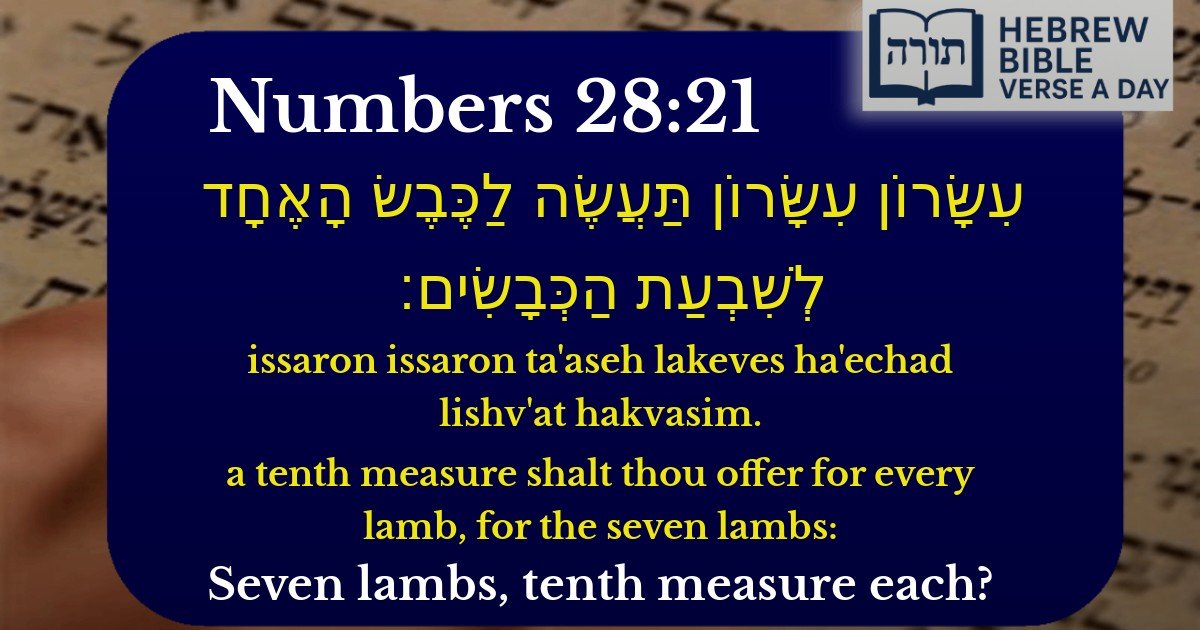
עִשָּׂרוֹן עִשָּׂרוֹן תַּעֲשֶׂה לַכֶּבֶשׂ הָאֶחָד לְשִׁבְעַת הַכְּבָשִׂים׃
English Translation
a tenth measure shalt thou offer for every lamb, for the seven lambs:
Transliteration
Issaron issaron ta'aseh lakeves ha'echad lishv'at hakvasim.
Hebrew Leining Text
עִשָּׂר֤וֹן עִשָּׂרוֹן֙ תַּעֲשֶׂ֔ה לַכֶּ֖בֶשׂ הָאֶחָ֑ד לְשִׁבְעַ֖ת הַכְּבָשִֽׂים׃
🎵 Listen to leining
Parasha Commentary
📚 Talmud Citations
This verse is not quoted in the Talmud.
Explanation of the Verse
The verse "עִשָּׂרוֹן עִשָּׂרוֹן תַּעֲשֶׂה לַכֶּבֶשׂ הָאֶחָד לְשִׁבְעַת הַכְּבָשִׂים" (a tenth measure shalt thou offer for every lamb, for the seven lambs) appears in the context of the korbanot (sacrificial offerings) in the Torah, specifically regarding the daily Tamid offering and additional offerings on festivals. This verse details the precise measurement of flour (issaron, a tenth of an ephah) to accompany each lamb.
Rashi's Commentary
Rashi (Bamidbar 28:21) explains that this verse refers to the mincha (meal offering) brought alongside the korban tamid (daily offering) and additional offerings on Chag HaMatzot (Passover). He emphasizes that each of the seven lambs requires its own issaron of fine flour mixed with oil, totaling seven issaron measures. This underscores the importance of precision in divine service.
Rambam's Perspective
In Hilchot Temidin uMusafin (1:4), the Rambam (Maimonides) codifies this law, stating that the mincha accompanying the korban tamid must be one issaron per lamb, whether it is a single lamb or multiple lambs. This reflects the Torah’s meticulous attention to detail in avodat Hashem (service of G-d).
Midrashic Insight
The Sifrei (Bamidbar 142) connects the repetition of the word "עִשָּׂרוֹן" (tenth measure) to teach that each lamb’s mincha must be prepared separately, not combined. This reinforces the principle that each offering must be treated with individual care and sanctity.
Symbolic Meaning