
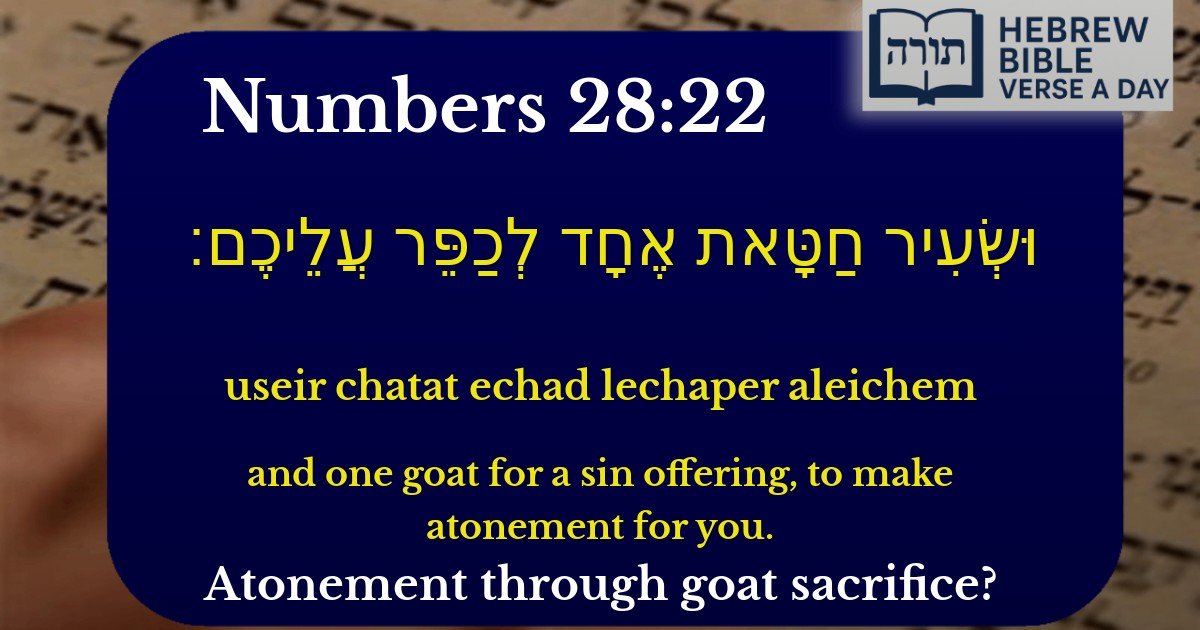

Numbers 28:22 - Atonement through goat sacrifice?

Numbers 28:22 - במדבר 28:22

Hebrew Text

וּשְׂעִיר חַטָּאת אֶחָד לְכַפֵּר עֲלֵיכֶם׃

English Translation

and one goat for a sin offering, to make atonement for you.

Transliteration

Useir chatat echad lechaper aleichem

Hebrew Leining Text

וּשְׂעִ֥יר חַטָּ֖את אֶחָ֑ד לְכַפֵּ֖ר עֲלֵיכֶֽם׃

🎵 Listen to leining

Parasha Commentary

The Sin Offering (שעיר חטאת) in Jewish Tradition

The verse refers to the שעיר חטאת (goat sin offering), a central element in the atonement process, particularly on Yom Kippur (Vayikra 16:9). Rashi (Vayikra 16:5) explains that this goat atones for the impurity of the Mishkan and the Kodesh Kodashim caused by the sins of Bnei Yisrael. The Rambam (Hilchot Teshuva 1:2) emphasizes that while sacrifices facilitate atonement, true repentance (תשובה) is indispensable for complete kaparah.

The Role of the שעיר in the Yom Kippur Service

The Yoma (39a) discusses how the שעיר המשתלח (scapegoat) and the שעיר חטאת work in tandem—one atones through its blood in the Kodesh Kodashim, while the other carries sins to the wilderness. The Torat Kohanim (16:5) notes that the שעיר חטאת mentioned here specifically atones for unintentional sins (שגגות), highlighting Hashem's mercy even for inadvertent transgressions.

The Mechanism of Atonement (כפרה)

The Ramban (Vayikra 16:8) explains that the שעיר's blood symbolizes the transfer of guilt, as the Kohen Gadol's service "cleanses" the nation. The Sforno adds that this process reinstates the divine presence (שכינה) among Klal Yisrael. The Talmud (Shevuot 9a) further clarifies that the כפרה achieved is contingent on proper intent (כוונה) during the offering.

Contemporary Lessons from the שעיר חטאת

  • Repentance and Sacrifice: The Chatam Sofer teaches that while we lack the Beit HaMikdash, tefillah (prayer) and tzedakah (charity) serve in place of korbanot (Dvarim Rabba 5:3).
  • Communal Responsibility: The שעיר atoned for כלל ישראל—a reminder that each Jew shares accountability for the spiritual state of the nation (Sanhedrin 27b).
  • Divine Mercy: The very institution of the שעיר חטאת, as the Meshech Chochmah notes, demonstrates Hashem's willingness to accept repentance even for severe sins.

📚 Talmud Citations

This verse is quoted in the Talmud.

📖 Yoma 66a
The verse is referenced in the discussion about the sin offerings and the atonement process on Yom Kippur.
📖 Shevuot 13b
Mentioned in the context of discussing the laws and significance of sin offerings.

Frequently Asked Questions

Q: What does the 'goat for a sin offering' in Numbers 28:22 represent?
A: The goat for a sin offering (שעיר חטאת) in Numbers 28:22 was part of the additional sacrifices brought on festivals. According to Rashi, this goat atoned for ritual impurities that may have occurred in the Temple or with its offerings. It served as a way to purify the community and maintain the sanctity of the Mishkan (Tabernacle) and later the Beit HaMikdash (Temple).
Q: Why was atonement necessary in this verse?
A: Atonement (כפרה) was necessary to cleanse the Jewish people from unintentional sins, particularly those related to the Temple service. The Rambam explains in Hilchot Ma'aseh HaKorbanot that such offerings helped rectify spiritual blemishes and reinforced the connection between Hashem and the Jewish people, especially during festive times when they gathered in holiness.
Q: Does this verse still have relevance today without the Temple?
A: While we no longer bring animal sacrifices since the Temple's destruction, the concept of atonement remains central in Judaism. The Talmud (Berachot 17a) teaches that prayer, repentance, and acts of kindness serve as substitutes for sacrifices. On festivals, we still reflect on themes of purity and closeness to Hashem, as hinted in this verse.
Q: Why specifically a goat for this sin offering?
A: The Midrash (Vayikra Rabbah 5:6) explains that the goat was chosen because its Hebrew name (שעיר) alludes to the 'hairy' garment of Eisav, symbolizing the yetzer hara (evil inclination). By offering a goat, we demonstrate our commitment to overcoming negative tendencies and elevating ourselves spiritually, especially during sacred occasions.