Frequently Asked Questions
Q: What is the significance of the goat offering mentioned in Numbers 29:11?
A: The goat offering (שְׂעִיר־עִזִּים) in Numbers 29:11 is a sin offering (חַטָּאת) brought as part of the additional sacrifices for Rosh Chodesh (the new month). According to Rashi, this offering atones for unintentional sins, emphasizing the importance of repentance and spiritual purification, especially at the beginning of a new month.
Q: Why does the verse mention other offerings alongside the goat sin offering?
A: The verse lists other offerings (the sin offering of atonement, the continual burnt offering, and their meal and drink offerings) to show that multiple sacrifices were required on Rosh Chodesh. The Rambam explains in Hilchot Temidin uMusafin that these additional offerings highlight the sanctity of the day and reinforce our commitment to serving Hashem through both atonement and devotion.
Q: How does this verse apply to Jewish practice today?
A: Although we no longer bring animal sacrifices after the destruction of the Temple, the concept of atonement remains central. The Talmud (Berachot 26b) teaches that prayer, tzedakah (charity), and teshuva (repentance) substitute for sacrifices. On Rosh Chodesh, we recite special prayers (Musaf) to commemorate these offerings and reflect on spiritual renewal.
Q: What is the 'continual burnt offering' (עֹלַת הַתָּמִיד) mentioned in this verse?
A: The 'continual burnt offering' refers to the daily sacrifice (תָּמִיד) brought morning and evening in the Temple, as described in Exodus 29:38–42. Rashi explains that this offering symbolizes the Jewish people's constant devotion to Hashem. Even on special occasions like Rosh Chodesh, the daily offering was not interrupted.
Q: Why is a goat specifically chosen for the sin offering here?
A: The Midrash (Vayikra Rabbah 5:6) teaches that goats were often used for sin offerings because they symbolize the yetzer hara (evil inclination). By offering a goat, we acknowledge our human flaws and seek atonement. The choice of a goat also connects to historical events, such as Yosef’s brothers using a goat’s blood to deceive Yaakov (Genesis 37:31), reminding us of the consequences of sin.


Explanation of the Verse
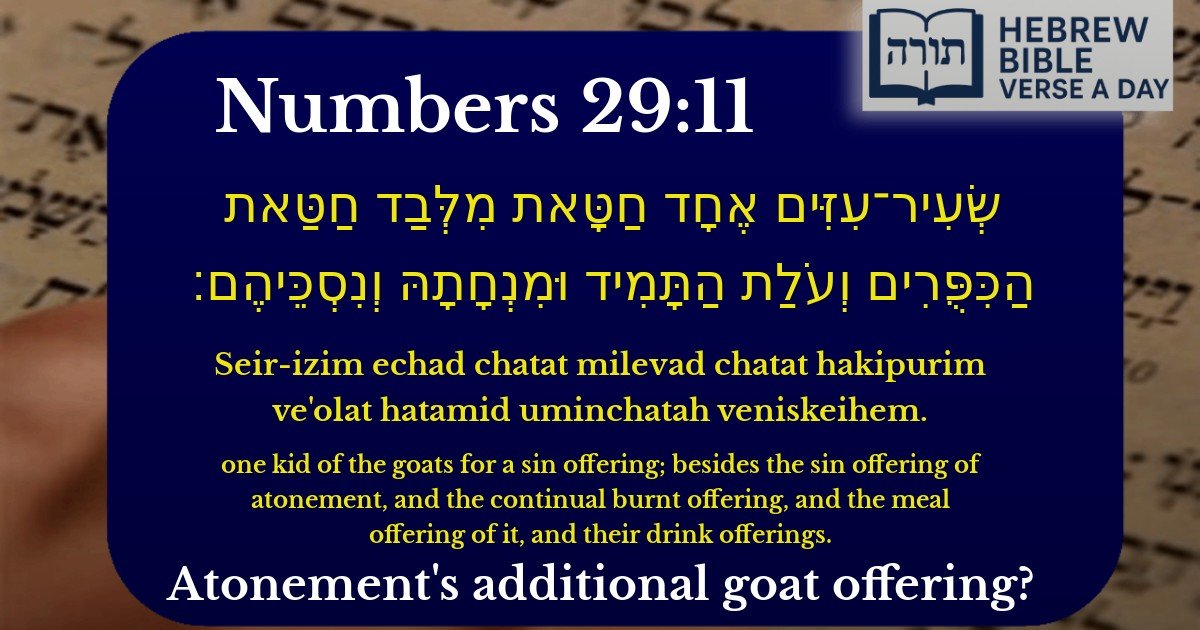
The verse (Numbers 29:11) discusses the additional offerings brought on Rosh Chodesh (the New Moon), specifically mentioning a goat as a sin offering alongside other obligatory sacrifices. This reflects the importance of atonement and divine service even during times of additional sanctity.
Rashi's Commentary
Rashi (Rabbi Shlomo Yitzchaki) explains that the "sin offering of atonement" mentioned here refers to the Chatat (sin offering) brought to atone for unintentional sins. He notes that this goat is in addition to the regular daily offerings (Korban Tamid) and the additional Rosh Chodesh offerings, emphasizing that even on special occasions, the need for atonement remains.
Rambam's Perspective
In Hilchot Temidin uMusafin (Laws of Continual and Additional Offerings), Rambam (Maimonides) clarifies that the sin offering mentioned here is distinct from Yom Kippur's offerings. It serves as a general atonement for communal impurities, ensuring the sanctity of the Temple service remains intact.
Midrashic Insights
Halachic Significance
The Talmud (Menachot 45b) discusses the order of these offerings, emphasizing that the sin offering precedes the burnt and meal offerings, teaching that atonement must come before complete divine service. This reflects the principle that one must first correct wrongdoing before fully dedicating oneself to Hashem.