Frequently Asked Questions
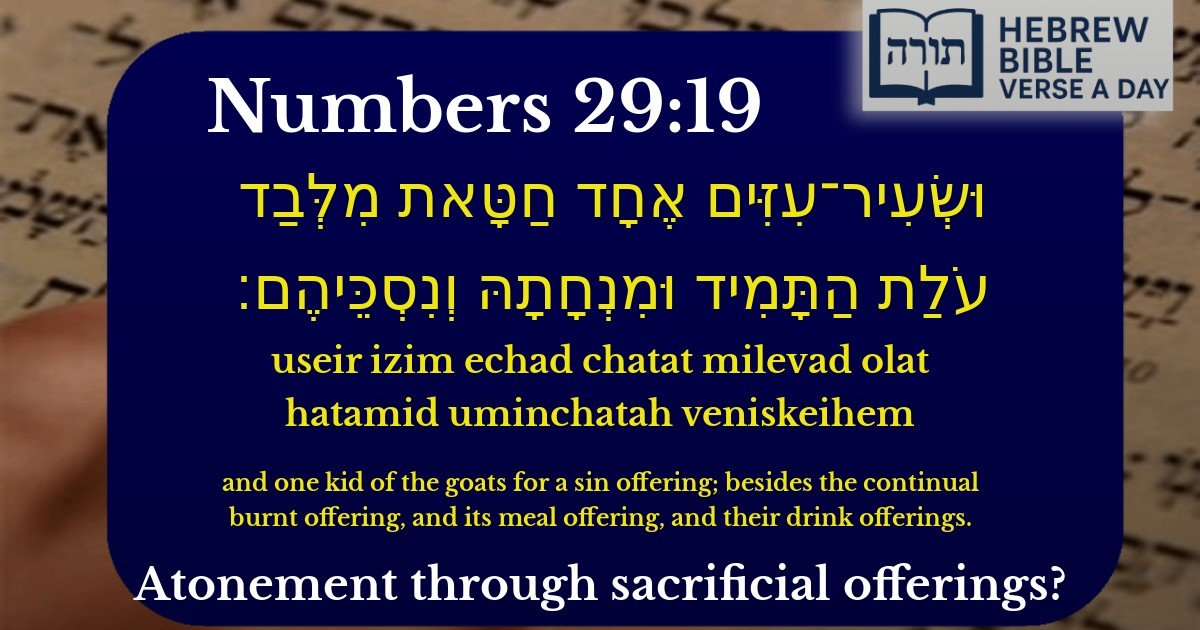
Q: What is the purpose of the sin offering mentioned in Numbers 29:19?
A: The sin offering (חַטָּאת) mentioned in this verse was brought to atone for unintentional sins. According to Jewish tradition (Rambam, Hilchot Maaseh HaKorbanot), this offering helped purify individuals or the community from wrongdoing, especially during special occasions like festivals.
Q: Why is the continual burnt offering (עֹלַת הַתָּמִיד) mentioned alongside the sin offering?
A: The continual burnt offering was a daily sacrifice in the Temple (morning and evening) that symbolized constant devotion to Hashem. The Torah emphasizes here that even on special occasions like festivals, the daily offerings must not be neglected (Rashi on Numbers 28:15).
Q: What do the meal and drink offerings represent in this verse?
A: The meal offering (מִנְחָה) and drink offerings (נִסְכִּים) accompanied animal sacrifices to show complete dedication. The Talmud (Menachot 104b) teaches that these offerings represent gratitude and submission to Hashem, as flour and wine were staple foods in biblical times.
Q: Why specifically a goat for the sin offering in this verse?
A: Our Sages explain (Vayikra Rabbah 5:6) that the goat atones for the sin of the sale of Yosef, where his brothers used goat's blood to deceive their father. Additionally, goats were common and accessible, making repentance achievable for all (Rambam, Guide for the Perplexed 3:46).
Q: How does this verse apply to Jews today without the Temple?
A: While we cannot bring sacrifices today, the Talmud (Berachot 17a) teaches that prayer, Torah study, and acts of kindness substitute for offerings. The Rambam (Hilchot Teshuvah 1:3) emphasizes that sincere repentance remains central, just as sacrifices were in Temple times.


Context in the Torah
The verse (Numbers 28:22) appears in the section detailing the additional offerings (קרבנות מוסף) brought on the festival of Shavuot. Alongside the daily Tamid offering (עולת התמיד), the Torah mandates a goat as a sin offering (שעיר עזים אחד חטאת) as part of the Musaf sacrifices.
Purpose of the Sin Offering
Rashi (based on Chullin 60b) explains that this goat serves as atonement for impurity in the Beit HaMikdash or its sacred objects (טומאת מקדש וקדשיו). Unlike other sin offerings, this is brought even if no transgression occurred, serving as a precautionary measure (חומרת הקודש). The Rambam (Hilchot Temidin u'Musafin 7:1) further clarifies that this offering maintains the sanctity of the Temple by addressing potential unknown violations.
Connection to Shavuot
The Midrash (Bamidbar Rabbah 21:21) connects this offering to the giving of the Torah. Just as Yom Kippur (which features a similar goat offering) atones for sins, this goat on Shavuot symbolically prepares the nation to receive the Torah anew. The Chatat serves as spiritual purification before reaccepting our covenantal relationship with Hashem.
Structural Significance
Halachic Implications
The Talmud (Menachot 91a) derives from this verse that all public offerings require accompanying meal and drink offerings. The Rambam (Hilchot Maaseh HaKorbanot 2:1) codifies this as halacha, demonstrating how this verse establishes enduring Temple service protocols.