Frequently Asked Questions
Q: What is the purpose of the goat sin offering mentioned in Numbers 29:28?
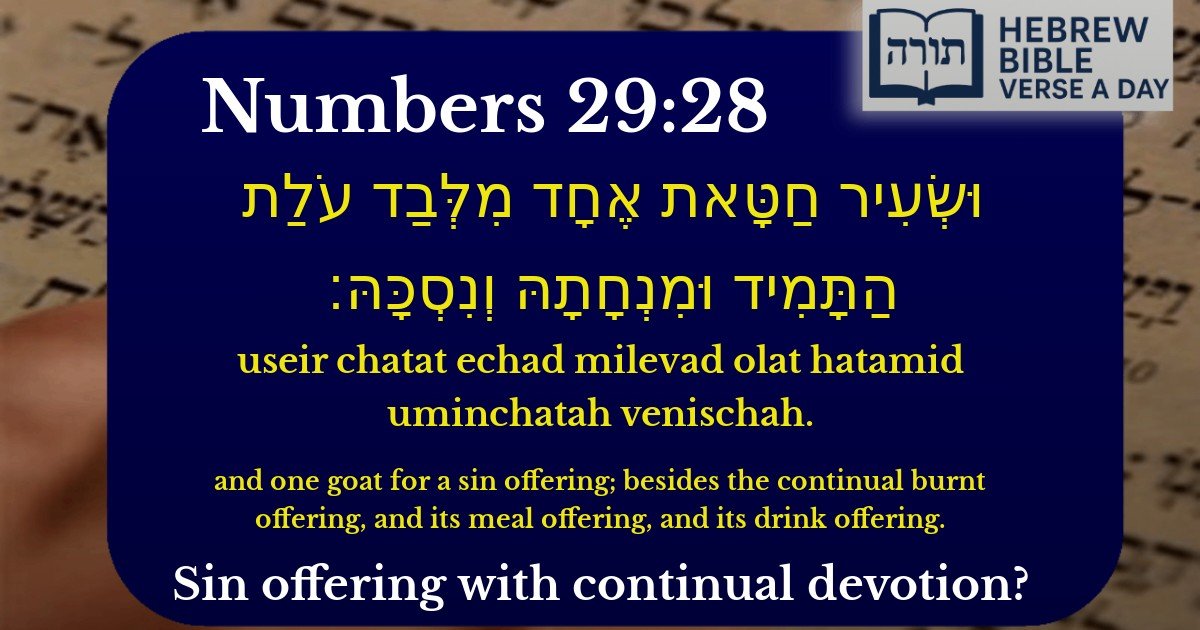
A: The goat sin offering (שְׂעִיר חַטָּאת) in Numbers 29:28 was brought as part of the additional sacrifices during the festival of Sukkot. According to Rashi, this offering atoned for unintentional sins, especially those related to impurity in the Temple or its holy things. The Torah emphasizes that this was in addition to the daily Tamid offering.
Q: Why does the verse mention the continual burnt offering (עֹלַת הַתָּמִיד) alongside the sin offering?
A: The verse highlights that the special festival offerings (like the goat sin offering) do not replace the daily Tamid offering (עֹלַת הַתָּמִיד), which was brought twice daily in the Temple. Rambam explains in Hilchot Temidin uMusafin that the Tamid represents the constant bond between the Jewish people and Hashem, while additional offerings reflect heightened sanctity of holidays.
Q: What is the significance of the meal and drink offerings mentioned in this verse?
A: The meal offering (מִנְחָה) and drink offering (נֶסֶךְ) accompanied animal sacrifices to complete the service. The Talmud (Menachot 104b) teaches that these offerings symbolize our gratitude for sustenance—flour (from earth) and wine (human labor)—showing that serving Hashem involves both physical and spiritual elements.
Q: How does this verse relate to the holiday of Sukkot?
A: Numbers 29:28 refers to sacrifices brought on the seventh day of Sukkot. The Midrash (Bamidbar Rabbah 21:25) notes that the seventy bulls offered throughout Sukkot correspond to the seventy nations, while this goat atonement reminds Israel of their unique covenant. The sin offering underscores repentance during this joyous time.
Q: Can we apply the lessons of this verse today without the Temple?
A: While we cannot bring sacrifices today, the Rambam (Moreh Nevuchim 3:46) teaches that prayer replaced sacrifices. The goat sin offering reminds us to seek atonement daily—especially during festivals—through teshuva (repentance), tefillah (prayer), and tzedakah (charity), as the Talmud states (Berachot 26b).


The Sin Offering in Context
The verse (Numbers 28:22) describes the additional offerings brought on the festival of Shavuot, specifying a goat as a chatat (sin offering) alongside the daily tamid offering. Rashi explains that this sin offering atones for possible unintentional violations of the festival's sanctity, such as eating chametz (leavened bread) without realizing it was prohibited on Shavuot (Rashi on Numbers 28:22, based on Shevuot 1:4).
Purpose of the Sin Offering
According to the Rambam (Hilchot Shegagot 1:1), the chatat serves to atone for sins committed b'shogeg (unintentionally). The inclusion of this offering on Shavuot emphasizes the need for spiritual purification even during joyous festivals, as human error is ever-present.
Relationship to the Tamid Offering
The verse specifies that the sin offering is brought "besides the continual burnt offering." The Talmud (Menachot 91a) derives from this phrasing that the additional festival offerings do not exempt one from the obligation of the daily tamid offering. This teaches that consistent daily service of Hashem forms the foundation upon which special occasion offerings are added.
Symbolism of the Goat
The Midrash (Bamidbar Rabbah 21:11) notes that goats are frequently used for sin offerings because they represent the yetzer hara (evil inclination), which must be subdued through divine service. The festival sin offering thus symbolizes the ongoing struggle against negative tendencies even during times of celebration.
The Three Components