Frequently Asked Questions
Q: What does Numbers 29:29 mean?
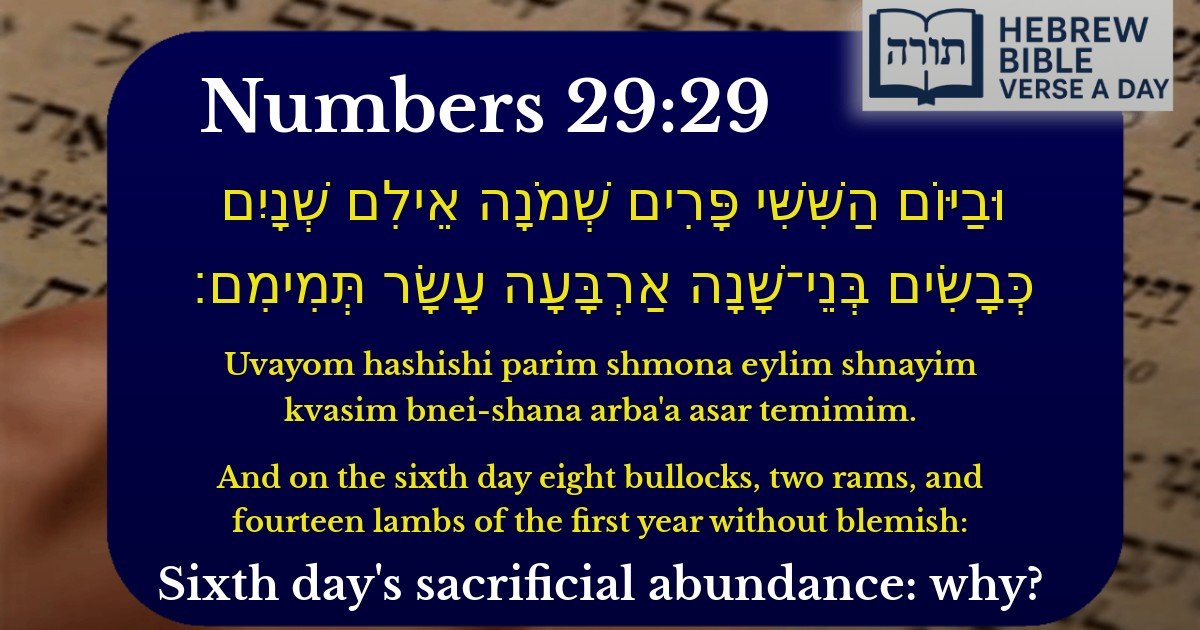
A: Numbers 29:29 describes the specific animal sacrifices brought on the sixth day of Sukkot (the Festival of Tabernacles). On this day, the offerings included eight bulls, two rams, and fourteen unblemished lambs in their first year. These sacrifices were part of the additional offerings (Musaf) brought during Sukkot, as detailed in the Torah.
Q: Why are there different numbers of animals sacrificed each day of Sukkot?
A: The number of bulls sacrificed decreases each day of Sukkot (starting with 13 on the first day and reducing by one each day). Rashi explains that this symbolizes the gradual reduction of offerings for the nations of the world, representing a decrease in their spiritual influence. The lambs and rams, however, remain consistent, emphasizing the eternal bond between Hashem and the Jewish people.
Q: Why were the animals required to be 'without blemish'?
A: The Torah requires sacrifices to be 'tamim' (without blemish) to symbolize offering our best to Hashem. Rambam explains that this teaches us the importance of giving with sincerity and excellence in our service to G-d. A physical blemish represents spiritual imperfection, so only perfect animals were fit for the altar.
Q: How does this verse apply to us today without the Temple?
A: Although we no longer bring animal sacrifices, the Talmud (Berachot 26b) teaches that prayer was established in place of sacrifices. The detailed descriptions of offerings remind us to approach prayer with the same dedication and attention to detail. Additionally, the Midrash teaches that acts of kindness and Torah study can serve as spiritual substitutes for sacrifices in our times.
Q: What is the significance of the number 14 for the lambs in this verse?
A: The fourteen lambs (seven pairs) correspond to the seven days of creation, doubled to represent completeness. The Midrash connects this to the idea that our service to Hashem should encompass all aspects of existence. Additionally, the number 14 (represented by the Hebrew letters 'yud' and 'dalet') alludes to G-d's name (yud) and the door (dalet) to divine service.


Context in the Torah
The verse (Bamidbar 29:29) describes the additional offerings (קרבנות מוסף) brought on the sixth day of Sukkot. This is part of the detailed list of sacrifices prescribed for each day of the festival, with a unique number of animals offered each day.
Numerical Significance
Rashi (Bamidbar 29:29) explains that the decreasing number of bulls (from 13 on the first day to 7 on the seventh day) symbolizes the gradual reduction of the nations of the world, as the 70 bulls correspond to the 70 nations. The consistent numbers of rams and lambs (2 and 14 respectively) represent the eternal covenant with Israel.
Spiritual Meaning
The Midrash Tanchuma (Pinchas 16) teaches that these offerings atone for the sins of the nations, showing that the Beit HaMikdash served as a spiritual center for all humanity. The consistent lambs (14 daily) represent the perpetual relationship between Hashem and Klal Yisrael.
Halachic Details
Chassidic Insight
The Baal HaTanya (Likutei Torah) explains that the sixth day's eight bulls represent transcending nature (symbolized by seven), as Sukkot prepares us for the supernatural joy of Shemini Atzeret which follows.