

Join Our Newsletter To Be Informed When New Videos Are Posted
Hebrew Text
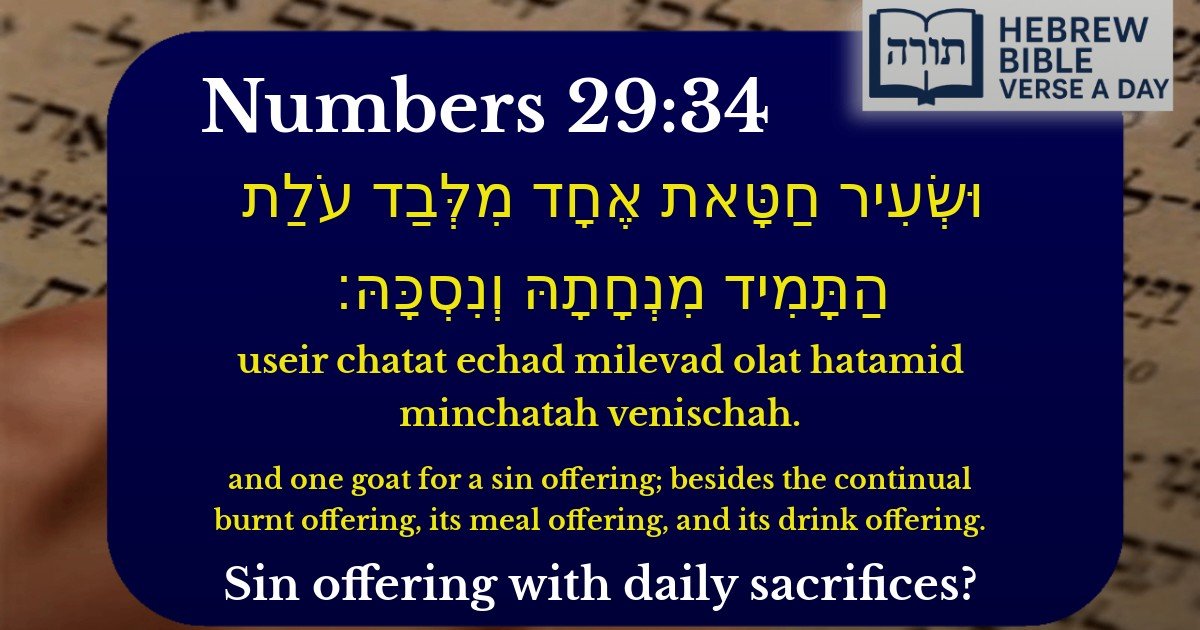
וּשְׂעִיר חַטָּאת אֶחָד מִלְּבַד עֹלַת הַתָּמִיד מִנְחָתָהּ וְנִסְכָּהּ׃
English Translation
and one goat for a sin offering; besides the continual burnt offering, its meal offering, and its drink offering.
Transliteration
Useir chatat echad milevad olat hatamid minchatah venischah.
Hebrew Leining Text
וּשְׂעִ֥יר חַטָּ֖את אֶחָ֑ד מִלְּבַד֙ עֹלַ֣ת הַתָּמִ֔יד מִנְחָתָ֖הּ וְנִסְכָּֽהּ׃ {ס}
🎵 Listen to leining
Parasha Commentary
📚 Talmud Citations
This verse is not quoted in the Talmud.
Explanation of the Verse
The verse (Numbers 28:15) discusses the additional offerings brought on Rosh Chodesh (the New Moon), specifying that alongside the daily Korban Tamid (continual burnt offering), a sin offering of a goat (Se'ir Chatat) must also be brought. This reflects the unique requirements for atonement and sanctification associated with the beginning of each month.
Rashi's Commentary
Rashi (Rabbi Shlomo Yitzchaki) explains that the Se'ir Chatat (goat sin offering) is brought to atone for possible impurities in the Temple or among the Jewish people. He notes that this offering is distinct from the Korban Tamid, emphasizing that even on special occasions like Rosh Chodesh, the daily offerings are not neglected.
Rambam's Perspective
In Hilchot Temidin uMusafin (Laws of Continual and Additional Offerings), the Rambam (Maimonides) elaborates that the Se'ir Chatat serves as a communal atonement, ensuring the sanctity of the Temple service. He highlights that this offering is obligatory on Rosh Chodesh, underscoring the importance of maintaining purity in divine worship.
Midrashic Insights
The Midrash Tanchuma connects the Se'ir Chatat to the concept of renewal, as Rosh Chodesh symbolizes a fresh start. The goat offering serves as a reminder of human fallibility and the need for continuous repentance, especially at the onset of a new month.
Key Themes