

Join Our Newsletter To Be Informed When New Videos Are Posted
Hebrew Text
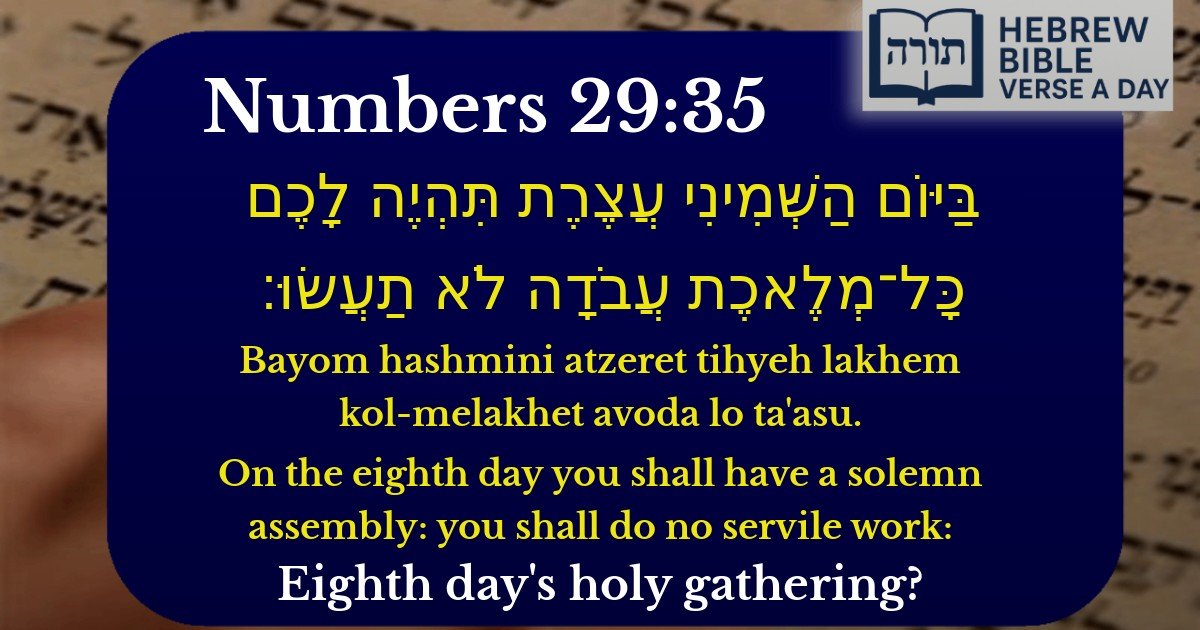
בַּיּוֹם הַשְּׁמִינִי עֲצֶרֶת תִּהְיֶה לָכֶם כָּל־מְלֶאכֶת עֲבֹדָה לֹא תַעֲשׂוּ׃
English Translation
On the eighth day you shall have a solemn assembly: you shall do no servile work:
Transliteration
Bayom hashmini atzeret tihyeh lakhem kol-melakhet avoda lo ta'asu.
Hebrew Leining Text
בַּיּוֹם֙ הַשְּׁמִינִ֔י עֲצֶ֖רֶת תִּהְיֶ֣ה לָכֶ֑ם כׇּל־מְלֶ֥אכֶת עֲבֹדָ֖ה לֹ֥א תַעֲשֽׂוּ׃
🎵 Listen to leining
Parasha Commentary
📚 Talmud Citations
This verse is quoted in the Talmud.
📖 Moed Katan 19a
The verse is referenced in the discussion about the prohibition of work on Shemini Atzeret, emphasizing that it is a day of solemn assembly with restrictions similar to other festival days.
📖 Chagigah 17a
The verse is cited in the context of discussing the obligations and prohibitions during the festival of Shemini Atzeret, highlighting its unique status among the holidays.
The Eighth Day Assembly (Shemini Atzeret)
The verse (Bamidbar 29:35) commands the observance of Shemini Atzeret, the "Eighth Day Assembly," following the seven days of Sukkot. Rashi explains that this day is a separate festival, distinct from Sukkot, where Hashem requests an additional day of closeness with the Jewish people—like a king who asks his departing guests to stay one more day out of affection.
Prohibition of Melachah (Servile Work)
The Torah prohibits melachah (servile work) on Shemini Atzeret, similar to other Yom Tovim. The Rambam (Hilchot Shevitat Yom Tov 1:1) clarifies that this prohibition applies to the same categories of labor forbidden on Shabbat, with exceptions for food preparation (ochel nefesh). The Talmud (Chagigah 18a) emphasizes that this day is meant for spiritual reflection and connection to Hashem, not mundane labor.
Distinctiveness from Sukkot
Spiritual Significance
The Midrash (Bamidbar Rabbah 21:24) compares Shemini Atzeret to a concluding feast after a grand celebration, symbolizing the intimate bond between Hashem and Klal Yisrael. The Vilna Gaon notes that this day represents the culmination of the Tishrei festivals, where the spiritual achievements of Rosh Hashanah, Yom Kippur, and Sukkot are internalized.
Connection to Simchat Torah
In Eretz Yisrael, Shemini Atzeret coincides with Simchat Torah, the celebration of completing the annual Torah reading cycle. The Maharil explains that this joyous custom reflects the Torah’s central role in Jewish life, reinforcing the day’s theme of closeness to Hashem through His Torah.