

Join Our Newsletter To Be Informed When New Videos Are Posted
Hebrew Text
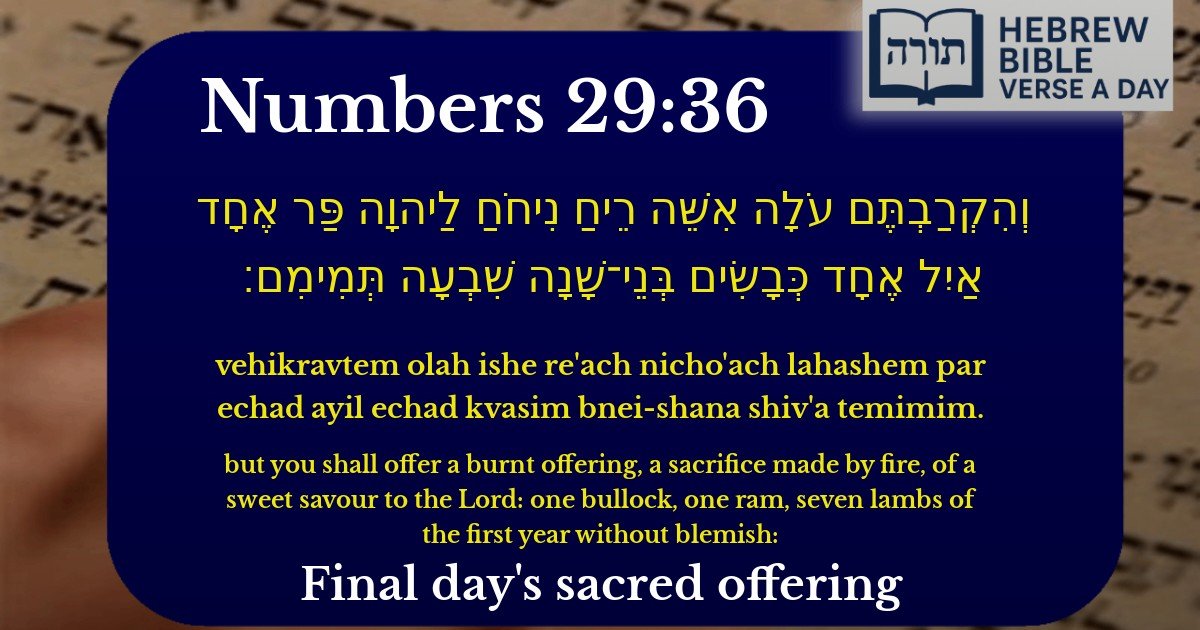
וְהִקְרַבְתֶּם עֹלָה אִשֵּׁה רֵיחַ נִיחֹחַ לַיהוָה פַּר אֶחָד אַיִל אֶחָד כְּבָשִׂים בְּנֵי־שָׁנָה שִׁבְעָה תְּמִימִם׃
English Translation
but you shall offer a burnt offering, a sacrifice made by fire, of a sweet savour to the Lord: one bullock, one ram, seven lambs of the first year without blemish:
Transliteration
Vehikravtem olah ishe re'ach nicho'ach lahashem par echad ayil echad kvasim bnei-shana shiv'a temimim.
Hebrew Leining Text
וְהִקְרַבְתֶּ֨ם עֹלָ֜ה אִשֵּׁ֨ה רֵ֤יחַ נִיחֹ֙חַ֙ לַֽיהֹוָ֔ה פַּ֥ר אֶחָ֖ד אַ֣יִל אֶחָ֑ד כְּבָשִׂ֧ים בְּנֵי־שָׁנָ֛ה שִׁבְעָ֖ה תְּמִימִֽם׃
🎵 Listen to leining
Parasha Commentary
📚 Talmud Citations
This verse is quoted in the Talmud.
📖 Menachot 110a
The verse is referenced in the discussion about the sacrifices and their significance, particularly in relation to the burnt offerings and their pleasing aroma to the Lord.
📖 Zevachim 6a
The verse is cited in the context of discussing the proper procedures and types of sacrifices, emphasizing the requirement for the animals to be without blemish.
Verse Context and Overview
The verse (Numbers 28:19) describes the korban olah (burnt offering) brought on the second day of Pesach (Passover) as part of the additional sacrifices (musafim) prescribed for the festival. This offering is characterized as an isheh rei'ach nichoach laHashem—"a fire-offering, a pleasing aroma to Hashem." The specific animals required are one bull, one ram, and seven unblemished male lambs in their first year.
Explanation of the Sacrifice
Rashi (on Numbers 28:19) explains that the term isheh rei'ach nichoach emphasizes that the offering is entirely consumed by fire on the altar, unlike other sacrifices where portions are eaten by the kohanim or the donors. This total dedication symbolizes complete submission to Hashem's will.
The Rambam (Hilchot Temidin uMusafin 8:1) elaborates that these additional offerings are distinct from the daily tamid sacrifices and are unique to festivals, underscoring the elevated sanctity of these days.
Significance of the Animals
Theological and Ethical Lessons
The Talmud (Menachot 110a) teaches that sacrifices are a means of drawing closer to Hashem (korban from the root karov, "to come near"). The olah, being entirely consumed, symbolizes total commitment, teaching that one must dedicate their entire being—thoughts, actions, and desires—to divine service.
Additionally, the requirement for the animals to be temimim (unblemished) underscores the importance of integrity and perfection in one's spiritual endeavors, as noted by the Sforno (on Numbers 28:19).