Frequently Asked Questions
Q: What is the purpose of the sin offering mentioned in Numbers 29:38?
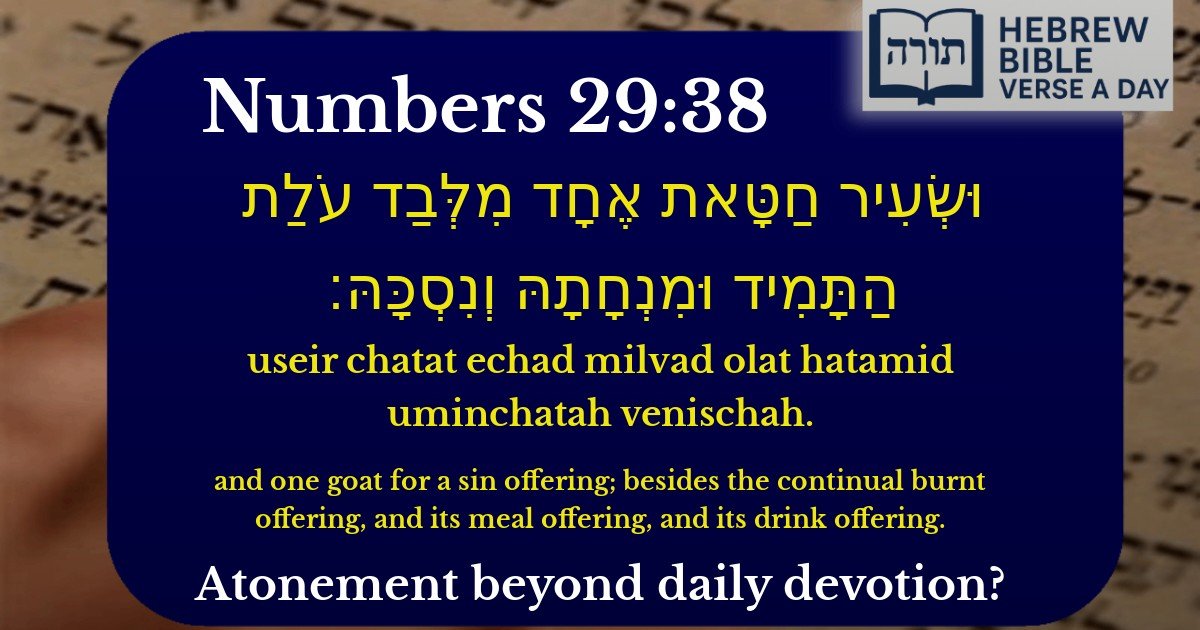
A: The sin offering (שְׂעִיר חַטָּאת) mentioned in this verse was brought to atone for unintentional sins. According to Rashi and the Talmud (Zevachim 7b), this offering was part of the additional sacrifices brought on special occasions, alongside the daily Tamid offering, to seek forgiveness and maintain spiritual purity.
Q: Why does the verse mention the continual burnt offering (עֹלַת הַתָּמִיד) along with the sin offering?
A: The continual burnt offering (Tamid) was brought twice daily, morning and evening, as a constant dedication to Hashem. The verse emphasizes that the sin offering was in addition to the Tamid, showing that even on special occasions, the regular service in the Mishkan (Tabernacle) or Beit Hamikdash (Temple) was never neglected (Rambam, Hilchot Temidin uMusafin 1:1-3).
Q: What do the meal offering (מִנְחָה) and drink offering (נֶסֶךְ) represent in this verse?
A: The meal offering (flour mixed with oil) and drink offering (wine) accompanied the burnt offering as symbols of gratitude and devotion to Hashem. The Midrash (Sifrei Bamidbar) teaches that these offerings represent sustenance and joy, showing that serving Hashem involves both physical and spiritual dedication.
Q: How does this verse apply to Jewish practice today without the Temple?
A: Since the destruction of the Beit Hamikdash, we no longer bring physical offerings. Instead, the Talmud (Berachot 26b) teaches that prayer (תְּפִלָּה) replaces sacrifices. Additionally, acts of charity (צְדָקָה) and Torah study are considered substitutes for offerings (Proverbs 21:3, Menachot 110a).
Q: Why was a goat specifically chosen for the sin offering here?
A: A goat was often used for sin offerings because, as Rashi explains (Vayikra 16:5), goats have symbolic significance in atonement. The Talmud (Yoma 67b) also notes that goats were commonly available and accessible for all people, emphasizing that repentance and atonement should be within everyone's reach.


Context in the Torah
The verse (Numbers 28:22) appears in the section detailing the additional offerings (מוּסָפִים) brought on the festival of Shavuot. The goat for a sin offering (שְׂעִיר חַטָּאת) is listed alongside the daily Tamid offering (עֹלַת הַתָּמִיד) and its accompanying meal and drink offerings (מִנְחָה וְנֶסֶךְ).
Purpose of the Sin Offering
Rashi (on Numbers 28:22) explains that the sin offering atones for possible defilement of the Temple or its sacred objects, even if such defilement occurred unintentionally. The Rambam (Hilchot Temidin uMusafin 1:2) further clarifies that this offering serves as a kaparah (atonement) for impurity that may have gone unnoticed during the festival.
Relationship to the Tamid Offering
The phrase "מִלְּבַד עֹלַת הַתָּמִיד" ("besides the continual burnt offering") teaches that the additional festival offerings do not replace the daily Tamid service. The Talmud (Menachot 91a) derives from this that the Musaf offerings must be brought after the morning Tamid, emphasizing the primacy of the constant daily service.
Symbolism of the Goat
The Midrash (Bamidbar Rabbah 21:21) connects the goat offering to the episode of Yosef's brothers dipping his coat in goat's blood (Genesis 37:31), suggesting that the atonement relates to repairing discord among the Jewish people. The goat serves as a reminder of the need for unity during festivals.
Halachic Details