

Join Our Newsletter To Be Informed When New Videos Are Posted
Hebrew Text
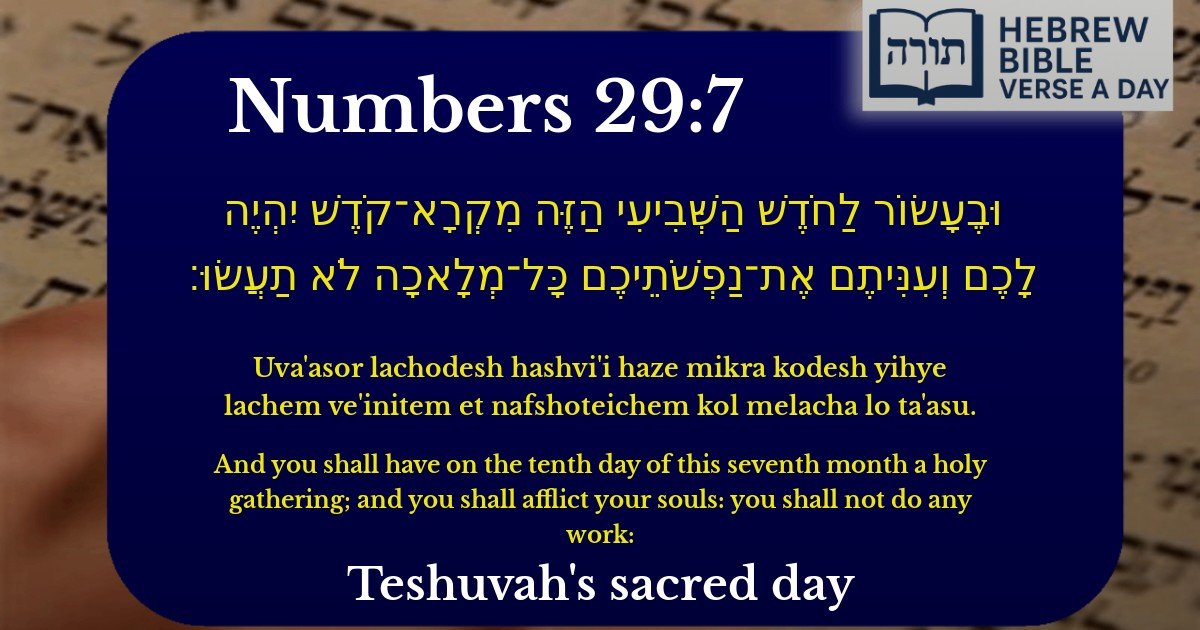
וּבֶעָשׂוֹר לַחֹדֶשׁ הַשְּׁבִיעִי הַזֶּה מִקְרָא־קֹדֶשׁ יִהְיֶה לָכֶם וְעִנִּיתֶם אֶת־נַפְשֹׁתֵיכֶם כָּל־מְלָאכָה לֹא תַעֲשׂוּ׃
English Translation
And you shall have on the tenth day of this seventh month a holy gathering; and you shall afflict your souls: you shall not do any work:
Transliteration
Uva'asor lachodesh hashvi'i haze mikra kodesh yihye lachem ve'initem et nafshoteichem kol melacha lo ta'asu.
Hebrew Leining Text
וּבֶעָשׂוֹר֩ לַחֹ֨דֶשׁ הַשְּׁבִיעִ֜י הַזֶּ֗ה מִֽקְרָא־קֹ֙דֶשׁ֙ יִהְיֶ֣ה לָכֶ֔ם וְעִנִּיתֶ֖ם אֶת־נַפְשֹׁתֵיכֶ֑ם כׇּל־מְלָאכָ֖ה לֹ֥א תַעֲשֽׂוּ׃
🎵 Listen to leining
Parasha Commentary
📚 Talmud Citations
This verse is quoted in the Talmud.
📖 Yoma 74b
The verse is discussed in the context of the laws of Yom Kippur, particularly regarding the prohibition of work and the commandment to afflict one's soul.
📖 Rosh Hashanah 32a
The verse is referenced in the discussion about the sanctity of the day and the special prayers recited on Yom Kippur.
📖 Megillah 31a
The verse is cited in the context of the Torah readings for Yom Kippur, emphasizing the importance of the day's observance.
The Tenth of Tishrei: Yom Kippur
The verse (Vayikra 23:27) establishes the sanctity of the tenth day of the seventh month (Tishrei) as Yom Kippur, the Day of Atonement. Rashi explains that this is the culmination of the Ten Days of Repentance that begin with Rosh Hashanah, providing the final opportunity for teshuvah (repentance) and kaparah (atonement) before the heavenly decree is sealed.
The Command to Afflict One's Soul
The phrase "וְעִנִּיתֶם אֶת־נַפְשֹׁתֵיכֶם" (and you shall afflict your souls) is understood by the Talmud (Yoma 74b) to refer to five specific afflictions:
Prohibition of Melacha (Work)
The Rambam (Hilchot Shevitat Asor 1:1-2) explains that the prohibition against work on Yom Kippur is equivalent to that of Shabbat, with the same 39 categories of prohibited labor applying. However, while Shabbat is a day of physical pleasure, Yom Kippur is a day of affliction - both sharing the common theme of dedicating the day entirely to spiritual matters.
The Purpose of the Afflictions
The Sefer HaChinuch (Mitzvah 313) explains that the afflictions serve to:
The Holiness of the Day
The Sforno notes that the term "מִקְרָא־קֹדֶשׁ" (holy gathering) indicates that the day's sanctity is achieved through gathering in prayer and repentance. The Vilna Gaon adds that the numerical value of "הַשְּׁבִיעִי" (the seventh) corresponds to concepts of completion and spiritual perfection, reflecting Yom Kippur's role in perfecting one's relationship with Hashem.