

Join Our Newsletter To Be Informed When New Videos Are Posted
Hebrew Text
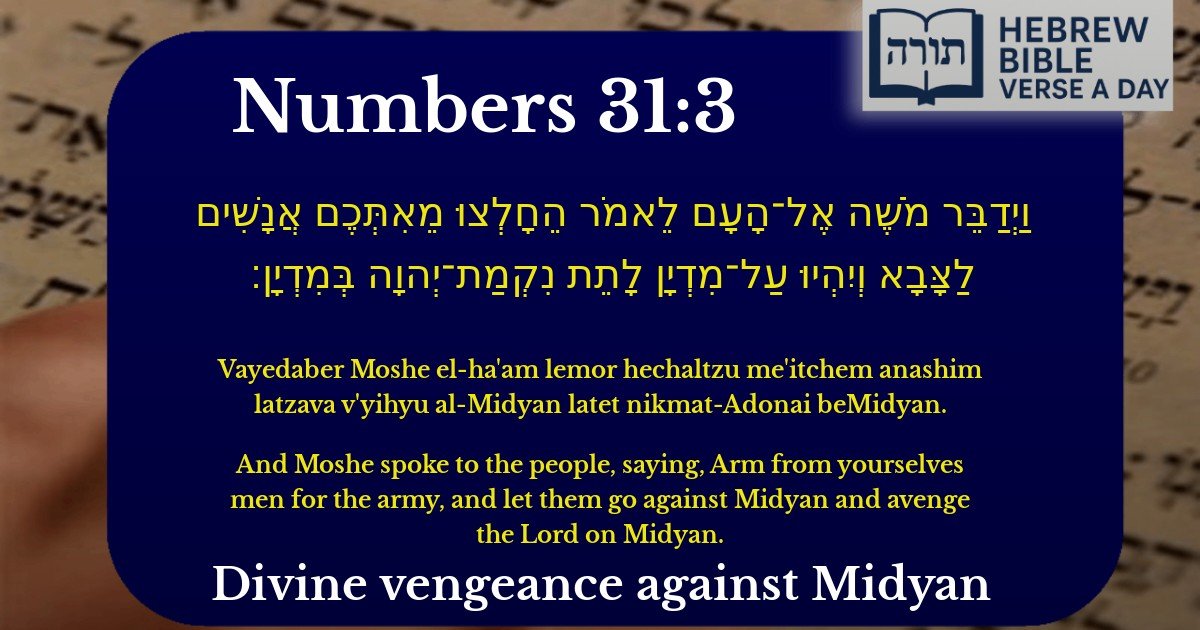
וַיְדַבֵּר מֹשֶׁה אֶל־הָעָם לֵאמֹר הֵחָלְצוּ מֵאִתְּכֶם אֲנָשִׁים לַצָּבָא וְיִהְיוּ עַל־מִדְיָן לָתֵת נִקְמַת־יְהוָה בְּמִדְיָן׃
English Translation
And Moshe spoke to the people, saying, Arm from yourselves men for the army, and let them go against Midyan and avenge the Lord on Midyan.
Transliteration
Vayedaber Moshe el-ha'am lemor hechaltzu me'itchem anashim latzava v'yihyu al-Midyan latet nikmat-Adonai beMidyan.
Hebrew Leining Text
וַיְדַבֵּ֤ר מֹשֶׁה֙ אֶל־הָעָ֣ם לֵאמֹ֔ר הֵחָלְצ֧וּ מֵאִתְּכֶ֛ם אֲנָשִׁ֖ים לַצָּבָ֑א וְיִהְיוּ֙ עַל־מִדְיָ֔ן לָתֵ֥ת נִקְמַת־יְהֹוָ֖ה בְּמִדְיָֽן׃
🎵 Listen to leining
Parasha Commentary
📚 Talmud Citations
This verse is quoted in the Talmud.
📖 Sotah 43a
The verse is referenced in the discussion about the war against Midyan and the commandment to avenge the Lord's vengeance upon them.
📖 Sanhedrin 16a
The verse is cited in the context of discussing the authority of Moses and the leaders in waging war and executing divine commandments.
Context of the Verse
The verse (Bamidbar 31:3) records Moshe's command to prepare for war against Midyan as divine retribution for their role in leading Bnei Yisrael astray through the incident of Ba'al Pe'or (Bamidbar 25). This was not merely a battle for territorial gain but a fulfillment of Hashem's justice.
Rashi's Explanation
Rashi (ad loc.) emphasizes that this war was specifically "נִקְמַת־יְהוָה" (the vengeance of Hashem), as Midyan had caused Israel to sin against G-d. Unlike the war with Amalek, which was a human obligation (Devarim 25:17-19), this war was a direct divine command to uphold Hashem's honor.
Rambam's Perspective
Rambam (Hilchot Melachim 5:1) categorizes this as a milchemet mitzvah (obligatory war), as it was initiated by divine decree to rectify a spiritual harm inflicted upon Klal Yisrael. The selection of soldiers ("הֵחָלְצוּ מֵאִתְּכֶם אֲנָשִׁים") implies a voluntary enlistment of righteous individuals.
Midrashic Insights
Halachic Implications
The Chofetz Chaim (in Mishnah Berurah) derives from this verse that wars for sanctifying Hashem's name require meticulous spiritual preparation. Soldiers were chosen not only for physical prowess but for moral integrity, as they represented divine justice.
Symbolic Interpretation
The Kli Yakar suggests "הֵחָלְצוּ" (arm yourselves) alludes to removing materialism ("חֹל" - profane) to focus on the sacred mission. Midyan, representing strife (from "מַדּוֹן"), had to be confronted to restore spiritual equilibrium.