

Join Our Newsletter To Be Informed When New Videos Are Posted
Hebrew Text
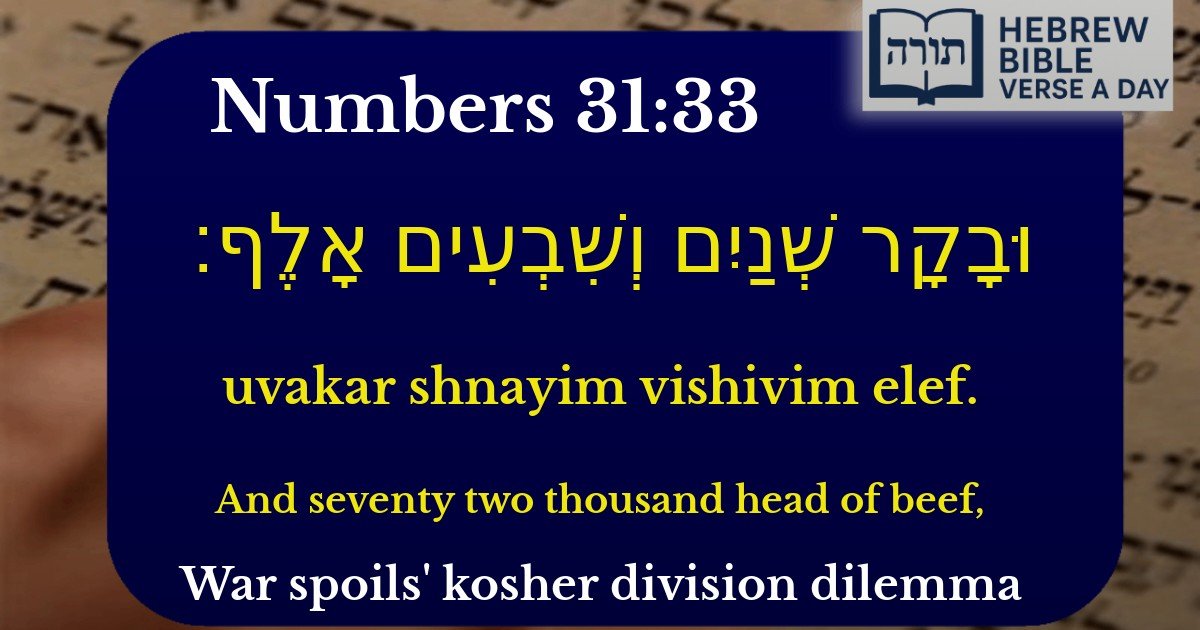
וּבָקָר שְׁנַיִם וְשִׁבְעִים אָלֶף׃
English Translation
And seventy two thousand head of beef,
Transliteration
Uvakar shnayim vishivim elef.
Hebrew Leining Text
וּבָקָ֕ר שְׁנַ֥יִם וְשִׁבְעִ֖ים אָֽלֶף׃
🎵 Listen to leining
Parasha Commentary
📚 Talmud Citations
This verse is not quoted in the Talmud.
Context of the Verse
The verse "וּבָקָר שְׁנַיִם וְשִׁבְעִים אָלֶף" (And seventy-two thousand head of beef) appears in Numbers 31:38, within the context of the spoils of war from the battle against Midian. This was part of the distribution of the captured livestock among the Israelites, the Levites, and as a tribute to Hashem.
Interpretation of the Number 72,000
Rashi, citing the Midrash (Bamidbar Rabbah 22:4), explains that the number 72,000 is significant because it corresponds to the 72 sacrifices offered during the seven days of the inauguration of the Mishkan (Tabernacle). This parallel suggests that the spoils of war were sanctified in a manner reminiscent of the Mishkan's dedication.
Spiritual Lessons
The Midrash (Tanchuma, Matot 3) teaches that the spoils, including the 72,000 cattle, were a test for Bnei Yisrael. Their proper handling demonstrated gratitude to Hashem for the victory and reinforced the principle that material gains must be sanctified through mitzvot, such as giving portions to the Kohanim and Levi'im.
Halachic Implications
The Talmud (Chullin 17a) discusses the laws of slaughtering and consuming these cattle, noting that even in times of war, the Israelites adhered to the laws of kashrut and proper sanctification. This underscores the idea that holiness must be maintained even in extraordinary circumstances.