

Join Our Newsletter To Be Informed When New Videos Are Posted
Hebrew Text
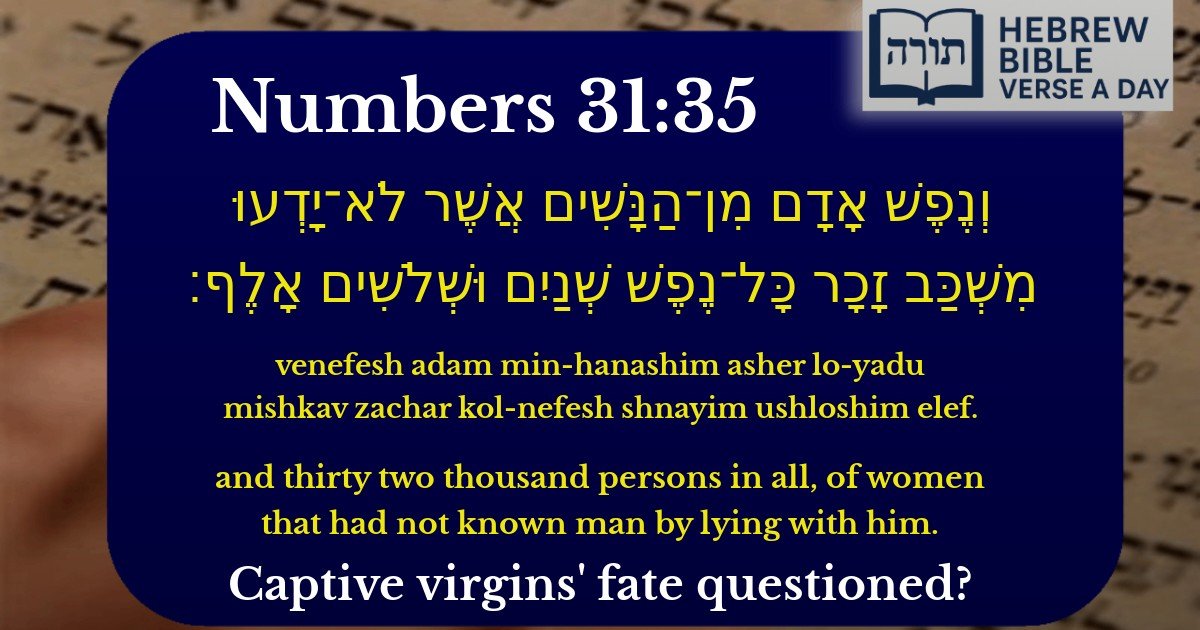
וְנֶפֶשׁ אָדָם מִן־הַנָּשִׁים אֲשֶׁר לֹא־יָדְעוּ מִשְׁכַּב זָכָר כָּל־נֶפֶשׁ שְׁנַיִם וּשְׁלֹשִׁים אָלֶף׃
English Translation
and thirty two thousand persons in all, of women that had not known man by lying with him.
Transliteration
Venefesh adam min-hanashim asher lo-yadu mishkav zachar kol-nefesh shnayim ushloshim elef.
Hebrew Leining Text
וְנֶ֣פֶשׁ אָדָ֔ם מִ֨ן־הַנָּשִׁ֔ים אֲשֶׁ֥ר לֹֽא־יָדְע֖וּ מִשְׁכַּ֣ב זָכָ֑ר כׇּל־נֶ֕פֶשׁ שְׁנַ֥יִם וּשְׁלֹשִׁ֖ים אָֽלֶף׃
🎵 Listen to leining
Parasha Commentary
📚 Talmud Citations
This verse is not quoted in the Talmud.
Context of the Verse
This verse appears in Bamidbar (Numbers) 31:35, describing the spoils of war taken by Bnei Yisrael from Midian, specifically the women who had never been intimate with a man. The count of 32,000 virgins is part of a larger tally of captives and plunder.
Rashi's Explanation
Rashi (Rabbi Shlomo Yitzchaki) comments on this verse by noting that these women were separated from the rest because they were pure (betulot) and had not engaged in forbidden relations. He connects this to the earlier command in Bamidbar 31:18, where Moshe instructs Bnei Yisrael to spare only the virgin women, as they were not involved in the sin of seduction (referring to the incident with Balaam and the Midianite women in Bamidbar 25).
Halachic Implications
The Rambam (Maimonides) discusses the laws of eshet yefat to'ar (a beautiful captive woman) in Hilchot Melachim (Laws of Kings 8:2-3), which may be relevant here. While this verse does not directly address those laws, the principle of distinguishing between women who had relations and those who had not reflects the Torah's emphasis on moral purity, even in wartime.
Midrashic Insights
Moral and Ethical Lessons
This verse teaches that even in the context of war, the Torah demands ethical conduct and discernment. The separation of the virgins underscores the principle that not all members of an enemy nation are equally culpable, and innocence must be recognized and preserved.