

Join Our Newsletter To Be Informed When New Videos Are Posted
Hebrew Text
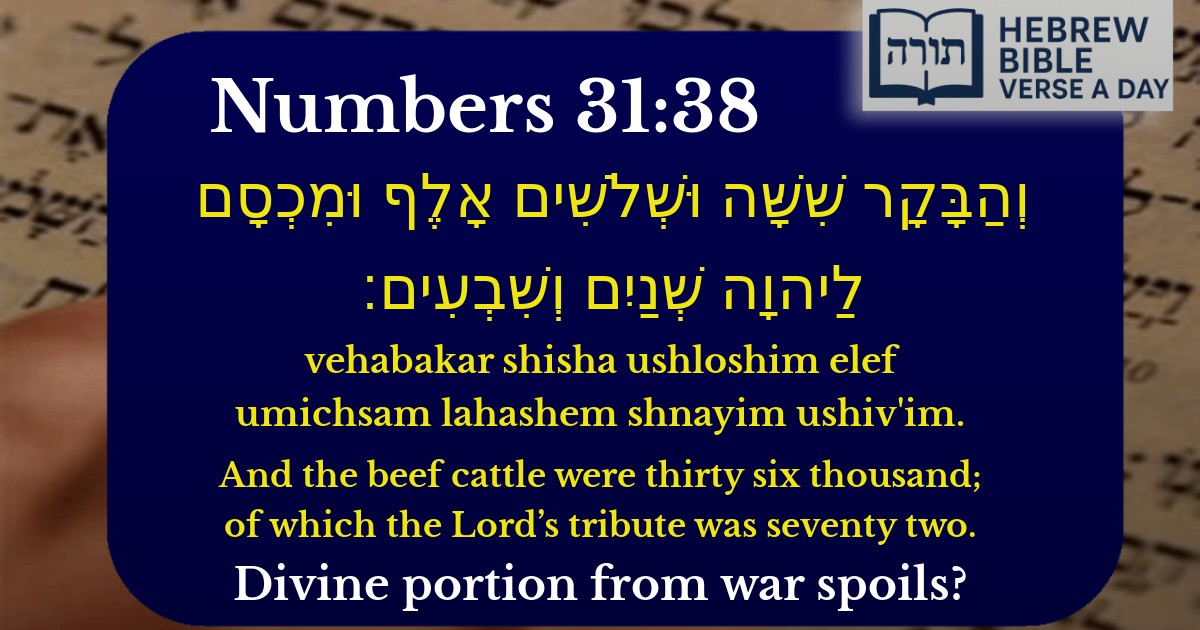
וְהַבָּקָר שִׁשָּׁה וּשְׁלֹשִׁים אָלֶף וּמִכְסָם לַיהוָה שְׁנַיִם וְשִׁבְעִים׃
English Translation
And the beef cattle were thirty six thousand; of which the Lord’s tribute was seventy two.
Transliteration
Vehabakar shisha ushloshim elef umichsam lahashem shnayim ushiv'im.
Hebrew Leining Text
וְהַ֨בָּקָ֔ר שִׁשָּׁ֥ה וּשְׁלֹשִׁ֖ים אָ֑לֶף וּמִכְסָ֥ם לַיהֹוָ֖ה שְׁנַ֥יִם וְשִׁבְעִֽים׃
🎵 Listen to leining
Parasha Commentary
📚 Talmud Citations
This verse is not quoted in the Talmud.
Context in the Torah
This verse appears in Bamidbar (Numbers) 31:38, describing the spoils of war from the battle against Midian. The verse details the number of cattle taken and the portion designated as a tribute to Hashem.
Rashi's Explanation
Rashi (Rabbi Shlomo Yitzchaki) explains that the "Lord’s tribute" refers to the terumah (sacred portion) given to the kohanim (priests). The calculation follows the Torah’s requirement (Numbers 31:28-30) that one out of every 500 animals from the spoils of war be given to the kohanim as a tribute to Hashem. Here, 36,000 cattle divided by 500 yields exactly 72, aligning with the verse.
Rambam's Perspective
Rambam (Maimonides) in Hilchot Me'ilah (Laws of Sacrilege) 6:1 discusses the sanctity of such tributes. He emphasizes that once designated for Hashem, these animals attain a holy status and must be treated with the same reverence as other sanctified offerings.
Midrashic Insights
Halachic Implications
The Shulchan Aruch (Yoreh De'ah 61:1) cites this verse as a precedent for the obligation to separate terumot and ma'aserot (tithes) from produce, drawing a parallel between the spoils of war and agricultural gifts to the kohanim.