

Join Our Newsletter To Be Informed When New Videos Are Posted
Hebrew Text
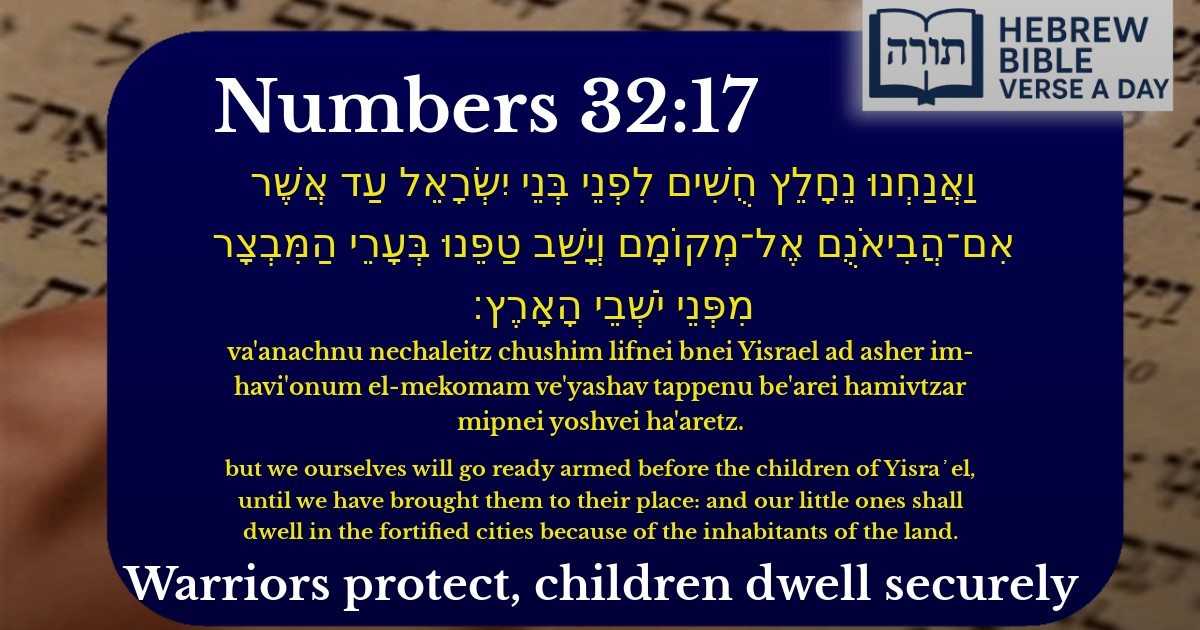
וַאֲנַחְנוּ נֵחָלֵץ חֻשִׁים לִפְנֵי בְּנֵי יִשְׂרָאֵל עַד אֲשֶׁר אִם־הֲבִיאֹנֻם אֶל־מְקוֹמָם וְיָשַׁב טַפֵּנוּ בְּעָרֵי הַמִּבְצָר מִפְּנֵי יֹשְׁבֵי הָאָרֶץ׃
English Translation
but we ourselves will go ready armed before the children of Yisra᾽el, until we have brought them to their place: and our little ones shall dwell in the fortified cities because of the inhabitants of the land.
Transliteration
Va'anachnu nechaleitz chushim lifnei bnei Yisrael ad asher im-havi'onum el-mekomam ve'yashav tappenu be'arei hamivtzar mipnei yoshvei ha'aretz.
Hebrew Leining Text
וַאֲנַ֜חְנוּ נֵחָלֵ֣ץ חֻשִׁ֗ים לִפְנֵי֙ בְּנֵ֣י יִשְׂרָאֵ֔ל עַ֛ד אֲשֶׁ֥ר אִם־הֲבִֽיאֹנֻ֖ם אֶל־מְקוֹמָ֑ם וְיָשַׁ֤ב טַפֵּ֙נוּ֙ בְּעָרֵ֣י הַמִּבְצָ֔ר מִפְּנֵ֖י יֹשְׁבֵ֥י הָאָֽרֶץ׃
🎵 Listen to leining
Parasha Commentary
📚 Talmud Citations
This verse is not quoted in the Talmud.
Context of the Verse
This verse (Numbers 32:17) is part of the dialogue between Moshe (Moses) and the tribes of Reuven and Gad, who requested to settle on the eastern side of the Jordan River. They assured Moshe that they would join the other tribes in conquering Eretz Yisrael before returning to their allotted land.
Rashi's Explanation
Rashi explains that the phrase "נֵחָלֵץ חֻשִׁים" ("go ready armed") means they would arm themselves and go at the forefront of battle. He emphasizes that they committed to fighting alongside their brethren until the land was fully conquered and settled. Rashi also notes that their children would remain in fortified cities for protection from potential attacks by the remaining inhabitants of the land.
Rambam's Perspective
Rambam (Maimonides), in Hilchot Melachim (Laws of Kings), discusses the obligation of all tribes to participate in the conquest of Eretz Yisrael. This verse demonstrates the principle of collective responsibility—Reuven and Gad upheld their duty to assist in securing the land, ensuring the safety and inheritance of all Bnei Yisrael.
Midrashic Insights
Halachic Implications
The Gemara (Sotah 44a) derives from this verse that even in voluntary wars (milchemet reshut), there is an obligation to protect non-combatants. The fortified cities served as a model for later halachic discussions about wartime safety measures.
Spiritual Lesson
This episode teaches the importance of unity and mutual responsibility among Klal Yisrael. Reuven and Gad's willingness to delay their own settlement for the sake of the nation exemplifies the ideal of "כל ישראל ערבים זה לזה" ("All Jews are responsible for one another").