

Join Our Newsletter To Be Informed When New Videos Are Posted
Hebrew Text
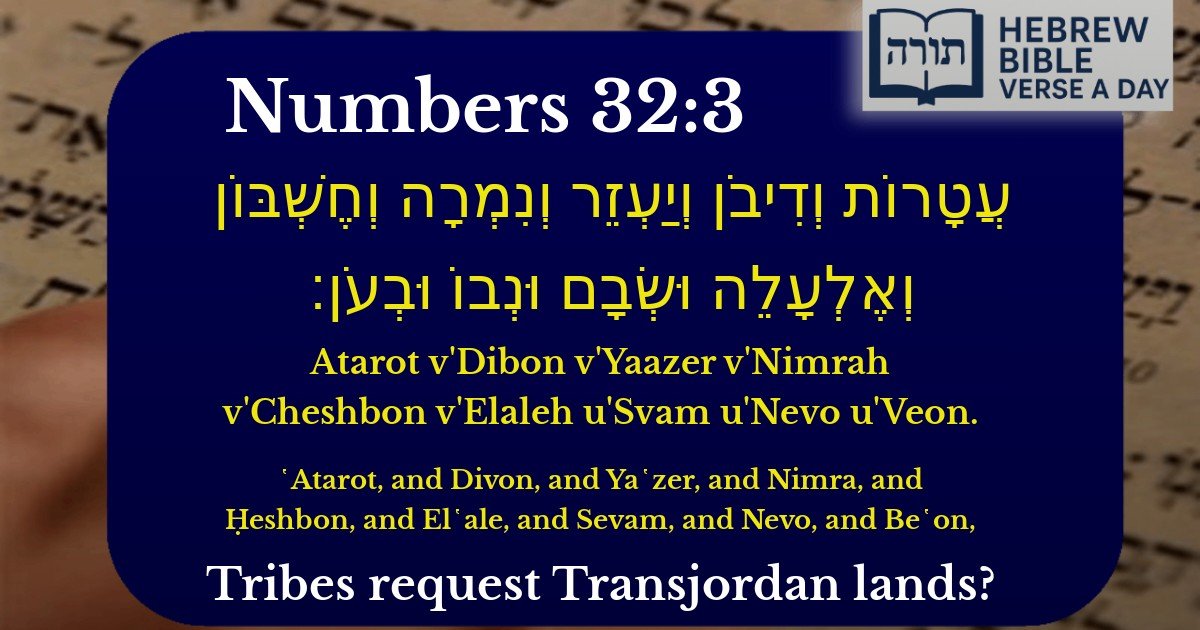
עֲטָרוֹת וְדִיבֹן וְיַעְזֵר וְנִמְרָה וְחֶשְׁבּוֹן וְאֶלְעָלֵה וּשְׂבָם וּנְבוֹ וּבְעֹן׃
English Translation
῾Atarot, and Divon, and Ya῾zer, and Nimra, and Ḥeshbon, and El῾ale, and Sevam, and Nevo, and Be῾on,
Transliteration
Atarot v'Dibon v'Yaazer v'Nimrah v'Cheshbon v'Elaleh u'Svam u'Nevo u'Veon.
Hebrew Leining Text
עֲטָר֤וֹת וְדִיבֹן֙ וְיַעְזֵ֣ר וְנִמְרָ֔ה וְחֶשְׁבּ֖וֹן וְאֶלְעָלֵ֑ה וּשְׂבָ֥ם וּנְב֖וֹ וּבְעֹֽן׃
🎵 Listen to leining
Parasha Commentary
📚 Talmud Citations
This verse is not quoted in the Talmud.
Geographical Context of the Verse
The verse lists cities in the territory of the Emorites, which were later conquered by the Israelites under Moshe's leadership (Bamidbar 21:25-26). These cities were situated east of the Jordan River, in the region known as Ever HaYarden (Transjordan). Rashi (Bamidbar 32:3) explains that these cities were initially built by the Emorites and later rebuilt by the tribes of Reuven and Gad, who requested this land for their inheritance.
Significance of the Cities
Each city mentioned holds historical and spiritual significance in Jewish tradition:
Spiritual Lessons
The Ramban (Bamidbar 21:21) teaches that the conquest of these cities symbolizes the Jewish people's ability to overcome physical and spiritual obstacles in their journey toward Eretz Yisrael. The cities' names often allude to deeper concepts, such as:
Historical Continuity
These cities remained significant in later Jewish history, as noted in the books of Yehoshua and Nevi'im. The Talmud (Megillah 6a) references some of these locations in discussions about the boundaries of Eretz Yisrael, emphasizing their enduring role in Jewish geography and identity.