

Join Our Newsletter To Be Informed When New Videos Are Posted
Hebrew Text
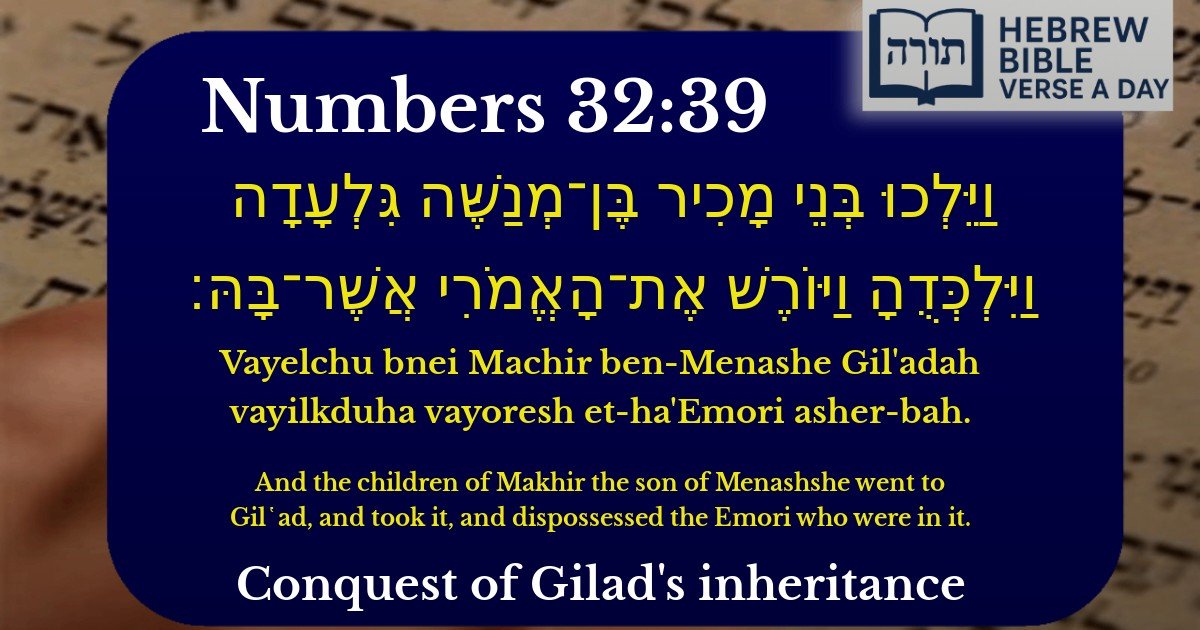
וַיֵּלְכוּ בְּנֵי מָכִיר בֶּן־מְנַשֶּׁה גִּלְעָדָה וַיִּלְכְּדֻהָ וַיּוֹרֶשׁ אֶת־הָאֱמֹרִי אֲשֶׁר־בָּהּ׃
English Translation
And the children of Makhir the son of Menashshe went to Gil῾ad, and took it, and dispossessed the Emori who were in it.
Transliteration
Vayelchu bnei Machir ben-Menashe Gil'adah vayilkduha vayoresh et-ha'Emori asher-bah.
Hebrew Leining Text
וַיֵּ֨לְכ֜וּ בְּנֵ֨י מָכִ֧יר בֶּן־מְנַשֶּׁ֛ה גִּלְעָ֖דָה וַֽיִּלְכְּדֻ֑הָ וַיּ֖וֹרֶשׁ אֶת־הָאֱמֹרִ֥י אֲשֶׁר־בָּֽהּ׃
🎵 Listen to leining
Parasha Commentary
📚 Talmud Citations
This verse is not quoted in the Talmud.
Context in Sefer Bamidbar
This verse (Bamidbar 32:39) appears in the narrative discussing the request of the tribes of Reuven and Gad to settle east of the Jordan River. The children of Makhir, a prominent clan within the tribe of Menashe, are noted for their conquest of Gil῾ad from the Emori.
Rashi's Commentary
Rashi explains that the phrase "וַיִּלְכְּדֻהָ" ("and took it") refers to the military conquest of Gil῾ad. He emphasizes that this was a fulfillment of the promise made to Avraham Avinu that his descendants would inherit the land (Bereishit 15:16). Rashi also notes that the children of Makhir acted with mesirut nefesh (self-sacrifice) in this conquest, demonstrating their commitment to settling Eretz Yisrael.
Ramban's Insight
The Ramban (Nachmanides) adds that this conquest was significant because it expanded the borders of Eretz Yisrael even beyond the Jordan. He highlights that the children of Makhir were particularly zealous in driving out the Emori, fulfilling the mitzvah of yerushas ha'aretz (inheriting the land) as commanded by Hashem.
Midrashic Interpretation
The Midrash (Bamidbar Rabbah 22:7) teaches that the children of Makhir were rewarded with this portion of land due to the merit of their ancestor Yosef, who was buried in Shechem. This connection underscores the principle of zechus avos (merit of the forefathers) in securing portions of Eretz Yisrael for their descendants.
Halachic Implications
Historical Significance
This event marked the beginning of the Israelite settlement east of the Jordan, later ratified by Moshe Rabbeinu (Bamidbar 32:40). The Targum Yonasan notes that this area became an integral part of the tribal inheritance, despite being outside the main boundaries of Eretz Yisrael proper.