

Join Our Newsletter To Be Informed When New Videos Are Posted
Hebrew Text
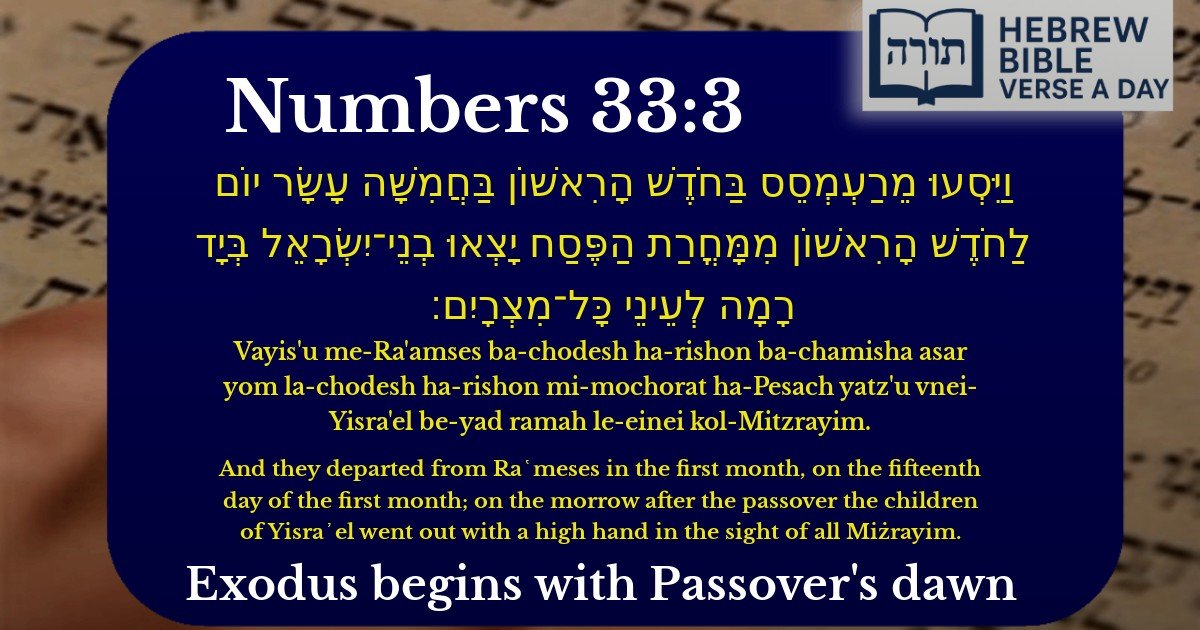
וַיִּסְעוּ מֵרַעְמְסֵס בַּחֹדֶשׁ הָרִאשׁוֹן בַּחֲמִשָּׁה עָשָׂר יוֹם לַחֹדֶשׁ הָרִאשׁוֹן מִמָּחֳרַת הַפֶּסַח יָצְאוּ בְנֵי־יִשְׂרָאֵל בְּיָד רָמָה לְעֵינֵי כָּל־מִצְרָיִם׃
English Translation
And they departed from Ra῾meses in the first month, on the fifteenth day of the first month; on the morrow after the passover the children of Yisra᾽el went out with a high hand in the sight of all Miżrayim.
Transliteration
Vayis'u me-Ra'amses ba-chodesh ha-rishon ba-chamisha asar yom la-chodesh ha-rishon mi-mochorat ha-Pesach yatz'u vnei-Yisra'el be-yad ramah le-einei kol-Mitzrayim.
Hebrew Leining Text
וַיִּסְע֤וּ מֵֽרַעְמְסֵס֙ בַּחֹ֣דֶשׁ הָרִאשׁ֔וֹן בַּחֲמִשָּׁ֥ה עָשָׂ֛ר י֖וֹם לַחֹ֣דֶשׁ הָרִאשׁ֑וֹן מִֽמׇּחֳרַ֣ת הַפֶּ֗סַח יָצְא֤וּ בְנֵֽי־יִשְׂרָאֵל֙ בְּיָ֣ד רָמָ֔ה לְעֵינֵ֖י כׇּל־מִצְרָֽיִם׃
🎵 Listen to leining
Parasha Commentary
📚 Talmud Citations
This verse is quoted in the Talmud.
📖 Rosh Hashanah 11a
The verse is referenced in a discussion about the timing of the Exodus from Egypt, particularly concerning the date of the 15th of Nisan.
📖 Megillah 10b
The verse is cited in a discussion about the miracles associated with the Exodus, emphasizing the 'high hand' with which the Israelites left Egypt.
The Departure from Ra'amses
The verse describes the Israelites' departure from Ra'amses on the 15th of Nisan, the day after the Passover offering. Rashi (on Numbers 33:3) explains that the phrase "מִמָּחֳרַת הַפֶּסַח" ("on the morrow after the Passover") refers to the day after the Korban Pesach was brought, which was the first day of Chag HaMatzot. The departure occurred in broad daylight ("בְּיָד רָמָה"—"with a high hand"), demonstrating Hashem's open miracle and the Egyptians' inability to stop them.
The Significance of the Date
The 15th of Nisan marks the beginning of the Exodus, a foundational event in Jewish history. The Rambam (Hilchot Chametz U'Matzah 7:1) emphasizes that this date was divinely appointed, as it fulfilled the promise made to Avraham Avinu at the Brit Bein HaBetarim (Covenant Between the Parts). The Midrash (Shemot Rabbah 18:12) adds that the Israelites left with great confidence ("בְּיָד רָמָה"), as if they were victors, not fleeing slaves.
The Egyptians' Witness
The phrase "לְעֵינֵי כָּל־מִצְרָיִם" ("in the sight of all Egypt") highlights that the Exodus was a public display of Hashem's power. The Talmud (Sotah 11a) teaches that the Egyptians, despite their suffering, were compelled to acknowledge the truth of Hashem's sovereignty. The Ibn Ezra notes that this public departure ensured no false claims could arise that the Israelites escaped secretly.
Spiritual Lessons