

Join Our Newsletter To Be Informed When New Videos Are Posted
Hebrew Text
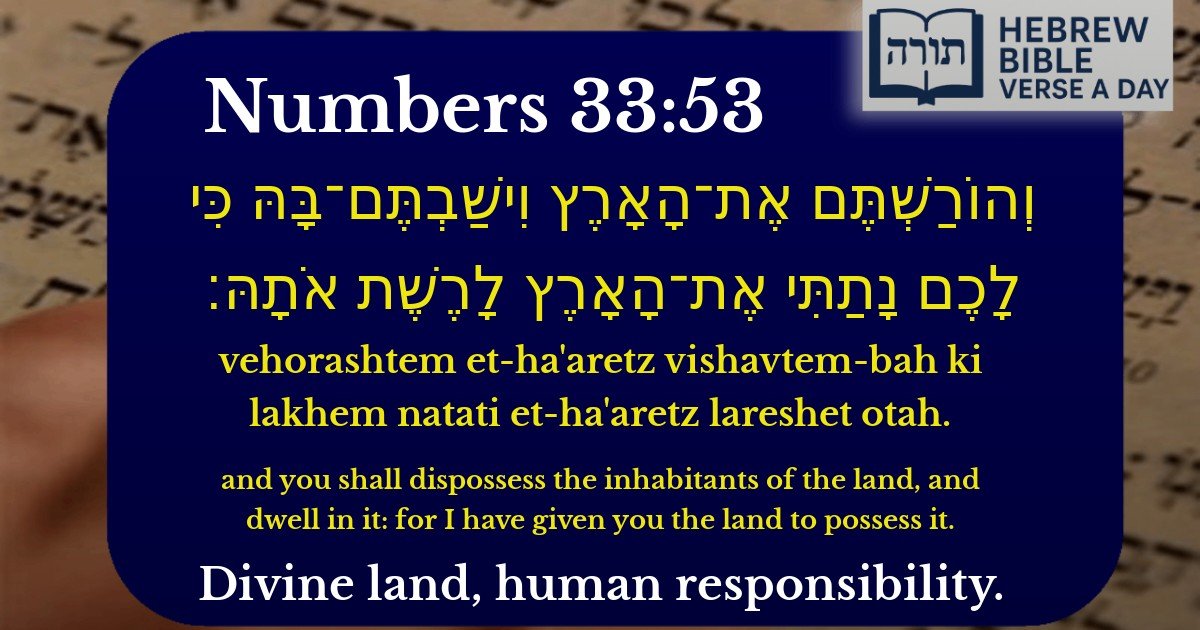
וְהוֹרַשְׁתֶּם אֶת־הָאָרֶץ וִישַׁבְתֶּם־בָּהּ כִּי לָכֶם נָתַתִּי אֶת־הָאָרֶץ לָרֶשֶׁת אֹתָהּ׃
English Translation
and you shall dispossess the inhabitants of the land, and dwell in it: for I have given you the land to possess it.
Transliteration
Vehorashtem et-ha'aretz vishavtem-bah ki lakhem natati et-ha'aretz lareshet otah.
Hebrew Leining Text
וְהוֹרַשְׁתֶּ֥ם אֶת־הָאָ֖רֶץ וִֽישַׁבְתֶּם־בָּ֑הּ כִּ֥י לָכֶ֛ם נָתַ֥תִּי אֶת־הָאָ֖רֶץ לָרֶ֥שֶׁת אֹתָֽהּ׃
🎵 Listen to leining
Parasha Commentary
📚 Talmud Citations
This verse is quoted in the Talmud.
📖 Sotah 34a
The verse is referenced in the discussion about the spies sent by Moses to scout the land of Canaan, emphasizing the divine promise of the land to the Israelites.
📖 Sanhedrin 110b
The verse is cited in a discussion about the obligation to settle the land of Israel and the consequences of not doing so.
Understanding the Command to Possess the Land
The verse states: "וְהוֹרַשְׁתֶּם אֶת־הָאָרֶץ וִישַׁבְתֶּם־בָּהּ כִּי לָכֶם נָתַתִּי אֶת־הָאָרֶץ לָרֶשֶׁת אֹתָהּ" ("and you shall dispossess the inhabitants of the land, and dwell in it: for I have given you the land to possess it"). This commandment is foundational to the Jewish people's relationship with Eretz Yisrael (the Land of Israel). Rashi (on Bamidbar 33:53) explains that the term "וְהוֹרַשְׁתֶּם" ("you shall dispossess") implies that the Israelites must actively drive out the inhabitants of the land to fulfill the mitzvah of settling it. Merely conquering the land without inhabiting it would be insufficient.
The Divine Gift of Eretz Yisrael
The latter part of the verse emphasizes that the land is a gift from Hashem: "כִּי לָכֶם נָתַתִּי אֶת־הָאָרֶץ" ("for I have given you the land"). The Ramban (Nachmanides, on Bamidbar 33:53) teaches that this gift is conditional upon the Jewish people upholding their covenant with Hashem. The land is intrinsically tied to the fulfillment of Torah and mitzvot, as later prophets (e.g., Yirmiyahu and Yechezkel) warn that exile results from abandoning these responsibilities.
The Obligation to Settle the Land
The Sifrei (a halachic Midrash on Bamidbar) derives from this verse that settling Eretz Yisrael is a positive commandment. The Rambam (Mishneh Torah, Hilchot Melachim 5:6) codifies this as a mitzvah incumbent upon every generation, stating that the Jewish people must not leave the land in the hands of other nations or desolate. The Talmud (Ketubot 110b) further emphasizes the importance of living in Eretz Yisrael, stating that one who dwells outside the land is as if they worship idols.
Moral and Ethical Considerations
The commandment to dispossess the inhabitants raises moral questions. The Midrash (Tanchuma, Shoftim 8) explains that the Canaanite nations were given ample opportunity to repent or leave, as seen with the Gibeonites (Yehoshua 9). Additionally, the Netziv (Rabbi Naftali Tzvi Yehuda Berlin, in Ha'amek Davar) notes that the conquest was not an act of cruelty but a necessary step to establish a society based on Torah values, as the corrupt practices of the Canaanites (e.g., idolatry and immorality) posed a spiritual threat to Israel.