

Join Our Newsletter To Be Informed When New Videos Are Posted
Hebrew Text
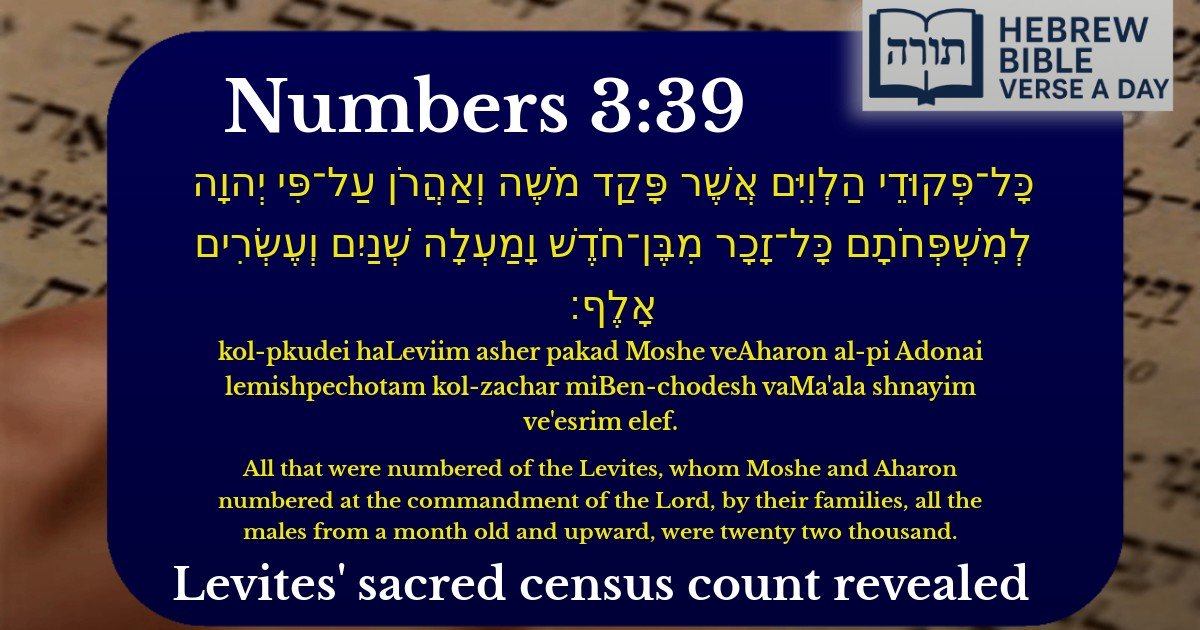
כָּל־פְּקוּדֵי הַלְוִיִּם אֲשֶׁר פָּקַד מֹשֶׁה וְאַהֲרֹן עַל־פִּי יְהוָה לְמִשְׁפְּחֹתָם כָּל־זָכָר מִבֶּן־חֹדֶשׁ וָמַעְלָה שְׁנַיִם וְעֶשְׂרִים אָלֶף׃
English Translation
All that were numbered of the Levites, whom Moshe and Aharon numbered at the commandment of the Lord, by their families, all the males from a month old and upward, were twenty two thousand.
Transliteration
Kol-pkudei haLeviim asher pakad Moshe veAharon al-pi Adonai lemishpechotam kol-zachar miBen-chodesh vaMa'ala shnayim ve'esrim elef.
Hebrew Leining Text
כׇּל־פְּקוּדֵ֨י הַלְוִיִּ֜ם אֲשֶׁר֩ פָּקַ֨ד מֹשֶׁ֧ה וְׄאַׄהֲׄרֹ֛ׄןׄ עַל־פִּ֥י יְהֹוָ֖ה לְמִשְׁפְּחֹתָ֑ם כׇּל־זָכָר֙ מִבֶּן־חֹ֣דֶשׁ וָמַ֔עְלָה שְׁנַ֥יִם וְעֶשְׂרִ֖ים אָֽלֶף׃ {ס}
🎵 Listen to leining
Parasha Commentary
📚 Talmud Citations
This verse is not quoted in the Talmud.
Overview of the Verse
The verse (Bamidbar 3:39) recounts the census of the Levites conducted by Moshe and Aharon at Hashem's command. Unlike the other tribes, who were counted from age twenty and up for military service (Bamidbar 1:3), the Levites were counted from one month old, as their role was sacred service rather than warfare. The total number of Levite males was 22,000.
Why Count from One Month Old?
Rashi explains that the Levites were counted from infancy because their sanctity was inherent from birth, unlike the Kohanim, who only assumed their roles upon maturity. The Midrash (Bamidbar Rabbah 3:6) adds that this early counting reflects the Levites' unique status as replacements for the firstborns after the sin of the Golden Calf (Shemot 32:26-29).
The Significance of 22,000
The number 22,000 corresponds to the 22,000 firstborns who needed redemption (Bamidbar 3:43). The Levites served as their substitutes in Divine service. The Baal HaTurim notes that the numerical value (gematria) of the Hebrew word "כל" ("all") is 50, hinting at the 50-day count from Pesach to Shavuos, symbolizing the Levites' role in facilitating spiritual elevation.
Discrepancy in Numbers
Later in the parsha (Bamidbar 3:22-34), the sum of the three Levite families (Gershon, Kehas, and Merari) totals 22,300, not 22,000. Rashi resolves this by stating that the extra 300 were firstborn Levites, who could not redeem other firstborns (since they themselves required redemption). Thus, only 22,000 were eligible for the exchange.
Lessons from the Levite Census