

Join Our Newsletter To Be Informed When New Videos Are Posted
Hebrew Text
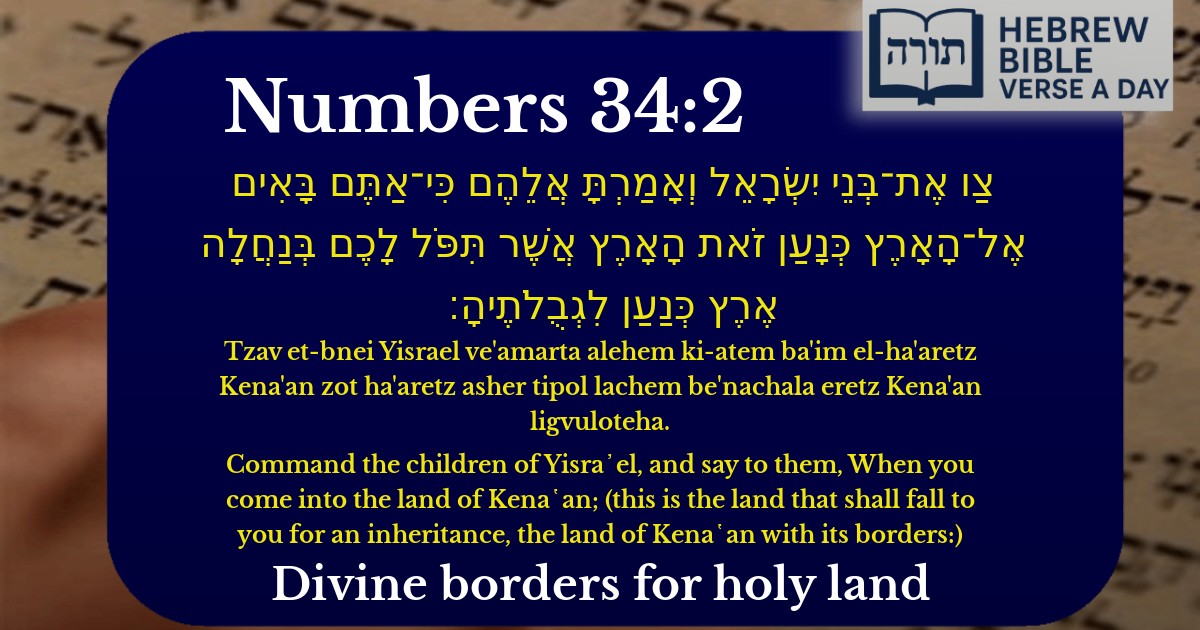
צַו אֶת־בְּנֵי יִשְׂרָאֵל וְאָמַרְתָּ אֲלֵהֶם כִּי־אַתֶּם בָּאִים אֶל־הָאָרֶץ כְּנָעַן זֹאת הָאָרֶץ אֲשֶׁר תִּפֹּל לָכֶם בְּנַחֲלָה אֶרֶץ כְּנַעַן לִגְבֻלֹתֶיהָ׃
English Translation
Command the children of Yisra᾽el, and say to them, When you come into the land of Kena῾an; (this is the land that shall fall to you for an inheritance, the land of Kena῾an with its borders:)
Transliteration
Tzav et-bnei Yisrael ve'amarta alehem ki-atem ba'im el-ha'aretz Kena'an zot ha'aretz asher tipol lachem be'nachala eretz Kena'an ligvuloteha.
Hebrew Leining Text
צַ֞ו אֶת־בְּנֵ֤י יִשְׂרָאֵל֙ וְאָמַרְתָּ֣ אֲלֵהֶ֔ם כִּֽי־אַתֶּ֥ם בָּאִ֖ים אֶל־הָאָ֣רֶץ כְּנָ֑עַן זֹ֣את הָאָ֗רֶץ אֲשֶׁ֨ר תִּפֹּ֤ל לָכֶם֙ בְּֽנַחֲלָ֔ה אֶ֥רֶץ כְּנַ֖עַן לִגְבֻלֹתֶֽיהָ׃
🎵 Listen to leining
Parasha Commentary
📚 Talmud Citations
This verse is not quoted in the Talmud.
Context of the Verse
The verse appears in Bamidbar (Numbers) 34:2, where Hashem instructs Moshe to delineate the borders of Eretz Yisrael before Bnei Yisrael enter the land. This command comes after the episode of the spies and the subsequent wandering in the desert, marking a transition toward the fulfillment of the promise to Avraham, Yitzchak, and Yaakov.
Rashi's Explanation
Rashi (34:2) emphasizes the word "צַו" (command), noting that this term implies urgency—both for the present generation and future generations. He explains that delineating the borders was crucial to prevent disputes and ensure clarity in the division of the land among the tribes. Rashi also highlights that the land is referred to as "אֶרֶץ כְּנַעַן" (the land of Canaan), reinforcing that its conquest was a fulfillment of Hashem's promise to the Avot.
Rambam's Perspective
In Hilchot Terumot (1:2), the Rambam discusses the sanctity of Eretz Yisrael, linking it to this verse. He explains that the borders defined here establish the parameters for mitzvot hateluyot ba'aretz (commandments dependent on the land), such as terumah, ma'aser, and shemitah. The precise delineation ensures these mitzvot apply only within the divinely ordained boundaries.
Midrashic Insights
Theological Significance
The verse underscores the eternal bond between Am Yisrael and Eretz Yisrael. The borders are not merely geographical but reflect a spiritual inheritance, as the land serves as the backdrop for fulfilling the Torah's commandments. The Talmud (Ketubot 110b) states that dwelling in Eretz Yisrael is equivalent to observing all mitzvot, highlighting its centrality in Jewish life.
Practical Implications
The delineation of borders also carries halachic weight, particularly in determining: