Frequently Asked Questions
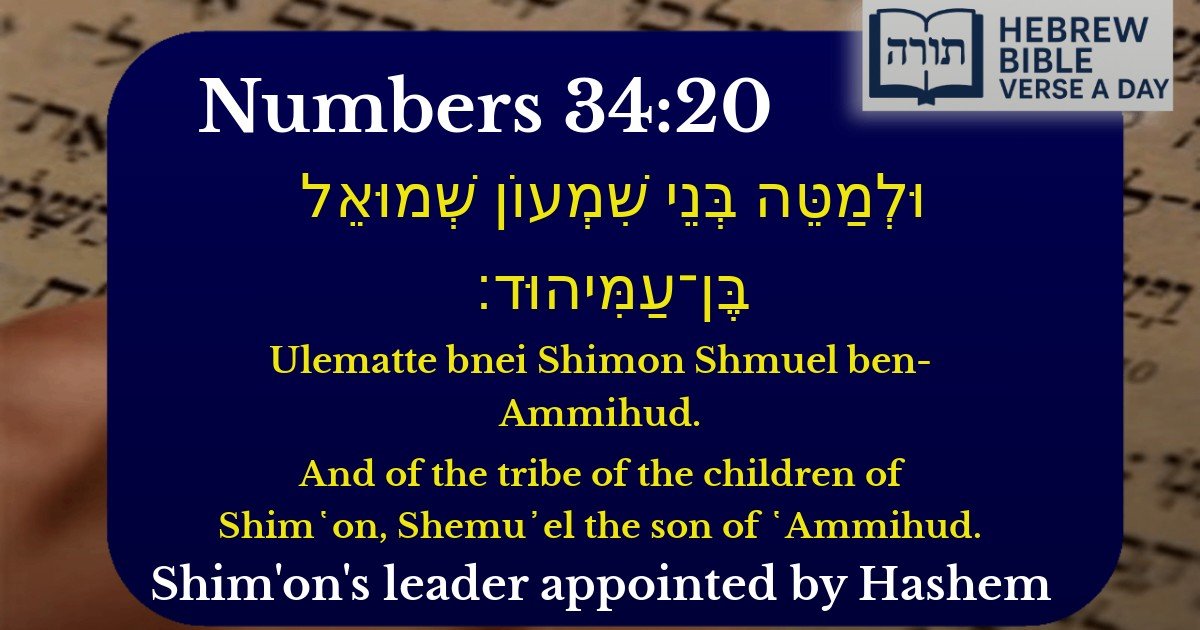
Q: Who was Shemu'el ben Ammihud mentioned in Numbers 34:20?
A: Shemu'el ben Ammihud was the representative chosen from the tribe of Shimon to help divide the Land of Israel among the tribes. According to Rashi, these leaders were appointed for their wisdom and righteousness to ensure a fair distribution of the land.
Q: Why does the Torah list tribal representatives for dividing the land?
A: The Torah lists these representatives (like Shemu'el ben Ammihud) to show the importance of fair and organized leadership in sacred tasks. The Midrash teaches that each representative was carefully chosen to uphold justice and prevent disputes when apportioning the Land of Israel.
Q: What can we learn from Shemu'el ben Ammihud's role in this verse?
A: We learn the value of appointing trustworthy leaders for important communal responsibilities. The Rambam (Hilchot Sanhedrin) explains that such roles require people of integrity, like Shemu'el ben Ammihud, to ensure divine commandments are carried out properly.
Q: Why is the tribe of Shimon specifically mentioned here?
A: Each tribe had its own representative to ensure their interests were respected. The Talmud (Bava Batra 122a) notes that even though Shimon was a smaller tribe, they still received equal representation in dividing the land, teaching us that every community matters in Jewish life.
Q: How does this verse about land division apply to us today?
A: While we no longer divide tribal lands, the principle remains relevant: Jewish leadership must be fair and inclusive. The Sforno explains that just as Shemu'el ben Ammihud acted for his tribe's benefit, today's leaders must represent their communities with honesty and dedication.


Context in the Torah
This verse appears in Bamidbar (Numbers) 34:20, listing the tribal representatives appointed to assist in dividing the Land of Israel. Shemu’el ben Ammihud is designated as the leader from the tribe of Shimon.
Rashi's Commentary
Rashi (Bamidbar 34:20) notes that Shemu’el’s father, Ammihud, is mentioned here but not in the earlier census (Bamidbar 1:10), where the Shimonite leader was Shelumiel ben Tzurishaddai. Rashi explains that leadership roles were reassigned based on merit, suggesting Shemu’el earned distinction through his righteousness or capabilities.
Midrashic Insights
Halachic Significance
Rambam (Hilchot Terumot 1:2) derives from such appointments that communal leaders must be trustworthy and knowledgeable, as their decisions impact inheritance and sacred obligations.
Symbolism of Shimon's Representation
Shimon’s inclusion here, despite its later territorial challenges (Yehoshua 19:1-9), underscores the unity of the tribes in fulfilling G-d’s promise. The Kli Yakar (Bamidbar 34:20) suggests this reflects the principle that all tribes, regardless of size or status, shared equally in the sanctity of the Land.