

Join Our Newsletter To Be Informed When New Videos Are Posted
Hebrew Text
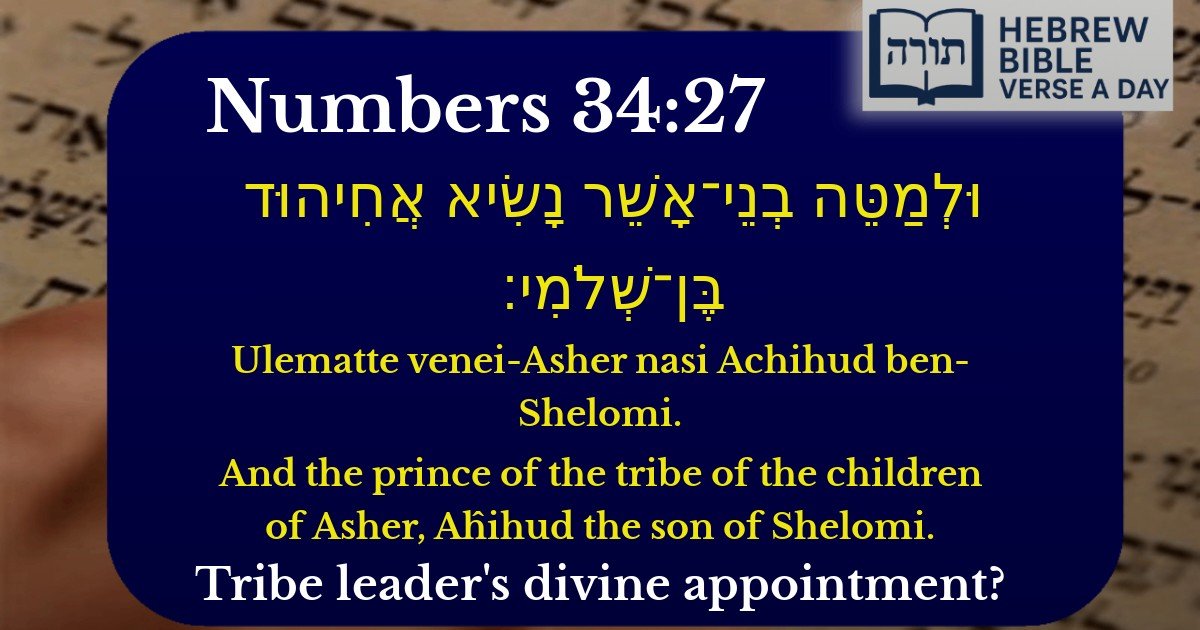
וּלְמַטֵּה בְנֵי־אָשֵׁר נָשִׂיא אֲחִיהוּד בֶּן־שְׁלֹמִי׃
English Translation
And the prince of the tribe of the children of Asher, Aĥihud the son of Shelomi.
Transliteration
Ulematte venei-Asher nasi Achihud ben-Shelomi.
Hebrew Leining Text
וּלְמַטֵּ֥ה בְנֵי־אָשֵׁ֖ר נָשִׂ֑יא אֲחִיה֖וּד בֶּן־שְׁלֹמִֽי׃
🎵 Listen to leining
Parasha Commentary
📚 Talmud Citations
This verse is not quoted in the Talmud.
Introduction to the Verse
The verse (Numbers 34:27) lists Aĥihud ben Shelomi as the prince (נָשִׂיא) representing the tribe of Asher during the division of the Land of Israel. This appointment reflects the Torah's emphasis on orderly leadership and tribal representation in sacred matters.
Meaning of the Names
The Role of Tribal Princes
Rambam (Hilchot Sanhedrin 1:3) teaches that tribal princes were chosen for their wisdom and righteousness, tasked with guiding their tribes in both civil and spiritual matters. The Talmud (Horayot 10a) emphasizes that these leaders were integral to maintaining unity during the land allocation.
Asher's Unique Representation
The Midrash Tanchuma (Pinchas 10) notes that Asher's prince was selected to highlight the tribe's material and spiritual blessings—particularly their fertile land (Genesis 49:20) and contribution to the Mishkan's oil. Aĥihud's leadership thus embodied the balance of earthly prosperity and divine service.