Frequently Asked Questions
Q: What does 'And the Lord spoke to Moshe, saying' mean in Numbers 3:44?
A: This phrase is a common introduction in the Torah indicating that Hashem is giving a direct commandment or instruction to Moshe. Rashi explains that this wording emphasizes the precision with which Moshe transmitted Hashem's words to the Jewish people.
Q: Why does the Torah repeat 'saying' after 'And the Lord spoke to Moshe'?
A: The Talmud (Yoma 4b) teaches that the word 'saying' (לֵּאמֹר) means Moshe was instructed to repeat these words to others - in this case, to Aharon and the leaders of Israel. This shows the chain of transmission of Torah from Hashem to all of Israel.
Q: How many times does this phrase appear in the Torah?
A: The exact phrase 'And the Lord spoke to Moshe, saying' appears over 70 times in the Torah. The Ramban explains that each occurrence marks a new divine communication, showing how frequently Hashem guided the Jewish people through Moshe.
Q: What can we learn from how Hashem spoke to Moshe?
A: The Midrash (Shemos Rabbah 28:6) teaches that Hashem always spoke to Moshe with clarity and kindness, using language of 'speaking' rather than harsh terms. This models how we should communicate with others - with patience and clarity.
Q: Why is it important that the Torah specifies Hashem spoke to Moshe?
A: As Rambam explains in Yesodei HaTorah, this establishes the authenticity of Moshe's prophecy. Unlike other prophets who received messages through visions or dreams, Moshe communicated with Hashem directly and clearly, making him the greatest of all prophets.

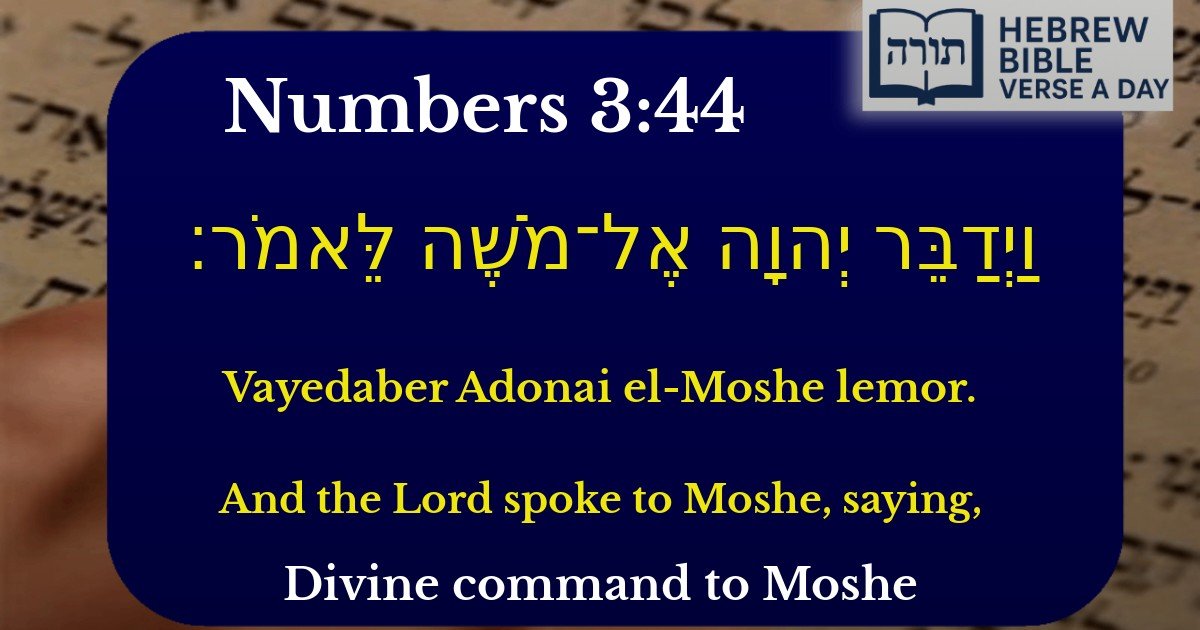

The Divine Communication to Moshe
The phrase "וַיְדַבֵּר יְהוָה אֶל־מֹשֶׁה לֵּאמֹר" ("And the Lord spoke to Moshe, saying") appears frequently in the Torah, marking the transmission of divine commandments. Rashi (Shemot 6:2) explains that this expression emphasizes the clarity and directness of Hashem's communication with Moshe, distinguishing it from other forms of prophecy. Unlike other prophets who received messages through visions or dreams (Bamidbar 12:6-8), Moshe heard Hashem's words "פֶּה אֶל פֶּה" ("mouth to mouth"), with unparalleled clarity.
The Significance of "לֵּאמֹר"
The term "לֵּאמֹר" ("saying") is interpreted by the Midrash (Shemot Rabbah 28:6) as an instruction for Moshe to relay the divine words exactly as received, without adding or omitting anything. Rambam (Hilchos Yesodei HaTorah 7:6) elaborates that this underscores Moshe's unique role as the faithful transmitter of Torah, ensuring its precise preservation for future generations.
Contextual Meaning in the Torah
Kabbalistic Insight
The Zohar (Shemot 15a) teaches that "וַיְדַבֵּר" (spoke) reflects the sefirah of Malchus, representing the channel through which divine will is articulated to the world. Moshe's receptivity to this communication symbolizes the ideal union between heaven and earth.