

Join Our Newsletter To Be Informed When New Videos Are Posted
Hebrew Text
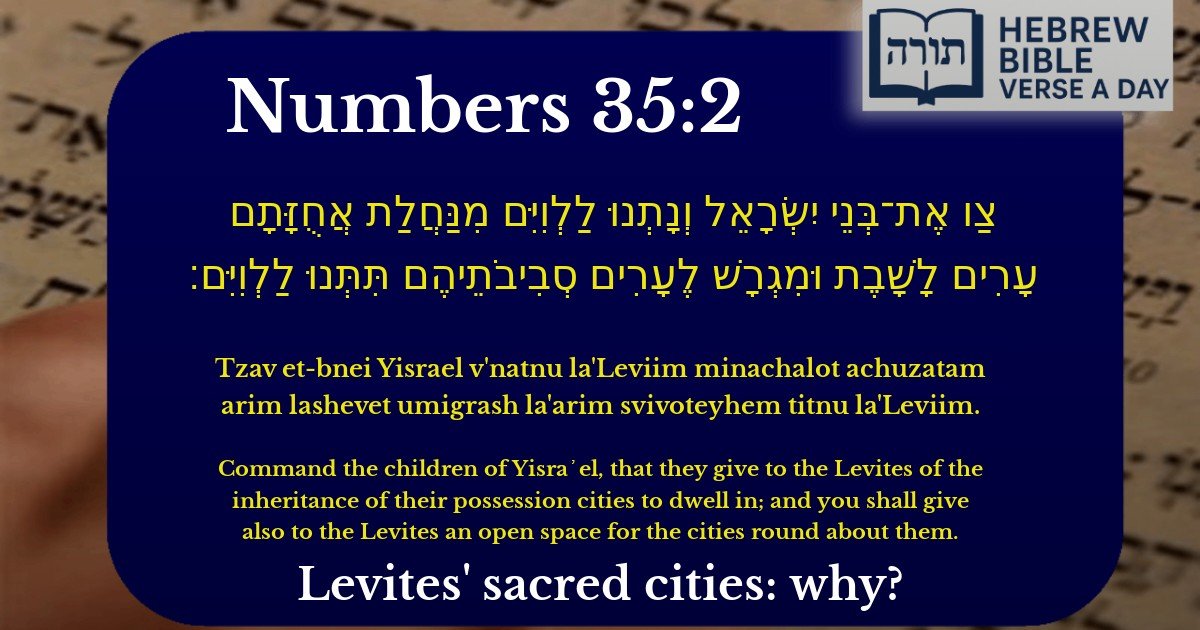
צַו אֶת־בְּנֵי יִשְׂרָאֵל וְנָתְנוּ לַלְוִיִּם מִנַּחֲלַת אֲחֻזָּתָם עָרִים לָשָׁבֶת וּמִגְרָשׁ לֶעָרִים סְבִיבֹתֵיהֶם תִּתְּנוּ לַלְוִיִּם׃
English Translation
Command the children of Yisra᾽el, that they give to the Levites of the inheritance of their possession cities to dwell in; and you shall give also to the Levites an open space for the cities round about them.
Transliteration
Tzav et-bnei Yisrael v'natnu la'Leviim minachalot achuzatam arim lashevet umigrash la'arim svivoteyhem titnu la'Leviim.
Hebrew Leining Text
צַו֮ אֶת־בְּנֵ֣י יִשְׂרָאֵל֒ וְנָתְנ֣וּ לַלְוִיִּ֗ם מִֽנַּחֲלַ֛ת אֲחֻזָּתָ֖ם עָרִ֣ים לָשָׁ֑בֶת וּמִגְרָ֗שׁ לֶֽעָרִים֙ סְבִיבֹ֣תֵיהֶ֔ם תִּתְּנ֖וּ לַלְוִיִּֽם׃
🎵 Listen to leining
Parasha Commentary
📚 Talmud Citations
This verse is quoted in the Talmud.
📖 Arakhin 33b
The verse is cited in a discussion about the laws pertaining to the cities given to the Levites and the open spaces around them.
📖 Sotah 48b
The verse is referenced in the context of discussing the allocation of cities to the Levites and their surrounding open spaces as part of their inheritance.
Command to Allocate Cities for the Levites
The verse (Bamidbar 35:2) commands Bnei Yisrael to designate cities and surrounding open land for the Levites from their tribal inheritances. Rashi explains that this mitzvah was given specifically to the entire congregation of Israel, emphasizing that all tribes—not just those adjacent to the Levites—must participate in this allocation. This underscores the principle of collective responsibility in supporting those who serve in the Mishkan (and later the Beit HaMikdash).
Purpose of the Cities and Migrashim (Open Spaces)
The Levites were not given a territorial portion like the other tribes (Devarim 18:1-2). Instead, they received 48 cities (Bamidbar 35:7) scattered among the tribes. The migrashim (open spaces around the cities) served multiple purposes:
Spiritual Significance
The Midrash (Sifrei) highlights that the dispersion of the Levites among the tribes was divinely intentional. As teachers of Torah (Devarim 33:10), their presence in every region ensured widespread access to Torah knowledge. The cities also functioned as arei miklat (cities of refuge), symbolizing the Levites' role in guiding those seeking spiritual or physical protection.
Halachic Implications
Rambam (Hilchot Shemittah 13:12) rules that the sanctity of these cities and their migrashim remains eternal, even after the destruction of the Beit HaMikdash. This reflects the enduring role of the Levites—and by extension, Torah scholars—as spiritual anchors for Klal Yisrael.