Frequently Asked Questions
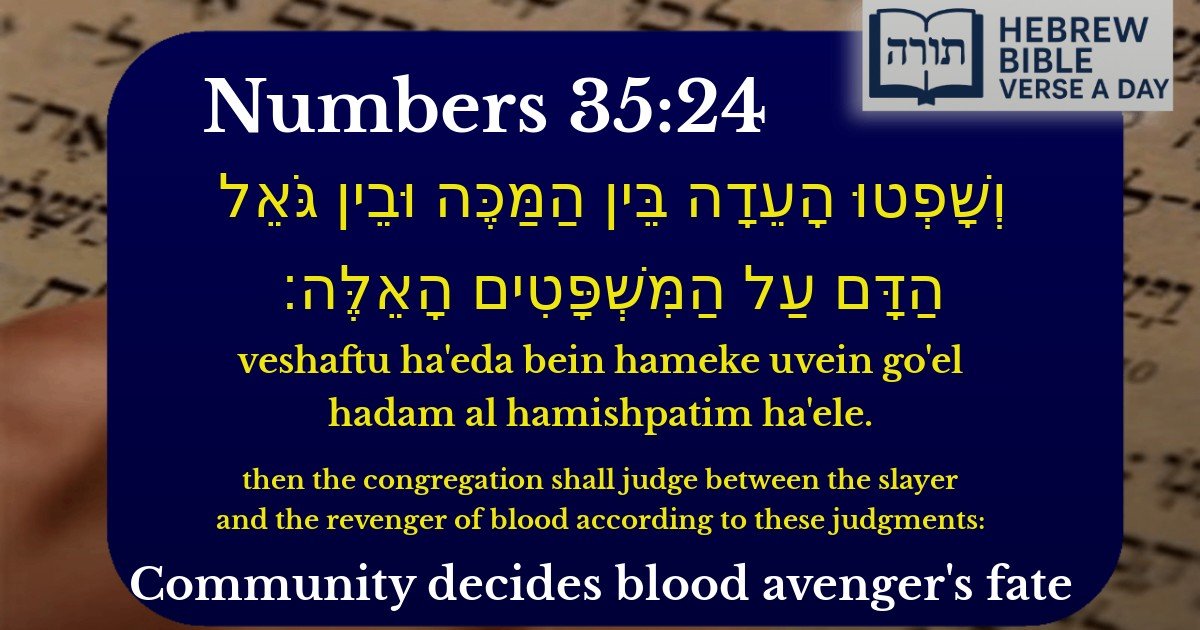
Q: What does 'the congregation shall judge between the slayer and the revenger of blood' mean in Numbers 35:24?
A: This verse refers to the process of determining whether a killing was intentional (murder) or accidental (manslaughter). The congregation (a court of judges) must carefully examine the case to decide if the killer must face the death penalty (if intentional) or be sent to a city of refuge (if accidental). This is based on the laws of 'go'el hadam' (blood avenger) and the cities of refuge discussed in this chapter.
Q: Why is the concept of 'go'el hadam' (revenger of blood) important in Jewish law?
A: The 'go'el hadam' (usually a close relative of the victim) has a role in ensuring justice is served, but only under strict legal supervision. The Torah establishes courts to prevent vigilante justice, emphasizing that even in cases of killing, judgment must be fair and based on evidence. Rambam (Hilchot Rotzeach 1:9-10) explains that this system balances justice with preventing unnecessary bloodshed.
Q: What can we learn from the requirement for the congregation to judge these cases?
A: This teaches the importance of due process and fair judgment in Jewish law. Rashi (on this verse) emphasizes that the court must carefully investigate all details before deciding. The Talmud (Sanhedrin 32b) elaborates on the rigorous standards for evidence in capital cases, showing how seriously the Torah takes human life and justice.
Q: How does the idea of cities of refuge apply today?
A: While we no longer have cities of refuge or the same system of blood avengers, the principles remain relevant. The Chofetz Chaim teaches that this teaches us to avoid rash judgments about others' actions. Just as the Torah required thorough investigation before declaring someone a murderer, we must be careful not to judge others hastily in our daily lives.
Q: What is the difference between murder and accidental killing in Jewish law based on this verse?
A: The verse introduces the distinction that becomes the foundation for Jewish laws of killing. Murder (retzicha) requires intent and premeditation, punishable by death after fair trial. Accidental killing (shogeg) shows no intent, requiring exile to a city of refuge (Numbers 35:11-12). The Talmud (Makkot 7b) discusses the detailed criteria that differentiate between these cases.


Context in the Torah
The verse (Bamidbar 35:24) appears in the context of the laws concerning accidental homicide and the establishment of arei miklat (cities of refuge). It outlines the role of the congregation (ha'edah) in adjudicating cases between the unintentional killer (hamakeh) and the blood avenger (go'el hadam).
Rashi's Explanation
Rashi explains that the congregation refers to the Sanhedrin, the supreme court of 71 judges, who determine whether the killing was intentional or accidental. If deemed accidental, the killer is sent to a city of refuge; if intentional, he is liable for capital punishment. The phrase "al hamishpatim ha'eleh" ("according to these judgments") refers to the detailed laws given in the preceding verses.
Rambam's Perspective
In Hilchos Rotzeach U'Shmiras Nefesh (Laws of Murder and Preservation of Life), Rambam elaborates that the court must thoroughly investigate the circumstances of the killing. The presence of witnesses, intent, and whether the killer could have avoided the act are all critical factors in the judgment. The congregation's role is to ensure justice is served fairly, protecting both the accidental killer from undue vengeance and society from intentional murderers.
Talmudic Discussion
The Talmud (Makkos 7b-10a) discusses the procedures for these cases, emphasizing that the killer must have been unaware of the danger posed by his actions to qualify for refuge. The court also evaluates whether the killer had prior enmity with the victim, which could indicate intent. The go'el hadam (blood avenger) is restricted from taking revenge if the court rules the act was unintentional.
Midrashic Insight
The Midrash Tanchuma (Masei 8) highlights the moral lesson: even accidental killing requires atonement, as human life is sacred. The cities of refuge serve not only as protection but also as a place for introspection and repentance. The congregation's judgment reflects the Torah's balance of justice and mercy.
Key Principles Derived