

Join Our Newsletter To Be Informed When New Videos Are Posted
Hebrew Text
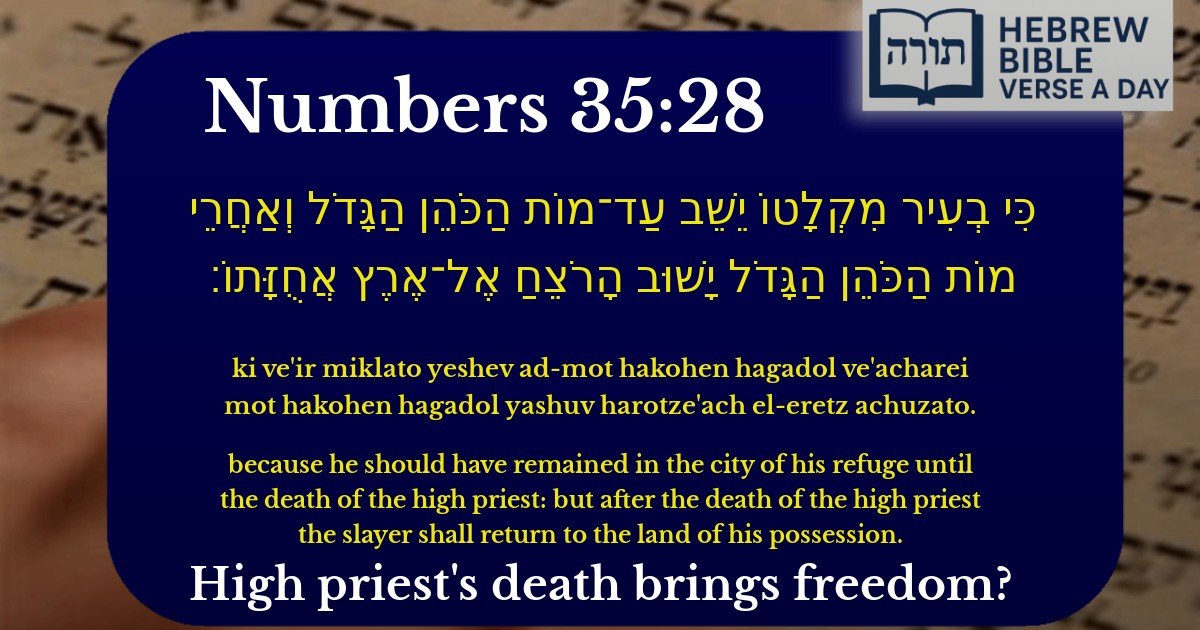
כִּי בְעִיר מִקְלָטוֹ יֵשֵׁב עַד־מוֹת הַכֹּהֵן הַגָּדֹל וְאַחֲרֵי מוֹת הַכֹּהֵן הַגָּדֹל יָשׁוּב הָרֹצֵחַ אֶל־אֶרֶץ אֲחֻזָּתוֹ׃
English Translation
because he should have remained in the city of his refuge until the death of the high priest: but after the death of the high priest the slayer shall return to the land of his possession.
Transliteration
Ki ve'ir miklato yeshev ad-mot hakohen hagadol ve'acharei mot hakohen hagadol yashuv harotze'ach el-eretz achuzato.
Hebrew Leining Text
כִּ֣י בְעִ֤יר מִקְלָטוֹ֙ יֵשֵׁ֔ב עַד־מ֖וֹת הַכֹּהֵ֣ן הַגָּדֹ֑ל וְאַחֲרֵ֥י מוֹת֙ הַכֹּהֵ֣ן הַגָּדֹ֔ל יָשׁוּב֙ הָרֹצֵ֔חַ אֶל־אֶ֖רֶץ אֲחֻזָּתֽוֹ׃
🎵 Listen to leining
Parasha Commentary
📚 Talmud Citations
This verse is quoted in the Talmud.
📖 Makkot 11b
The verse is discussed in the context of the laws regarding cities of refuge and the conditions under which a murderer may return from exile.
📖 Bava Kamma 38b
Referenced in a discussion about the responsibilities and roles of the high priest in relation to the cities of refuge.
Explanation of the Verse (Numbers 35:28)
The verse discusses the law of the עִיר מִקְלָט (ir miklat, city of refuge), where an unintentional murderer must remain until the death of the כֹּהֵן הַגָּדֹל (Kohen Gadol, High Priest). Only then may he return to his ancestral land.
Rashi's Commentary
Rashi (Rabbi Shlomo Yitzchaki) explains that the unintentional murderer must stay in the city of refuge as an atonement for his accidental act. The death of the Kohen Gadol serves as a form of כַּפָּרָה (atonement), allowing the exile to end. Rashi further notes that the Kohen Gadol’s death brings atonement because he should have prayed for Divine mercy to prevent such tragedies from occurring in his generation (Rashi on Numbers 35:25).
Rambam’s Perspective (Hilchot Rotzeach 7:1)
Maimonides (Rambam) elaborates in Mishneh Torah that the unintentional killer is not truly free until the Kohen Gadol’s death. This law emphasizes the severity of taking a life, even accidentally, and the need for a period of reflection and repentance. The Kohen Gadol’s passing symbolizes a shift in spiritual leadership, allowing the exile to conclude.
Talmudic Insights (Makkot 11a-11b)
The Talmud discusses why the unintentional murderer’s exile is linked to the Kohen Gadol’s death:
Midrashic Interpretation (Bamidbar Rabbah 23:13)
The Midrash teaches that the Kohen Gadol’s mother would provide food and clothing to the unintentional killers in the cities of refuge, ensuring they did not pray for her son’s death. This illustrates the delicate balance between justice and mercy—while the killer must remain in exile, the Kohen Gadol’s life is not to be hastened.
Halachic Implications
According to Shulchan Aruch (Choshen Mishpat 425:1), this law applies only to unintentional killers. A deliberate murderer has no refuge and is subject to capital punishment. The city of refuge serves as both protection from the גּוֹאֵל הַדָּם (blood avenger) and a place of atonement.