
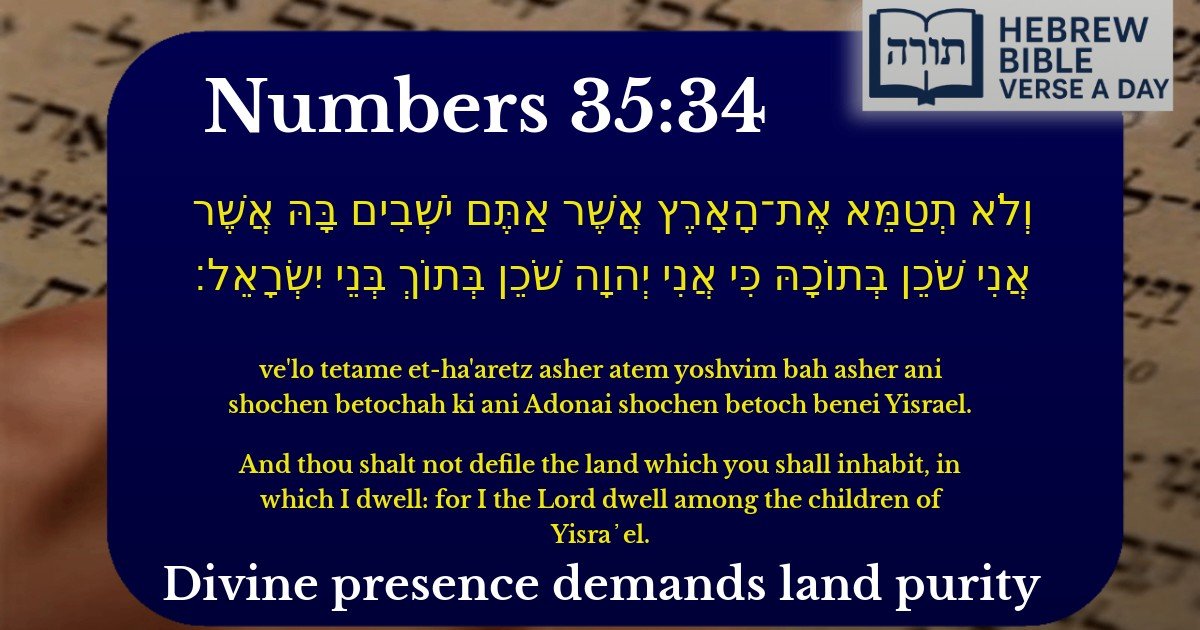

Numbers 35:34 - Divine presence demands land purity

Numbers 35:34 - במדבר 35:34

Hebrew Text

וְלֹא תְטַמֵּא אֶת־הָאָרֶץ אֲשֶׁר אַתֶּם יֹשְׁבִים בָּהּ אֲשֶׁר אֲנִי שֹׁכֵן בְּתוֹכָהּ כִּי אֲנִי יְהוָה שֹׁכֵן בְּתוֹךְ בְּנֵי יִשְׂרָאֵל׃

English Translation

And thou shalt not defile the land which you shall inhabit, in which I dwell: for I the Lord dwell among the children of Yisra᾽el.

Transliteration

Ve'lo tetame et-ha'aretz asher atem yoshvim bah asher ani shochen betochah ki ani Adonai shochen betoch benei Yisrael.

Hebrew Leining Text

וְלֹ֧א תְטַמֵּ֣א אֶת־הָאָ֗רֶץ אֲשֶׁ֤ר אַתֶּם֙ יֹשְׁבִ֣ים בָּ֔הּ אֲשֶׁ֥ר אֲנִ֖י שֹׁכֵ֣ן בְּתוֹכָ֑הּ כִּ֚י אֲנִ֣י יְהֹוָ֔ה שֹׁכֵ֕ן בְּת֖וֹךְ בְּנֵ֥י יִשְׂרָאֵֽל׃ {פ}

🎵 Listen to leining

Parasha Commentary

Source and Context

The verse appears in Bamidbar (Numbers) 35:34, within the context of the laws concerning the cities of refuge and the prohibition of bloodshed. The Torah warns against defiling the land, emphasizing that Hashem's presence dwells among Bnei Yisrael.

Meaning of "Defiling the Land"

Rashi explains that the primary defilement referred to here is shedding innocent blood, as the verse appears in the context of murder and its consequences. The land becomes spiritually contaminated when such severe sins are committed, as stated in Vayikra (Leviticus) 18:27-28, where immoral acts lead to the land "vomiting out" its inhabitants.

Hashem's Presence in the Land

The phrase "אֲנִי ה' שֹׁכֵן בְּתוֹךְ בְּנֵי יִשְׂרָאֵל" ("for I, Hashem, dwell among Bnei Yisrael") underscores the sanctity of Eretz Yisrael. The Ramban (Nachmanides) teaches that the Shechinah (Divine Presence) rests in the land in a unique way, making moral and ritual purity essential for maintaining this closeness. The Sforno adds that defiling the land through sin drives away the Shechinah, as seen in the destruction of the Beit HaMikdash.

Practical Implications

  • Moral Responsibility: The verse serves as a warning against violence and injustice, as these sins directly affect the spiritual state of the land.
  • Collective Accountability: The Talmud (Shabbat 33a) teaches that the land's purity depends on the actions of the entire nation, not just individuals.
  • Connection to Exile: The Midrash (Bamidbar Rabbah 7:10) links this verse to the eventual exile, stating that defilement of the land leads to expulsion, as seen in the destruction of the First and Second Temples.

Spiritual Lessons

The Kli Yakar emphasizes that the presence of the Shechinah obligates Bnei Yisrael to uphold holiness in both bein adam laMakom (man-G-d relationships) and bein adam lachaveiro (interpersonal relationships). The Netziv (Ha'amek Davar) adds that the verse teaches that ethical behavior is not merely a social obligation but a prerequisite for maintaining Hashem's dwelling among us.

📚 Talmud Citations

This verse is quoted in the Talmud.

📖 Yoma 67b
The verse is referenced in the discussion about the sanctity of the land of Israel and the consequences of defiling it, emphasizing God's presence among the Israelites.
📖 Sifrei Bamidbar 35:34
The verse is cited in the context of laws regarding murder and the defilement of the land, highlighting the importance of maintaining the land's purity due to God's dwelling among the people.

Frequently Asked Questions

Q: What does Numbers 35:34 mean when it says 'do not defile the land'?
A: Numbers 35:34 warns against actions that spiritually defile the Land of Israel, where Hashem's presence dwells among the Jewish people. Rashi explains this refers to serious sins like murder, idolatry, and immorality that damage the sanctity of the land. The Rambam (Hilchot Teshuvah) teaches that maintaining the land's purity is essential for maintaining the Divine Presence.
Q: Why is it important that Hashem dwells among the Jewish people?
A: The verse emphasizes that Hashem's presence (Shechinah) resides among the Jewish people, making our actions directly impact this holy connection. The Talmud (Sotah 17a) teaches that when a husband and wife live in harmony, the Shechinah dwells between them - showing how Divine presence depends on our moral behavior. This is why keeping the land pure is so vital.
Q: How does this verse apply to Jews living outside Israel today?
A: While this verse specifically addresses the Land of Israel, the Midrash (Tanchuma Kedoshim 10) teaches that wherever Jews maintain Torah values, we create a space for the Divine Presence. The Rambam (Hilchot Melachim) explains that all Jews must live ethically to prepare for the ultimate redemption when Hashem's presence will be fully revealed in Israel.
Q: What practical lesson can we learn from Numbers 35:34?
A: This verse teaches that our actions affect our spiritual environment. Just as the Jewish people were commanded to keep the land pure for the Divine Presence, today we must maintain purity in our homes and communities through Torah observance. The Sforno explains that this includes both avoiding negative commandments and actively performing mitzvot that sanctify our surroundings.
Q: What does it mean that Hashem 'dwells among the children of Israel'?
A: The verse teaches that Hashem's presence is intimately connected to the Jewish people. The Talmud (Megillah 29a) states that wherever Jews study Torah, the Shechinah is present. Rashi explains this special relationship means our behavior directly impacts the manifestation of the Divine Presence in our midst, whether in Israel or the diaspora.