

Join Our Newsletter To Be Informed When New Videos Are Posted
Hebrew Text
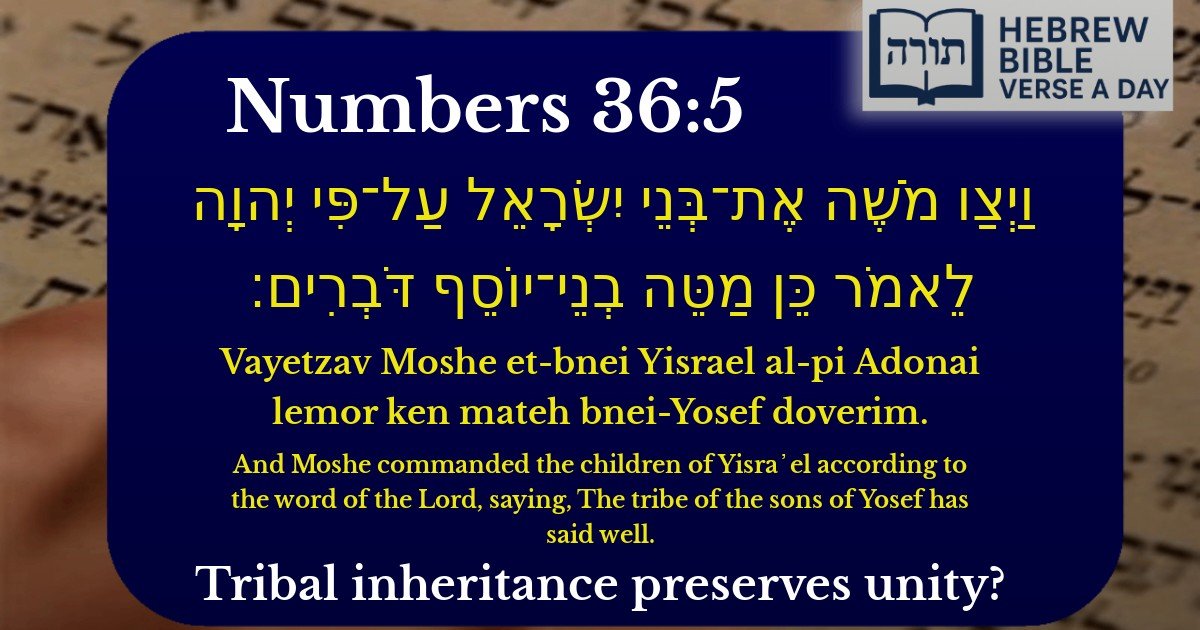
וַיְצַו מֹשֶׁה אֶת־בְּנֵי יִשְׂרָאֵל עַל־פִּי יְהוָה לֵאמֹר כֵּן מַטֵּה בְנֵי־יוֹסֵף דֹּבְרִים׃
English Translation
And Moshe commanded the children of Yisra᾽el according to the word of the Lord, saying, The tribe of the sons of Yosef has said well.
Transliteration
Vayetzav Moshe et-bnei Yisrael al-pi Adonai lemor ken mateh bnei-Yosef doverim.
Hebrew Leining Text
וַיְצַ֤ו מֹשֶׁה֙ אֶת־בְּנֵ֣י יִשְׂרָאֵ֔ל עַל־פִּ֥י יְהֹוָ֖ה לֵאמֹ֑ר כֵּ֛ן מַטֵּ֥ה בְנֵֽי־יוֹסֵ֖ף דֹּבְרִֽים׃
🎵 Listen to leining
Parasha Commentary
📚 Talmud Citations
This verse is not quoted in the Talmud.
Context of the Verse
The verse (Bamidbar 36:5) appears in the context of the daughters of Tzelofchad, who had requested an inheritance in the Land of Israel since their father had no sons. The leaders of the tribe of Menashe (a sub-tribe of Yosef) raised concerns that if these women married men from other tribes, their inheritance would transfer to those tribes, diminishing the portion of Yosef's descendants. Moshe, after consulting with Hashem, affirmed that their concern was valid.
Meaning of "The Tribe of the Sons of Yosef Has Said Well"
Rashi explains that the phrase "כֵּן מַטֵּה בְנֵי־יוֹסֵף דֹּבְרִים" ("The tribe of the sons of Yosef has said well") indicates that their argument was just and correct. The concern for preserving tribal land allocations was in accordance with divine will, as later confirmed by Hashem's response (Bamidbar 36:6-9).
Rambam's Perspective on Tribal Inheritance
Rambam (Hilchos Nachalos 6:1) derives from this episode that tribal land must remain within the tribe to prevent the erasure of any tribe's portion in Eretz Yisrael. This principle underscores the Torah’s emphasis on maintaining the integrity of each tribe’s inheritance, a concept rooted in the divine division of the Land.
Midrashic Insight: Yosef's Merit
The Midrash (Bamidbar Rabbah 21:7) connects this episode to Yosef’s righteousness. Just as Yosef was concerned with preserving his family’s legacy (e.g., ensuring his bones were buried in Eretz Yisrael), his descendants were similarly zealous in safeguarding their tribal inheritance. This reflects the principle of מידה כנגד מידה ("measure for measure")—Yosef’s merits extended to his progeny.
Halachic Implications
Spiritual Lesson: Advocacy for Justice
The Sforno highlights that the tribe of Yosef did not remain silent when they perceived a potential injustice to their portion. Their proactive stance teaches the importance of advocating for fairness within the framework of Torah law, provided it aligns with divine will—as confirmed by Moshe’s consultation with Hashem.