

Join Our Newsletter To Be Informed When New Videos Are Posted
Hebrew Text
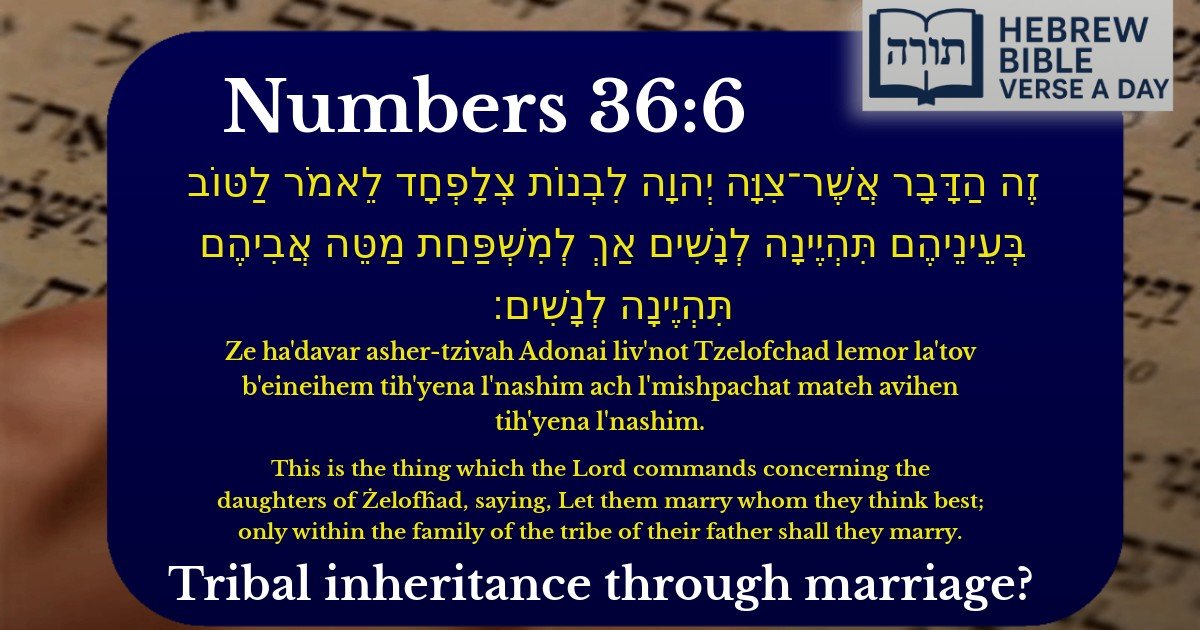
זֶה הַדָּבָר אֲשֶׁר־צִוָּה יְהוָה לִבְנוֹת צְלָפְחָד לֵאמֹר לַטּוֹב בְּעֵינֵיהֶם תִּהְיֶינָה לְנָשִׁים אַךְ לְמִשְׁפַּחַת מַטֵּה אֲבִיהֶם תִּהְיֶינָה לְנָשִׁים׃
English Translation
This is the thing which the Lord commands concerning the daughters of Żelofĥad, saying, Let them marry whom they think best; only within the family of the tribe of their father shall they marry.
Transliteration
Ze ha'davar asher-tzivah Adonai liv'not Tzelofchad lemor la'tov b'eineihem tih'yena l'nashim ach l'mishpachat mateh avihen tih'yena l'nashim.
Hebrew Leining Text
זֶ֣ה הַדָּבָ֞ר אֲשֶׁר־צִוָּ֣ה יְהֹוָ֗ה לִבְנ֤וֹת צְלׇפְחָד֙ לֵאמֹ֔ר לַטּ֥וֹב בְּעֵינֵיהֶ֖ם תִּהְיֶ֣ינָה לְנָשִׁ֑ים אַ֗ךְ לְמִשְׁפַּ֛חַת מַטֵּ֥ה אֲבִיהֶ֖ם תִּהְיֶ֥ינָה לְנָשִֽׁים׃
🎵 Listen to leining
Parasha Commentary
📚 Talmud Citations
This verse is quoted in the Talmud.
📖 Bava Batra 120a
The verse is discussed in the context of the laws of inheritance, particularly regarding the daughters of Zelophehad and their right to inherit their father's portion in the land of Israel.
📖 Sotah 44a
The verse is referenced in a discussion about the obligations and rights of women in matters of marriage and inheritance, emphasizing the importance of marrying within one's tribe to maintain tribal land holdings.
Context of the Verse
The verse (Bamidbar 36:6) addresses the daughters of Tzelofchad, who had previously petitioned Moshe for the right to inherit their father's portion in Eretz Yisrael since he had no sons (Bamidbar 27:1-11). Here, Hashem clarifies the conditions under which they may marry to ensure their inheritance remains within their father's tribe.
Rashi's Explanation
Rashi explains that the phrase "לַטּוֹב בְּעֵינֵיהֶם תִּהְיֶינָה לְנָשִׁים" ("Let them marry whom they think best") means they are permitted to marry any man they choose—provided he is from their father's tribe (Menashe). This ensures the land inheritance does not transfer to another tribe through marriage (Rashi on Bamidbar 36:6).
Rambam's Halachic Perspective
Rambam (Hilchos Nachalos 6:1-2) rules that this law applies universally: if a daughter inherits land (due to lacking brothers), she must marry within her father's tribe to prevent tribal land redistribution. This maintains the integrity of the original tribal allotments given at the time of Yehoshua's conquest.
Midrashic Insight
The Midrash (Bamidbar Rabbah 21:12) highlights the righteousness of Bnos Tzelofchad, noting their love for Eretz Yisrael motivated both their initial request and their compliance with this marital restriction. Their example teaches that personal desires should align with halachic boundaries for the greater good of Klal Yisrael.
Key Lessons