

Join Our Newsletter To Be Informed When New Videos Are Posted
Hebrew Text
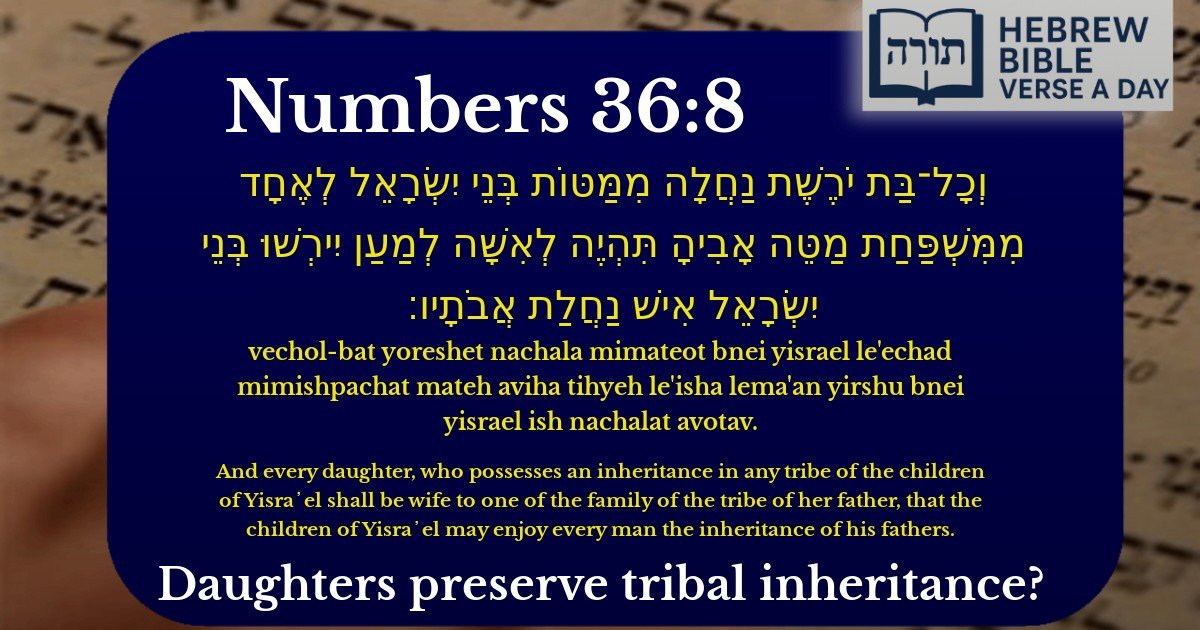
וְכָל־בַּת יֹרֶשֶׁת נַחֲלָה מִמַּטּוֹת בְּנֵי יִשְׂרָאֵל לְאֶחָד מִמִּשְׁפַּחַת מַטֵּה אָבִיהָ תִּהְיֶה לְאִשָּׁה לְמַעַן יִירְשׁוּ בְּנֵי יִשְׂרָאֵל אִישׁ נַחֲלַת אֲבֹתָיו׃
English Translation
And every daughter, who possesses an inheritance in any tribe of the children of Yisra᾽el shall be wife to one of the family of the tribe of her father, that the children of Yisra᾽el may enjoy every man the inheritance of his fathers.
Transliteration
Vechol-bat yoreshet nachala mimateot bnei yisrael le'echad mimishpachat mateh aviha tihyeh le'isha lema'an yirshu bnei yisrael ish nachalat avotav.
Hebrew Leining Text
וְכׇל־בַּ֞ת יֹרֶ֣שֶׁת נַחֲלָ֗ה מִמַּטּוֹת֮ בְּנֵ֣י יִשְׂרָאֵל֒ לְאֶחָ֗ד מִמִּשְׁפַּ֛חַת מַטֵּ֥ה אָבִ֖יהָ תִּהְיֶ֣ה לְאִשָּׁ֑ה לְמַ֗עַן יִֽירְשׁוּ֙ בְּנֵ֣י יִשְׂרָאֵ֔ל אִ֖ישׁ נַחֲלַ֥ת אֲבֹתָֽיו׃
🎵 Listen to leining
Parasha Commentary
📚 Talmud Citations
This verse is quoted in the Talmud.
📖 Bava Batra 120a
The verse is discussed in the context of the laws of inheritance, particularly regarding the daughters of Zelophehad and the requirement for them to marry within their father's tribe to preserve tribal land holdings.
Context of the Verse
This verse (Bamidbar 36:8) appears in the context of the request made by the daughters of Tzelofchad (Bamidbar 27) regarding inheriting their father's portion in Eretz Yisrael. The Torah here establishes the law that daughters who inherit land must marry within their own tribe to ensure tribal land holdings remain intact.
Rashi's Explanation
Rashi (Bamidbar 36:8) explains that this commandment was given specifically to the daughters of Tzelofchad and to all future generations. The purpose was to prevent land from transferring between tribes through inheritance, thereby maintaining the original tribal boundaries established by Yehoshua when dividing Eretz Yisrael.
Rambam's Halachic Perspective
In Mishneh Torah (Hilchos Nachalos 6:1), the Rambam codifies this law, stating that this restriction applies only to the generation entering Eretz Yisrael and the subsequent Jubilee cycle. After that period, the prohibition was relaxed, though the ideal remained to marry within one's tribe to preserve ancestral inheritance.
Talmudic Discussion
The Gemara (Bava Basra 120a) discusses this verse extensively, deriving several principles:
Midrashic Insights
The Midrash (Bamidbar Rabbah 21:9) notes that this law demonstrates the Torah's wisdom in balancing individual rights with communal needs. While the daughters of Tzelofchad were granted their inheritance (a recognition of individual justice), restrictions were placed to protect the larger tribal structure.
Nachmanides' Commentary
Ramban (Bamidbar 36:8) emphasizes that this commandment reflects the special sanctity of Eretz Yisrael and the importance of maintaining the tribal divisions established by divine decree. He notes that this concern for tribal boundaries doesn't apply to other properties, only to ancestral land in Israel.