

Join Our Newsletter To Be Informed When New Videos Are Posted
Hebrew Text
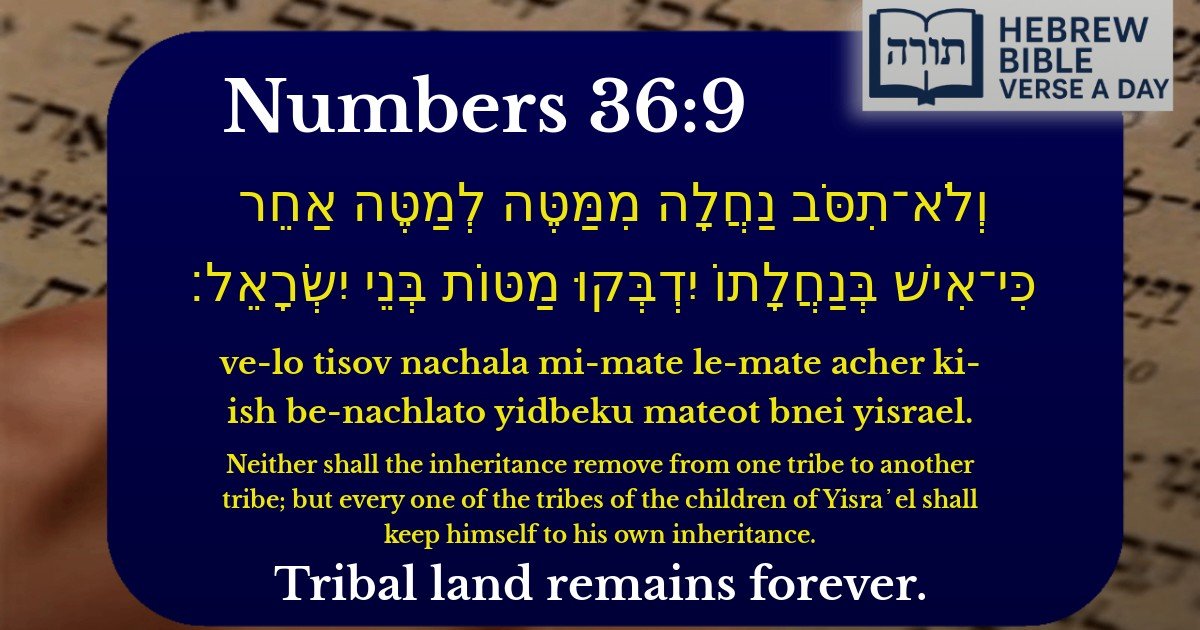
וְלֹא־תִסֹּב נַחֲלָה מִמַּטֶּה לְמַטֶּה אַחֵר כִּי־אִישׁ בְּנַחֲלָתוֹ יִדְבְּקוּ מַטּוֹת בְּנֵי יִשְׂרָאֵל׃
English Translation
Neither shall the inheritance remove from one tribe to another tribe; but every one of the tribes of the children of Yisra᾽el shall keep himself to his own inheritance.
Transliteration
Ve-lo tisov nachala mi-mate le-mate acher ki-ish be-nachlato yidbeku mateot bnei yisrael.
Hebrew Leining Text
וְלֹֽא־תִסֹּ֧ב נַחֲלָ֛ה מִמַּטֶּ֖ה לְמַטֶּ֣ה אַחֵ֑ר כִּי־אִישׁ֙ בְּנַ֣חֲלָת֔וֹ יִדְבְּק֕וּ מַטּ֖וֹת בְּנֵ֥י יִשְׂרָאֵֽל׃
🎵 Listen to leining
Parasha Commentary
📚 Talmud Citations
This verse is quoted in the Talmud.
📖 Bava Batra 120a
The verse is cited in a discussion about the laws of inheritance and the prohibition against transferring land from one tribe to another.
Prohibition of Transferring Tribal Inheritance
The verse (Bamidbar 36:9) establishes a fundamental principle in the division of Eretz Yisrael: inheritances must remain within the tribe to which they were originally allotted. This law ensures the preservation of tribal identities and boundaries as divinely ordained during the conquest and settlement of the land.
Rashi's Explanation
Rashi clarifies that this prohibition applies specifically to permanent transfers of land between tribes. Temporary transactions (like sales or leases) were permitted, but the land would revert to its original tribal owners during the Yovel (Jubilee) year (Vayikra 25:10). Rashi emphasizes that this law was given to prevent the tribe of Menashe from losing territory due to the daughters of Tzelofchad marrying into other tribes.
Rambam's Legal Perspective
In Hilchot Nachalot (Laws of Inheritance 1:1-2), Rambam codifies this principle as binding halacha. He explains that tribal territories were considered an eternal division, reflecting the divine wisdom in maintaining the unique characteristics and roles of each shevet (tribe) within Klal Yisrael.
Midrashic Insights
Practical Implications
The Talmud (Bava Batra 120a) discusses how this law affected marriage arrangements, particularly the case of the daughters of Tzelofchad who were required to marry within their tribe to preserve the tribal inheritance. This demonstrates how seriously the Torah views maintaining the integrity of tribal boundaries.
Spiritual Dimension
The Kli Yakar explains that the phrase "יִדְבְּקוּ מַטּוֹת בְּנֵי יִשְׂרָאֵל" ("the tribes of Israel shall cleave to their inheritance") suggests more than legal ownership - it implies a deep spiritual connection between each tribe and its portion of the land, reflecting their unique relationship with the Divine.