Frequently Asked Questions
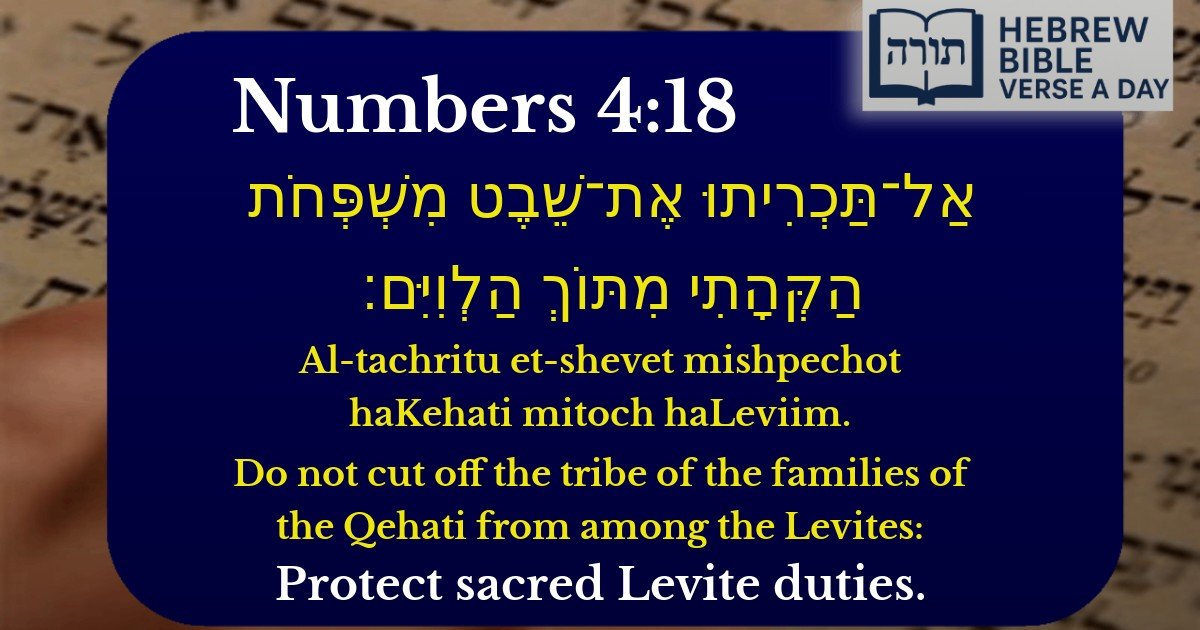
Q: What does Numbers 4:18 mean when it says 'Do not cut off the tribe of the families of the Qehati from among the Levites'?
A: This verse is a warning not to let the families of the Qehati (a subgroup of Levites) die out or be excluded from their sacred duties. The Qehatites had the special responsibility of carrying the most sacred objects of the Mishkan (Tabernacle), and the Torah emphasizes their importance in maintaining the service of the Levites (Rashi on Numbers 4:18).
Q: Why was the tribe of Qehati specifically mentioned in Numbers 4:18?
A: The Qehatites were singled out because they carried the holiest vessels of the Mishkan, including the Ark, Menorah, and Altar. Since their role was so vital, the Torah stresses that their lineage must continue to ensure these sacred duties are properly fulfilled (Rambam, Hilchot Klei HaMikdash 2:8).
Q: What lesson can we learn from Numbers 4:18 today?
A: This verse teaches the importance of preserving sacred traditions and roles within the Jewish people. Just as the Qehatites had a unique mission, every Jew has a role in maintaining Torah and mitzvot. The verse reminds us to value and protect our spiritual heritage (Midrash Tanchuma, Bamidbar 6).
Q: How does Numbers 4:18 apply to Jewish leadership roles?
A: The verse highlights that certain families or groups have designated roles in Jewish service. Just as the Qehatites had specific duties, Jewish leadership—whether kohanim, rabbis, or teachers—must be preserved and respected for their contributions to the community (Talmud, Arachin 11b).


Context of the Verse
The verse (Bamidbar 4:18) is part of the Torah's instructions regarding the duties of the Levites, specifically the family of Kehat, in transporting the Mishkan (Tabernacle) during the Israelites' travels in the wilderness. The Kehatites were responsible for carrying the most sacred vessels, including the Aron (Ark), Menorah, and Mizbeach (Altar).
Rashi's Explanation
Rashi explains that the warning "Do not cut off the tribe of the families of the Kehati" refers to preventing their premature death. Since the Kehatites carried the holy vessels, they were at risk if they looked at or touched them improperly (as described in Bamidbar 4:20). The Torah emphasizes that the Kehatites must not be allowed to perish due to negligence in following the proper procedures.
Rambam's Perspective
In Hilchot Klei HaMikdash (Laws of the Temple Vessels), Rambam discusses the sanctity of the Mishkan's vessels and the precautions necessary when handling them. He underscores that the warning here serves as a broader principle: those who serve in sacred roles must adhere strictly to divine commandments to avoid severe consequences.
Midrashic Interpretation
The Midrash Tanchuma (Bamidbar 6) elaborates that the phrase "Do not cut off" also carries a deeper meaning: the continuity of the Kehatite lineage must be preserved because of their unique spiritual role. Their service was essential for maintaining the sanctity of the Mishkan, and their absence would disrupt the divine order.
Practical Implications