

Join Our Newsletter To Be Informed When New Videos Are Posted
Hebrew Text
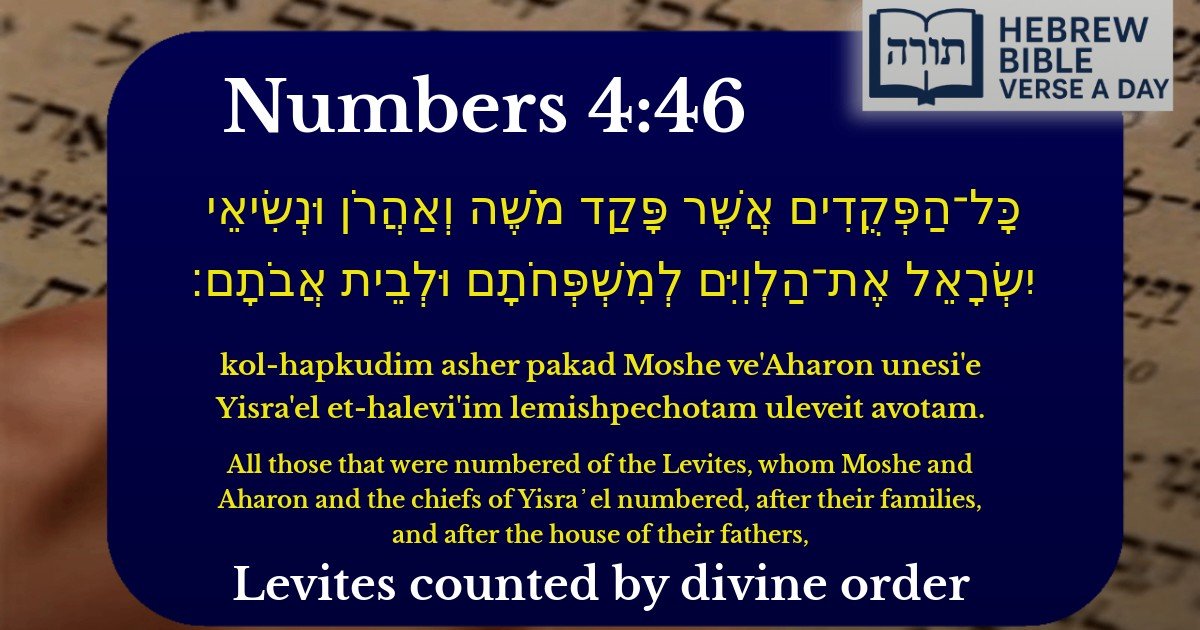
כָּל־הַפְּקֻדִים אֲשֶׁר פָּקַד מֹשֶׁה וְאַהֲרֹן וּנְשִׂיאֵי יִשְׂרָאֵל אֶת־הַלְוִיִּם לְמִשְׁפְּחֹתָם וּלְבֵית אֲבֹתָם׃
English Translation
All those that were numbered of the Levites, whom Moshe and Aharon and the chiefs of Yisra᾽el numbered, after their families, and after the house of their fathers,
Transliteration
Kol-hapkudim asher pakad Moshe ve'Aharon unesi'e Yisra'el et-halevi'im lemishpechotam uleveit avotam.
Hebrew Leining Text
כׇּֽל־הַפְּקֻדִ֡ים אֲשֶׁר֩ פָּקַ֨ד מֹשֶׁ֧ה וְאַהֲרֹ֛ן וּנְשִׂיאֵ֥י יִשְׂרָאֵ֖ל אֶת־הַלְוִיִּ֑ם לְמִשְׁפְּחֹתָ֖ם וּלְבֵ֥ית אֲבֹתָֽם׃
🎵 Listen to leining
Parasha Commentary
📚 Talmud Citations
This verse is not quoted in the Talmud.
Context of the Verse
This verse (Bamidbar 4:46) appears in the context of the census of the Levites, detailing their roles in transporting and maintaining the Mishkan (Tabernacle). Unlike the general census of Bnei Yisrael, which was conducted by Moshe and Elazar (Bamidbar 26:3), the Levites were counted separately due to their unique sacred duties.
Role of Moshe, Aharon, and the Princes
Rashi (Bamidbar 4:46) explains that Moshe, Aharon, and the princes of Israel were all involved in counting the Levites to emphasize the importance and honor of this task. The participation of the leadership underscores the elevated status of the Levites as those dedicated to Divine service.
Counting by Families and Fathers’ Houses
The verse specifies that the census was conducted "after their families and after the house of their fathers." The Ramban (Bamidbar 3:15) notes that this meticulous counting reflects the precision required in assigning the Levites their specific roles in the Mishkan. Each family had distinct responsibilities, such as carrying the Aron (Ark), the Menorah, or the Mizbeach (Altar).
Spiritual Significance of the Census
The Midrash (Bamidbar Rabbah 4:8) teaches that counting the Levites was not merely administrative but also a spiritual act. By numbering them, Moshe and Aharon elevated their status, demonstrating that every individual Levite was cherished and essential in the service of Hashem. This mirrors the broader Jewish principle that every Jew has a unique role in fulfilling the Divine will.
Practical Implications
The Talmud (Yoma 22a) derives from this verse that counting Jews should always be done indirectly (e.g., through half-shekels or other means) to avoid ayin hara (the evil eye). The Levites, however, were counted directly because their sanctified status protected them from such spiritual harm.