

Join Our Newsletter To Be Informed When New Videos Are Posted
Hebrew Text
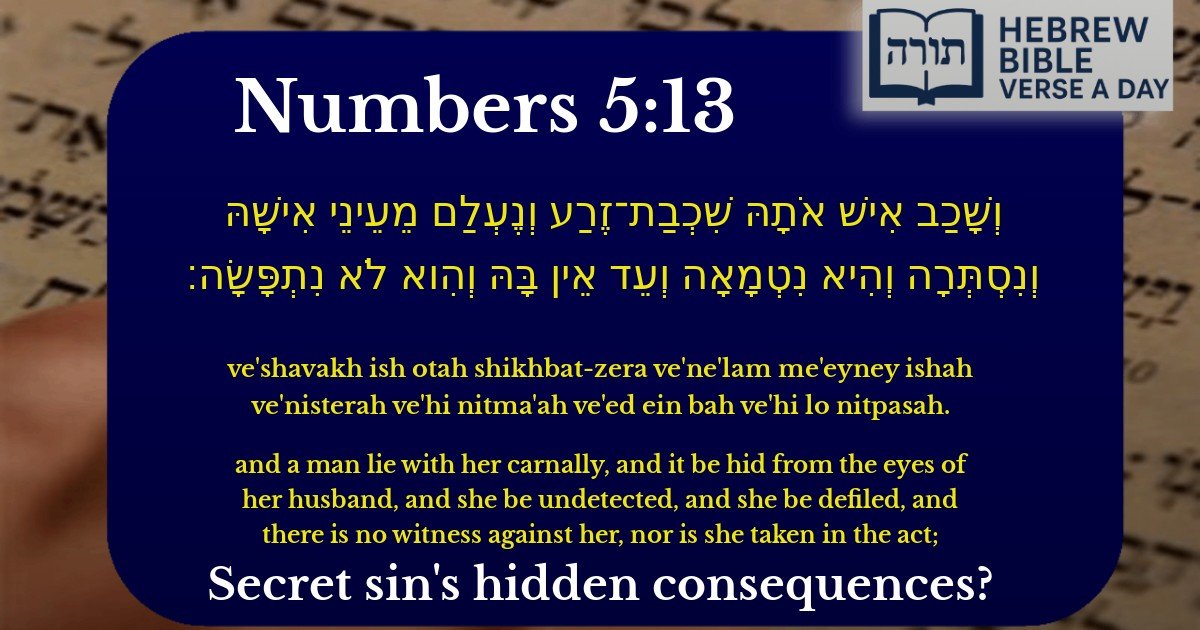
וְשָׁכַב אִישׁ אֹתָהּ שִׁכְבַת־זֶרַע וְנֶעְלַם מֵעֵינֵי אִישָׁהּ וְנִסְתְּרָה וְהִיא נִטְמָאָה וְעֵד אֵין בָּהּ וְהִוא לֹא נִתְפָּשָׂה׃
English Translation
and a man lie with her carnally, and it be hid from the eyes of her husband, and she be undetected, and she be defiled, and there is no witness against her, nor is she taken in the act;
Transliteration
Ve'shavakh ish otah shikhbat-zera ve'ne'lam me'eyney ishah ve'nisterah ve'hi nitma'ah ve'ed ein bah ve'hi lo nitpasah.
Hebrew Leining Text
וְשָׁכַ֨ב אִ֣ישׁ אֹתָהּ֮ שִׁכְבַת־זֶ֒רַע֒ וְנֶעְלַם֙ מֵעֵינֵ֣י אִישָׁ֔הּ וְנִסְתְּרָ֖ה וְהִ֣יא נִטְמָ֑אָה וְעֵד֙ אֵ֣ין בָּ֔הּ וְהִ֖וא לֹ֥א נִתְפָּֽשָׂה׃
🎵 Listen to leining
Parasha Commentary
📚 Talmud Citations
This verse is quoted in the Talmud.
📖 Sotah 2a
The verse is discussed in the context of the laws concerning a woman suspected of adultery (Sotah). The Talmud explores the conditions under which the ordeal of the bitter water is administered, referencing this verse to discuss the requirement that the act must be hidden from the husband's knowledge.
📖 Sotah 27b
The verse is cited in a discussion about the necessity of witnesses in cases of suspected adultery, emphasizing the scenario where there are no witnesses to the act.
Context in the Torah
This verse (Numbers 5:13) is part of the passage detailing the laws of the Sotah, a woman suspected of adultery. The Torah outlines a unique ritual involving the mei Sotah (bitter waters) to determine her guilt or innocence when there are no witnesses to the alleged transgression.
Key Terms and Their Meanings
Halachic Implications
The verse sets the conditions under which the Sotah ritual applies:
Midrashic Insights
The Midrash (Bamidbar Rabbah 9:9) notes that this law reflects Divine mercy—rather than leaving suspicion unresolved, Hashem provides a supernatural means (through the mei Sotah) to reveal the truth. The Or HaChaim adds that the hidden nature of the sin (ne'lam) parallels how human actions are never truly hidden from Hashem.
Moral Lessons
Rabbi Samson Raphael Hirsch emphasizes that the Sotah procedure underscores the sanctity of marriage and the severity of violating trust. The public nature of the ritual (Numbers 5:15-22) serves as a deterrent, reinforcing the importance of marital fidelity in Jewish life.